Welcome to Massage Educator, a resource created exclusively for massage schools and instructors. Each newsletter is filled with classroom tools and activities, important industry information, and links to ABMP resources created for schools and instructors.
Want to know more about how ABMP supports schools, educators, and students? Contact us at education@abmp.com.
Current Issue
2026 Issue 3
- Five Tips for When Educators Don’t Have All the Answers
- Do No Harm: What’s Next
- Do No Harm: Why My School Shouldn’t Opt In
- Do No Harm: What Are My School’s Options?
- Do No Harm: Report Your Tips
- Bene’s Career Academy Receives Massage Is for EveryBody Award
- Here’s What’s Coming Up—A Calendar of Events
- Meet the ABMP Team

5 Tips for When Educators Don’t Have All the Answers
By Chris Curry, LMT, BCTMB
Many teachers know the feeling: an inquisitive student asks a challenging question and your mind goes blank. Even worse is when you genuinely think you should know the answer, but don’t. These can be hard moments as a teacher, but they can define how students receive you. How you answer questions can deeply shape a student’s experience. Often, teachers feel the need to overcompensate and know the answer to every question. Instead, I offer the idea of being honest and humble while being curious with them.
I distinctly remember being a student in an anatomy class—I asked a question and my instructor responded with, “You should already know that.” I don’t remember what my question was, but I remember my teacher’s response, and then I never asked them another question. As a student, I had been vulnerable to say, “I don’t know,” and ask a question. This moment helped define my teaching future, because I realized how much potential there is in answering questions for students. A question is an opportunity for real learning, for real connections. This is where the power of “I don’t know” can come in for educators, because while questions are incredible opportunities, we cannot know everything, nor should we. It doesn’t really matter if you’re the student or the educator—being able to be vulnerable and say “I don’t know” can be profound.
Read more
This can be a moment to model to your students how to respond in the real world when you don’t know what to do. There will be plenty of moments where they have uncertainties, so modeling behavior early can have huge impacts. This also makes teaching easier, because it takes the stress off you, the educator, to know every single thing. Our job is to guide the student in their learning experience; we are more than a reference book. Co-inquiry is important and it motivates students when we have the same interests or goals. There is so much value in students seeing you invested in their learning experience and the support that provides.
5 STRATEGIES
Let’s go over some strategies on how to say “I don’t know” and further the student’s learning while learning something yourself.
1. Be curious alongside them.
You need to keep the door open for learning. This means never discounting a question; be curious with them. Questions mean they’re paying attention, and focus means they’re learning.
2. Set expectations early.
You can start the first day by telling them you will say, “I don’t know,” when you don’t know. That means you have to actually do so, though. Being consistent from day one will build trust with the students.
3. Look it up!
I love to look up the answer or encourage them to do so. If it is off topic or a distraction, tell them this might be a better question for a break or might be fun for them to look up after class. Let them teach you, so you both learn. You can always ask the class and see if anyone else knows.
4. Use alternative phrases.
“Hmm that’s an interesting thought. I hadn’t considered that before.”
“I actually have no idea! Let’s look it up.”
“Wow, that is a thought. Let’s discuss this more on break.”
“I honestly am unsure and don’t want to say the wrong thing, so let’s look it up.”
“Wait, I don’t understand your question, can you tell me more?”
5. Have fun with it.
Don’t let not knowing stress you out—let it be an opportunity to learn. While learning can be hard, it can also be a positive experience. A great teacher is learning just as much as the students are, so have fun, be curious, and connect with the student.
Embrace that there is always more to learn about massage therapy and the human body. When you say, “I don’t know,” you reduce pressure on yourself and you encourage more questions, which means your students learn more. Many times, there isn’t a clear answer in real life and teaching nuance leads to more client-centered outcomes. We have all had to explore an issue with a client that neither of us fully understand. Life isn’t simple and it helps to be creative while knowing that it is OK to not know everything. When you tell the truth and stay curious, you are exploring an issue with the student, which creates lasting learning, lasting connections, and a more well-rounded massage therapist.
Chris Curry, LMT, BCTMB, is an award-winning massage therapist, educator, and international competitor dedicated to advancing massage therapy through education, curiosity, and community.

Do No Harm: What’s Next
By Laura Puryear
Massage and bodywork schools have earned a little reprieve as the US Department of Education (ED) allowed a one-year delay on the implementation of its new earnings metric tied to financial aid.
For background, ED made the proposed accountability framework rules permanent on June 29, 2026. The “Do No Harm” rules, as originally written, would have spelled disaster for most massage therapy programs. The new earnings metric formula developed by ED compares the median annual earnings of working completers of undergraduate programs four years post-graduation to the median earnings of working adults age 25–34 who only have a high school diploma or its recognized equivalent. Programs that fail this test for two out of three years will lose eligibility for Title IV funding, more specifically, direct loans and Pell funds.
The intent of this test is to ensure students are financially better off after completing undergraduate programs than they would be without that education. While the intent of this measure is a good idea in theory, the formula didn’t take many key details into account, including regional differences in salary, gender and racial pay gaps, the difference between full-time and part-time salaries, and tipped income (which often goes unreported on tax forms).
The tip issue leads the Internal Revenue Service (IRS) to report income data far lower than the actual income for many professions, including massage therapy. The incorrect data from the IRS and a flawed formula that doesn’t account for part-time professions leaves massage therapy graduates looking like they are financially worse off than they would have been had they not graduated from a massage therapy program.
Read more
Changes to the Final Rule
After exhaustive work from ABMP and many other policy leaders in the profession, ED backtracked a little. The final rule was still published but now includes a one-year delay on the implementation of the new earnings metric for tipped professions, including massage therapy and Asian bodywork. The delay means the new earnings metric won’t be applied for one more year to certain programs whose graduates go into tipped professions; 2028 is the first year massage schools could start receiving warnings from ED. A few other programs will benefit from this brief reprieve, including esthetics and cosmetology, but nail programs were left out.
In the press release, ED stated: Delay of Select Provisions: The Department will delay implementation of the program eligibility consequences for certain programs that prepare students for employment in occupations where a majority of workers receive tipped income, in order to use reported earnings from the tax years when the “No Tax on Tips” policy is in effect, which begins with the 2026 tax year. This change results in at least a one-year delay in the rule’s eligibility consequences for affected programs.
This delay was added to the final rule to allow the IRS to collect updated revenue data from 2026, which will be the first year that includes the tip tax break passed by the Trump administration in 2025, allowing many practitioners (and other tipped professionals) to claim their tipped revenue without having to pay taxes on the first $25,000 in tips.
The hope is that if professionals take advantage of the tax break and actually report their full earnings on taxes, the revenue data collected by the IRS will be much higher than it has been historically, pushing the profession over the line that proves graduates from massage programs do, on average, make more than high school graduates in the workforce.
What Does This Mean for Your School?
First, encourage students and alumni to report their tips. It’s a hard hill to climb, but having these conversations in the classroom is the best place to start. Secondly, make sure to report your FVT/GE on time, unless you want to opt into the new metric early. And third, consider your options.
What’s Next?
Remember that regardless the path you take to address this issue, it’s only biding you time. We still need to fix the Do No Harm testing formula so it does not automatically and unfairly set massage therapy programs up for failure. ABMP is continuing to work on multiple avenues with industry partners to change the formula or remove non-degree certificate programs from this metric altogether. We will keep fighting for you, your schools, and your students.
Resources
Federal Register. “Accountability in Higher Education and Access Through Demand-Driven Workforce Pell: Student Tuition and Transparency System (STATS) and Earnings Accountability.” Accessed August 2026. www.federalregister.gov/documents/2026/07/01/2026-13286/accountability-….
Federal Student Aid. “One Big Beautiful Bill Act NSLDS Professional Access Updates (July 2026).” Accessed August 2026. https://fsapartners.ed.gov/knowledge-center/library/electronic-announce….
J. D. Supra. “US Department of Education Finalizes New Earnings Accountability Rule for Title IV Programs.” Accessed August 2026. www.jdsupra.com/legalnews/u-s-department-of-education-finalizes-8591501.
Thompson, F., J. Moran, and M. Prendingue. “Department of Education’s Final Earnings Accountability Rule for Higher Ed Institutions Relaxes Some of the Proposed Provisions.” McGuire Woods. Accessed August 2026. www.mcguirewoods.com/client-resources/alerts/2026/7/department-of-educa….
US Department of Education. “Explanation of Earnings Test and GE Changes.” Accessed August 2026. www.ed.gov/media/document/2025-ahead-explanation-of-earnings-test-and-g….
US Department of Education. “U.S. Department of Education Issues Final Rule to Hold All Colleges and Universities Accountable for Low-Earning Programs.” Accessed August 2026. www.ed.gov/about/news/press-release/us-department-of-education-issues-f….
Do No Harm: Why My School Shouldn’t Opt In
Almost all massage therapy programs will fail the earnings metric as currently written. Opting in early only opens you up to potentially losing federal aid sooner. And if you don’t currently accept federal aid, so you think opting in couldn’t hurt, remember that if your school does fail the test, you would be closing your school off to the option of accepting direct loans or Pell grants in the future, potentially for many years.
You should be warned that there is a way you could opt in early to this flawed earnings metric formula without even meaning to. If you neglect to report your FVT/GE information like usual, or submit it late, you will automatically opt yourself into the new earnings metric a year early, even if you don’t intend to do so. So, this year more than ever, it is critical that your school submits this data on time. Otherwise, ED will assume you are choosing to opt into the new metric early, and you could lose your Title IV funding before the profession has a chance to set this whole issue right.
Now, you may say, “well we would only lose it for two years, we could survive that.” Unfortunately, that’s incorrect. On paper it may look as if by failing the test for two out of three years and losing Title IV funding, all you need to do is appeal or reapply after your penalty period of a couple of years. The reality is much more complicated. First, the appeals options are severely limited. The only appeal ED will hear is one that can prove they did their math wrong. The next complication is that the period of ineligibility you enter after failing the test has some significant parameters. If a program fails, it will be very difficult to regain eligibility for federal funding. Even if you discontinued your program, ED would continue testing the earnings of your graduates for another seven years, so you would likely have to wait at least that long to regain eligibility.
There is, of course, a lot more to it than that. But the takeaway here is that if your school loses Title IV, there is no quick fix. You could spend years trying to get it back and still not succeed. The best option is to avoid losing it altogether, and there are ways to do that beyond asking your graduates to report their tips and hoping for the best.
Do No Harm: What Are My School’s Options?
So, what can you do to protect your school? The first thought you may have is a tuition drop, but it is important to note that debt is not considered in this test, so changing the cost of your program will not help.
One pathway that will protect your current students, but not future ones, is to voluntarily discontinue your program. This would allow your existing students to continue to benefit from Title IV funding through the completion of their program. Like you, we do not want any of your programs to shut down. But if you don’t have any other choice, voluntary discontinuation is an option to help you preserve federal funding through your teach-out.
There is another route that could give your program a bit more runway, potentially allowing you to keep operating without losing federal funding until the current or next administration fixes this deeply flawed formula. Some schools might be able to replace their massage therapy programs by changing Classification of Instructional Programs (CIP) codes. Changing the taxonomy of your program and making appropriate tweaks to the curriculum could gain you another three years or so, but only if you do it the right way. We strongly recommend hiring a professional to help you with the process; an attorney with a practice in higher education would be ideal. But we can give you a rough overview here so you can decide if you want to learn more and perhaps pursue this option.
First, you need to know that your replacement program must roll out before you discontinue the existing program, otherwise it will not be eligible for Title IV. The requirements for voluntary discontinuation of a program are not clearly defined, but the most likely scenario is your program is considered “discontinued” when you stop enrollment (this is something you should clarify with your attorney and ED before acting).
Your “new” program, which, to be clear, would essentially be a rose by another name, could be created one of two ways: by changing the credential level (going from undergraduate to associate, for example), or by changing the CIP code. With both examples, you wouldn’t be able to just slap a new name on the same program; you would have to make appropriate modifications to the program. These could be minor, like adding another course, tweaking curriculum hours, or increasing or decreasing total program hours. But this is something you would need to work on with your staff and, ideally, an attorney with experience in higher education policy.
Your program’s CIP code likely falls under “51.35 Somatic Bodywork and Related Therapeutic Services.” Within that category, there are four specific codes. That means, given the right tweaks, you have three other codes to choose from when launching a “new” program, potentially giving you a few more years of breathing room.
Do No Harm: Report Your Tips
In regards to the earning’s metric, it’s hard to say whether a change in tip declaration data alone will be enough to save our programs. We don’t know what the profession’s revenue will look like with tips included because we’ve never been able to collect that kind of data before, and current studies on the topic conflict. That is why it is so important that everyone in the profession includes all their income on their taxes this year—every dollar could make a difference in the outcome.
One of the most impactful things you can do right now to protect your programs is to hammer home the importance of reporting tips on tax forms to your students and alumni. We know you already teach them to report their tips. After all, it’s illegal for them not to. But the reasons now go beyond beefing up their future social security payout, creating a more realistic picture for loan servicers, and not getting audited—it could now be a deciding factor in the future of massage therapy education.
While reporting taxes is critical, it doesn’t solve the problem entirely. Some programs may still be on the chopping block even if the revenue reported next year comes back much higher, but the good news is you have options to protect your school and your students.
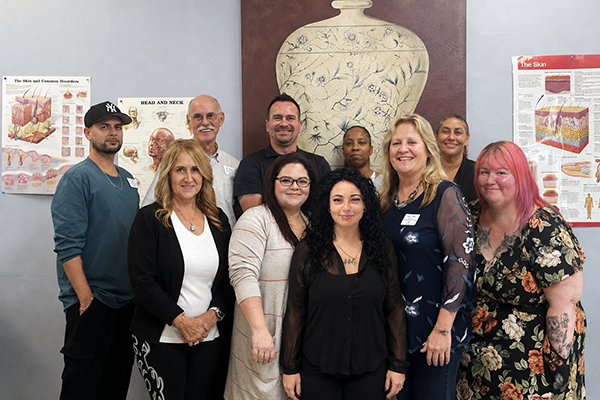
Bene’s Career Academy Awarded First Ever School Award in ABMP's Massage Is for EveryBody Contest
ABMP is proud to have partnered with Hand & Stone to give the first ever Massage Is for EveryBody School Award to Bene’s Career Academy in Florida for their work in the community. With programs in massage, esthetics, and cosmetology, the school has locations in New Port Richey and Brooksville.
Here’s What’s Coming Up—A Calendar of Events
July 1–December 31, 2026
Cornerstones: The ABMP Instructor Development Program
From July 1–December 31 ABMP is making the entire 24-module course free to the profession as part of the ABMP 40th anniversary celebration.
Watch this space for details: abmp.com/cornerstones
October 27, 2026
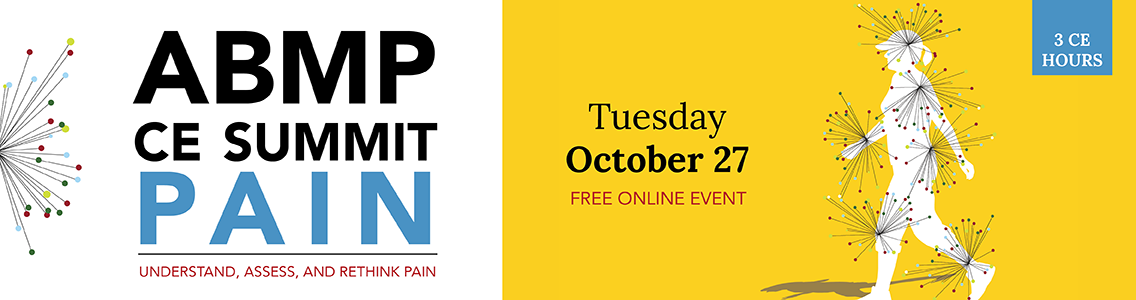
ABMP CE Summit: Pain
From assessing tissue-specific types of pain to learning treatment strategies, this online education event is free to the profession. Encourage students and instructors to register today! abmp.com/summit
April 23–24, 2027
ABMP School Forum
Boulder, Colorado
Join school owners and educators from around the country; strengthen your network, get inspired, and bring successful strategies back to your team. Get your early-bird pricing today! abmp.com/abmp-school-forum
Meet Your ABMP Team
Is your school part of the ABMP family? ABMP School membership includes a variety of resources for students, and lesson plans, tools, and presentations to help your faculty and students succeed. Learn more at abmp.com/educators or email our school liaisons at education@abmp.com with your questions and to request a 15-minute virtual school resource tour today!

Amber Levene
ABMP School Liaison
Amber@abmp.com
800-458-2267, ext. 1613
Areas Covered: Alaska, Arizona, California, Colorado, Connecticut, Delaware, D.C., Hawaii, Idaho, Kentucky, Maine, Maryland, Massachusetts, Montana, Nebraska, Nevada, New Hampshire, New Jersey, New Mexico, New York, North Carolina, North Dakota, Ohio, Oregon, Pennsylvania, Rhode Island, South Dakota, Utah, Vermont, Virginia, Washington, West Virginia, Wyoming

Bryan Chavez
ABMP School Liaison
Bryan@abmp.com
800-458-2267, ext. 1633
Areas Covered: Alabama, Arkansas, Florida, Georgia, Illinois, Indiana, Iowa, Kansas, Louisiana, Michigan, Minnesota, Mississippi, Missouri, Oklahoma, Puerto Rico, South Carolina, Tennessee, Texas, US Virgin Islands, Wisconsin