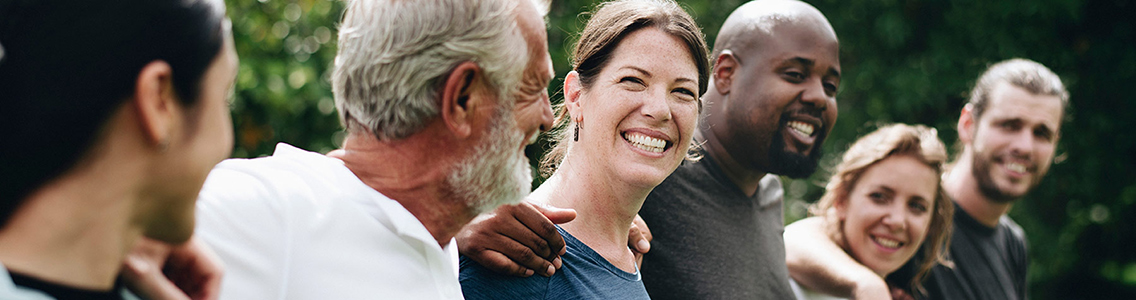
ABMP received a number of passionate essays explaining the many ways in which practitioners work tirelessly to support the guiding principles behind Massage Is for EveryBody. We at ABMP are deeply grateful to you all for your healing, inclusive work. You make the world a better place. Congratulations to the following winners (essays below) whose work exemplifies the healing and inclusive values of the campaign:
- Bringing Massage to Cancer Patients, Survivors, and Caregivers by Traci Daly-Smith
- Helping Others Feel Seen Through Therapeutic Massage by Kimberly Daniels
- Tides of Hope in a Sea of Change: Massage for the Cancer Patient by Elise Frost
- Using Massage to Teach Self-Care and Self-Love in Recovery by Nanette Ginise
- A Powerful Recovery Tool, Massage Helps Patients Reconnect by Nikki Gordon
- Supporting Gender Affirming Care for Trans Massage Clients by Airen McClure
- Small, Meaningful Moments for Children Fighting Cancer by Chana Rabinowitz
- Bringing Massage to Families of Incarcerated Mothers by Marlena Silva
- Bodywork Is My Purpose by Emily Stevens
- Building a Safe Space for Survivors by Tiffany Williams
School winner
- Making Community Outreach a Priority by Bene’s Career Academy
To see previous Massage Is for EveryBody winners, please visit the archives.
For last year's Massage Is for EveryBody winners, please visit this link.
Bringing Massage to Cancer Patients, Survivors, and Caregivers
By Traci Daly-Smith
Website: anewdalybeginning.org
 A New Daly Beginning started with someone I already knew. At the time, I was the manager and lead massage therapist at Lulu A Day Spa in Cumming, Georgia. One of my regular clients—a vibrant, successful real estate agent—was diagnosed with cancer. Before her diagnosis, she came in regularly for massage and facial services. She was strong, energetic, and always on the go.
When she reached out to continue receiving care during treatment, I remember feeling torn. I wanted to help ease her pain, side effects, stress, and fear. But I also realized I wasn’t fully prepared to safely work with someone going through cancer treatment. The last thing I wanted to do was cause harm when my intention was to help. That realization changed the direction of my career.
I pursued specialized oncology training and quickly discovered how many cancer patients, survivors, and caregivers were navigating their journeys without access to safe, knowledgeable touch. Many were overwhelmed financially. Others didn’t know these services existed or assumed massage wasn’t an option for them anymore. I couldn’t stop thinking about the gap.
What began with one client eventually became A New Daly Beginning, a nonprofit dedicated to providing oncology massage, oncology esthetics, manual lymphatic drainage, and other integrative therapies to people affected by cancer.
Over the years, I’ve witnessed the power of healing touch time and time again. One recent gentleman with stage 4 prostate cancer and his girlfriend participated in our programs as they navigated the end of his life. Being able to offer comfort, relief, and a moment of peace during such a difficult time is something I will never take for granted.
To me, "Massage Is for EveryBody" means everyone deserves a compassionate, healing touch, especially when life is at its hardest.
Helping Others Feel Seen Through Therapeutic Massage
By Kimberly Daniels
Website: massageforall.org
 For me, massage therapy has never been just about relaxation. After a back injury led to surgery and permanent nerve damage, my understanding of pain and healing changed completely. Living with chronic pain affected every aspect of my life—from sleep and movement to stress levels and daily activities. During that time, massage therapy became one of the few things that consistently helped me manage my symptoms and feel more comfortable in my body.
That experience ultimately led me to leave my federal career and pursue massage therapy professionally. For more than 18 years as a licensed massage therapist, I have worked with people experiencing chronic pain, caregiver fatigue, physical strain, and overwhelming stress.  My personal experience also shaped my belief that wellness services should be accessible to everyone, not only those who can easily afford them. That belief led me to establish Massage for All Foundation and recently partner with Project Outpour, an organization serving individuals experiencing homelessness in the Charlotte area. Through this partnership, we are working to bring chair massage therapy to people who often have limited access to supportive wellness services.
The foundation's long-term goal is to build a sustainable community-based wellness program that can operate consistently rather than through isolated events. Funding support would help establish the operational infrastructure necessary to expand services responsibly, including volunteer coordination, program scheduling, outreach efforts, equipment acquisition, liability protection, and community partnerships. We are committed to developing programs that can be maintained over time and adapted to meet evolving community needs.
Success will be measured through practical and achievable indicators, including the number of individuals served, community partnerships established, volunteer engagement, participant feedback, and the consistency of program delivery. These measures will help guide future program development and ensure resources are directed where they can provide the greatest benefit.
At its core, Massage for All Foundation exists because wellness should not be limited to those with financial means or easy access to services. Our goal is not simply to provide massage therapy sessions. It is to create opportunities for relief, connection, and support for individuals who are often overlooked within traditional wellness systems. Through thoughtful community partnerships and sustainable program development, we hope to make therapeutic touch more accessible to those who need it most throughout the Charlotte area.
Tides of Hope in a Sea of Change: Massage for the Cancer Patient
By Elise Frost
Website: cultivatewellnessmassage.com
 I came to the work of oncology massage when I opened my first private practice in Davenport, Iowa in 2019. A young mother entered my office with a plea—seeking help for her child, a leukemia patient whose experiences of touch throughout most of his short life had been composed of functional practicalities and uncomfortable necessities. She wanted to know how she could touch him safely and meaningfully amidst the trappings of medicine, his small frail body withstanding the demands of treatment and disease.
I sometimes find that the tides that change the course of our lives arrive on the cusp of a heartbreaking passage. For me, it was the moment I could not, in good conscience, say yes to her request because I did not yet have the training. The heartbreak deepened when I realized I could not find an oncology-trained massage therapist for her within a 100-mile radius. It was this unmet plea that transformed my life—and later, a family diagnosis that would continue to shape the course of my work in the years to come.
Since that day, I felt called to dedicate my time to study oncology and hospital-based massage, manual lymphatic drainage, palliative touch, and many hours more in supportive methods and clinical techniques to assist this complex and incredible population. Along the way, I have worked with The Little Red Door Cancer Agency and currently serve as the oncology massage therapist for Cancer Support Community of South Central Indiana (CSCSCIN). I have been privileged to take my work from the massage table to infusion units and the bedside, meeting people where they are in their journeys. Through these experiences I have been afforded the opportunity to engage with a population that often experiences life at the precipice of considerable unknowns. Treatments and surgeries frequently accompany not only a restructuring of daily life, but also a remapping of the physical body—a reorientation to the self that can upend everything a person has perceived their body ought to do or hope to be.
A body that was once a trusted place of encountering the world can begin to feel like an unreliable witness in a foreign landscape. Bringing comfort through informed touch and knowledge supports the healing process while serving as a beacon of awareness, allowing individuals to gain confidence in translating their embodied experience into meaningful information.
The complementary therapies assisting posttreatment and post-surgical care through comforting touch, manual lymphatic drainage, and scar tissue management are important aspects of healing. Through the free and discounted services I offer at both CSCSCIN and my practice, oncology-specific massage therapy can help bridge communication with providers and serve as a compassionate and present witness to their changing body through power of touch.
Through this joint act of witnessing and being witnessed, the body may have an opportunity to consider itself anew. It may begin to reclaim trust, discover resilience, and return a sense of belonging. In this way, massage therapy becomes an invitation to meet one another—and hopefully ourselves—in new ways, cultivating trust and knowledge in our ever-changing bodies while navigating life’s more tempestuous voyages.
No matter the side effects or implications of cancer, its surgeries, or its treatments, my heartfelt hope is that I have the knowledge, confidence, and presence to turn toward those in need so they do not have to traverse the unknown alone.
Using Massage to Teach Self-Care and Self-Love in Recovery
By Nanette Ginise
Website: selfcareforrecovery.org
 Recovery is more than removing drugs and alcohol from your life—it’s about restoring peace, balance, and the body-mind connection.
Since 2018, we’ve offered free massage therapy and complementary care to people navigating recovery from alcohol and substance use disorders, as well as mental health challenges.
Our mission is being carried throughout our recovery community in Connecticut with a positive impact. From our initial monthly program at CT Community for Addiction Recovery (CCAR), we have been invited to The Bridgeport Rescue Mission, Recovery Network of Programs, and Family Reentry to develop our massage therapy program for their inpatient and outpatient clients.  Providing nontransactional, trauma-informed bodywork to people affected by substance use, homelessness, or incarceration has deeply nourished my soul as an LMT. It has strengthened my understanding of massage therapy as a powerful healing modality and the importance of positive touch. When we begin a new program, some individuals initially say they are not interested or are uncomfortable with being touched. However, after observing us work in our group setting or hearing positive feedback from other participants, many choose to join the sessions: “Massage therapy fits into my recovery by helping me relax, putting me in a meditative state; it’s my quiet time to de-stress.”
A client once told me, “I hope you’re not upset—we couldn’t wait until next month, so we went and got a massage elsewhere.” I reassured them, “Not at all, my friend! You’re learning how to manage your physical discomfort, and that’s exactly what I hope for you.”
Massage is not a luxury; it’s a pathway to recovery that reduces stress, relieves physical pain, and supports emotional resilience.
A Powerful Recovery Tool, Massage Helps Patients Reconnect
By Nikki Gordon
Website: https://tinyurl.com/NgordonMassage
 I went to massage school shortly after graduating from high school because I believed in the power of therapeutic touch. I wanted to help people. Twenty years later and I have worked with many groups in trauma and crisis including veterans experiencing PTSD and chronic pain, frontline medical workers during COVID, and firefighters and evacuees during and in the aftermath of California wildfires.
The primary population I work with today are inpatients in chemical dependency rehab programs. Many of the patients arrive after years of using substances to cope with physical and emotional pain. The majority are men and they come from all around the country, often from physically demanding professions—miners, construction workers, and heavy machinery operators. They often arrive depleted and disconnected from their bodies. When I ask how they feel, the response is often some variation of “I feel terrible” or “Everything hurts.”
Many are receiving their first massage ever and are unsure what to expect. It’s an incredible opportunity to initiate and educate these folks about how massage can be part of their immediate and long-term health and wellness plans. When they are preparing to leave, I often provide guidance on how to find a massage therapist when they get home including the specific modalities they might prefer based on what they have responded best to in my treatment room.
I see patients once a week for 1–6 sessions. For those I get to see for several sessions, I have observed a distinct arc. They start in detox when “everything hurts,” and reported emotions—hopelessness, fear, shame, and guilt—are typically high. In the first session, I take a more compassionate touch approach: slow, gentle strokes or simple holds focused on creating a sense of safety and trust with me and with their own bodies. As weeks progress and they get their strength back, we have sessions more tailored to their requests, addressing areas where they carry the most muscle tension and stress. Once they get a discharge date, some anxiety enters as they anticipate going home or to the next program (PHP, partial hospitalization program, or IOP, intensive outpatient program) and losing the scaffolding and community they have in the inpatient settings. In final sessions, I often integrate more compassionate touch again to ease those peaking emotions.
Recently, I saw a 25-year-old experiencing withdrawal symptoms including nausea, tremors, loss of appetite, and trouble sleeping. It was his first massage ever and afterward, he asked for a hug, which I obliged, and told me he felt relaxed and hungry for the first time since arriving. He told me he was going to eat and then to take a nap. It was a simple moment, but a powerful reminder of how touch can connect us with our most basic needs and functions . . . even after long periods of numbing and disconnection.
Massage has a direct impact on the patients treated, but it also positively affects program staff. Patients can be irritable and even violent, which affects everyone in the house. Staff have told me they see change in individuals after massage, but they have also commented that the entire house feels calmer on massage days. It is wonderful to hear that massage is bringing these hardworking care professionals some relief as well.
Addiction was very disruptive during my own upbringing, and I was so grateful to the folks who helped my family members heal. Having a personal connection, I am able to come into this work uniquely prepared to serve everybody with empathy and understanding rather than fear or judgment. And I am so grateful to have found companies that are integrating massage into recovery alongside mental health, medical interventions, fitness, and nutrition. Everybody deserves to experience therapeutic touch as they heal.
Supporting Gender Affirming Care for Trans Massage Clients
By Airen McClure
Website: www.infinitegentleness.com
 As a trans and nonbinary massage therapist focusing on queer and trans clients, I personally know the political battlefield that makes care inaccessible. Many of the people I work with have never felt safe receiving bodywork before.
In my own practice, Infinite Gentleness Bodywork, many clients balance chronic pain from wearing a binder with managing their dysphoria, or a fear of undressing in therapeutic settings. I love getting to support folks in the years, months, and days before and after surgery. One client who wore a binder for years had surgery coming up. He didn’t want to take his binder off, and I worked around it. But with gentle communication and trust-building over time, he grew comfortable enough to remove it, and the benefits of myofascial work helped make his surgery a success. Another client preparing for top surgery was worried because they had a history of hypertrophic scarring. We worked together for months before and after their surgery to prevent and address this, helping ensure results they were thrilled with.  Seventy percent of my clients are trans, and I’m always mindful of the language I use for clients’ bodies. I take a holistic approach to supporting trans clients, who are statistically likely to be neurodivergent, have low incomes, or live with disabilities. To support clients unfamiliar with massage, I provide ample space before and after for questions and to navigate discomfort. With everything from scheduling practices to fidget toys to sensory adjustments in the studio, I am responsive to clients with autism, ADHD, or chronic pain, and I offer sliding-scale fees to keep my services accessible. People say massage is a luxury, but for my clients, it’s a necessity.
My massage practice subverts the narrative of transness as suffering, celebrating the connection, healing, euphoria, and magic of being trans.
Small, Meaningful Moments for Children Fighting Cancer
By Chana Rabinowitz
 I’m a massage therapist at St. Jude Children’s Research Hospital in Memphis. I chose this path because my brother had cancer twice as a kid. Massage helped him feel more like himself during some of the hardest moments. Even as a child, that experience showed me how powerful gentle, caring touch can be for children and families going through cancer.
Massage for kids with cancer isn’t about fixing the disease, it’s about easing the day-to-day stuff that makes life harder like pain, tight muscles, sleepless nights, anxiety before scans and procedures, nausea, and a general feeling of being down. A calm session can lower stress, help kids sleep better, reduce discomfort, and give families a peaceful way to connect.
I work with each child’s medical team to make sure massage is safe and tailored—adapting pressure, avoiding ports or surgical sites, and scheduling around treatments or low blood counts. I also teach caregivers simple touch techniques they can use between sessions to comfort their child and feel more involved.
What I see most is small but meaningful: a tense shoulder relaxed, a scared kid smiling, a parent able to soothe their child. Those moments matter and to me they are everything.
Bringing Massage to Families of Incarcerated Mothers
By Marlena Silva
 Being a massage therapist for over 15 years, I have found so many ways to volunteer my aloha through the gift of massage. One of the most impactful experiences I have had is being a part of serving the families of incarcerated mothers.
One of my friends works for a foundation that organizes family day opportunities for the children of incarcerated mothers to be able to spend quality time together. This includes a meal, arts and crafts, games, and, most importantly, the physical contact that is so missed.
When the children come running into the facility, I can’t help but be overcome with emotion as they run into the arms of their mothers. During the event, which is held within the prison, I am given a space to set up my massage chair and I massage the family members or friends who have taken on the responsibility of caring for the children who need them because their mothers are not able to do so. This is a selfless and unbelievably loving and caring undertaking, and I am honored to offer even a small moment of relief, relaxation, and healing for those who do so much.
Every time there is a family event, I am always eager and grateful to attend and massage the caregivers who deserve so much. The gift of giving massage to those who need it most is one of the most rewarding parts of being a massage therapist.
Bodywork Is My Purpose
By Emily Stevens
Website: calmhippo.net
 My name is Emily Indiana Stevens and my devotion to bodywork is profound. I am a certified massage therapist, Ayurvedic practitioner, yoga teacher, and In-Home Support Services (IHSS) Care Provider with comprehensive experience in home, spa, and clinical settings. As a child, I was a gymnast and dancer with a predisposition for gentle touch, so I knew from an early age that bodywork was my fate. My professional journey began in 2004 as a senior in high school when I asked my parents for a loan to become certified in massage therapy. Fast-forward 21 years, and I have a thriving practice across four Northern California counties with niche expertise in spinal cord injuries, brain trauma, prenatal, postpartum, and end-of-life care.
  I specialize in working with clients that have lifelong injuries and mobility issues because 14 years ago my little brother was paralyzed; he passed away a year after his accident as a result of the many complications that followed. When he died, I shifted gears and started focusing my skills and energy into working with people with disabilities because I had witnessed firsthand the suffering of someone incapable of moving their own body.
I travel long distances weekly in order to reach people in the comfort of their own spaces, many of whom are unlikely to experience bodywork otherwise. I assist them out of wheelchairs and onto massage tables. I meet them on their hospital beds or carry them down to the earth. No matter which individualized treatment plan I implement, my role is to help them release their tense, day-to-day holding patterns so they may know their bodies without so much pain. I have many long-standing clients; some have become like family. My profession isn’t just my job because bodywork is my purpose.
Building a Safe Space for Survivors
By Tiffany Williams
Instagram: @tiffyslim
 We are all family!
My childhood was very different to most. I grew up in the Warren Jeffs’ polygamist sect. My mother escaped with her seven younger children when I was 11. She was afraid to have another difficult miscarriage and wanted to provide a better life for her children.
I am now living in Nevada with my husband and have been practicing therapeutic massage for 15 years. I was drawn to this profession because I can help others, especially women who struggle with a sense of identity and purpose. Some are survivors of abuse; others have difficulty making ends meet. Working my own business allows me to discount and donate my services to bring healing and comfort to these women.  I have worked with women who are so traumatized they cannot remove their clothing. They don’t feel comfortable to disrobe because of abuse or having a background in the FLDS. I use Sarga Thai massage to work on these women fully clothed, combined with stretching, gua sha, aromatherapy, and hot stones, which help them feel grounded and less tense.
These women do not have the time or money to devote to self-care, which is why I gift my services to them. Through massage, I try to help them understand their value and reconnect to their bodies. Because these women have guarded their feelings for so long, it is common for them to have an emotional release during therapy, at which time, I pause the massage and let them know they are in a safe place and this is part of their journey to well-being.
I feel blessed to be a part of these clients’ wellness journeys! I am most proud when my clients and colleagues perceive me as family.
2026 ABMP School Winner
Making Community Outreach a Priority
By Bene's Career Academy
Website: benes.edu
 I am representing Bene’s Career Academy. We have an excellent massage program and I would like to tell you a little bit of what we do for our future professionals as well as our community of New Port Richey, Florida. We just participated in a county-wide teacher appreciation event where our future professionals massage teachers at K-12 schools locally, at no cost to them.
We also are actively working with veterans and for veterans and their wellness needs. We provide them with pain relief through massage at no cost to them. We attend events such as the “Stand Down,” which is solely for veterans, where we were able to administer over 80 healing massages in one day.  We are dedicated to helping our community heal from pain with our massage therapy program. We like to ensure our students understand that giving back to the community we live in—to our senior community as well as to our veterans—is a top priority for them.