


Fascia: The Pericardium-Diaphragm Connection
Understanding how the pericardium relates to breathing can in turn help clients relax into their massage session.
The transversus abdominis is the deepest of the abdominal muscles. Its fibers run horizontally and wrap around the waist from the vertebral column to the linea alba; it also joins the internal and external oblique muscles at the abdominal fascia, a sturdy sheath of connective tissue terminating anteriorly at the linea alba and lying superficial to the rectus abdominis. Because it lies deep to the rectus abdominis and the external and internal obliques, the transversus abdominis can be difficult to locate.
A unique muscle in that it has no true action, the transversus abdominis is instead defined by its function of increasing intra-abdominal pressure. Contraction of the transversus abdominis compresses the organs and contents of the abdominal cavity; the resulting increase in pressure within the abdominal cavity serves three functions. First, it assists with expulsion of air during forced exhalation. Second, it assists with expulsion of abdominal contents such as urine and feces, or stomach contents during vomiting. Third, and most importantly to human movement, it supports and stabilizes the lumbar spine. This last function earns the transversus abdominis the nickname “anatomical weight belt,” as a strong, functional transversus abdominis serves the same purpose as the thick belts worn to prevent injury when lifting heavy objects.
Common postural deviations, such as lumbar lordosis and anterior pelvic tilt, can inhibit the activity of the transversus abdominis. Resolving these deviations by lengthening the erector spinae muscles, quadratus lumborum, and hip flexors provides a good start, but locating and stimulating activity in the transversus abdominis is essential to normalizing trunk posture and improving lumbar stability.
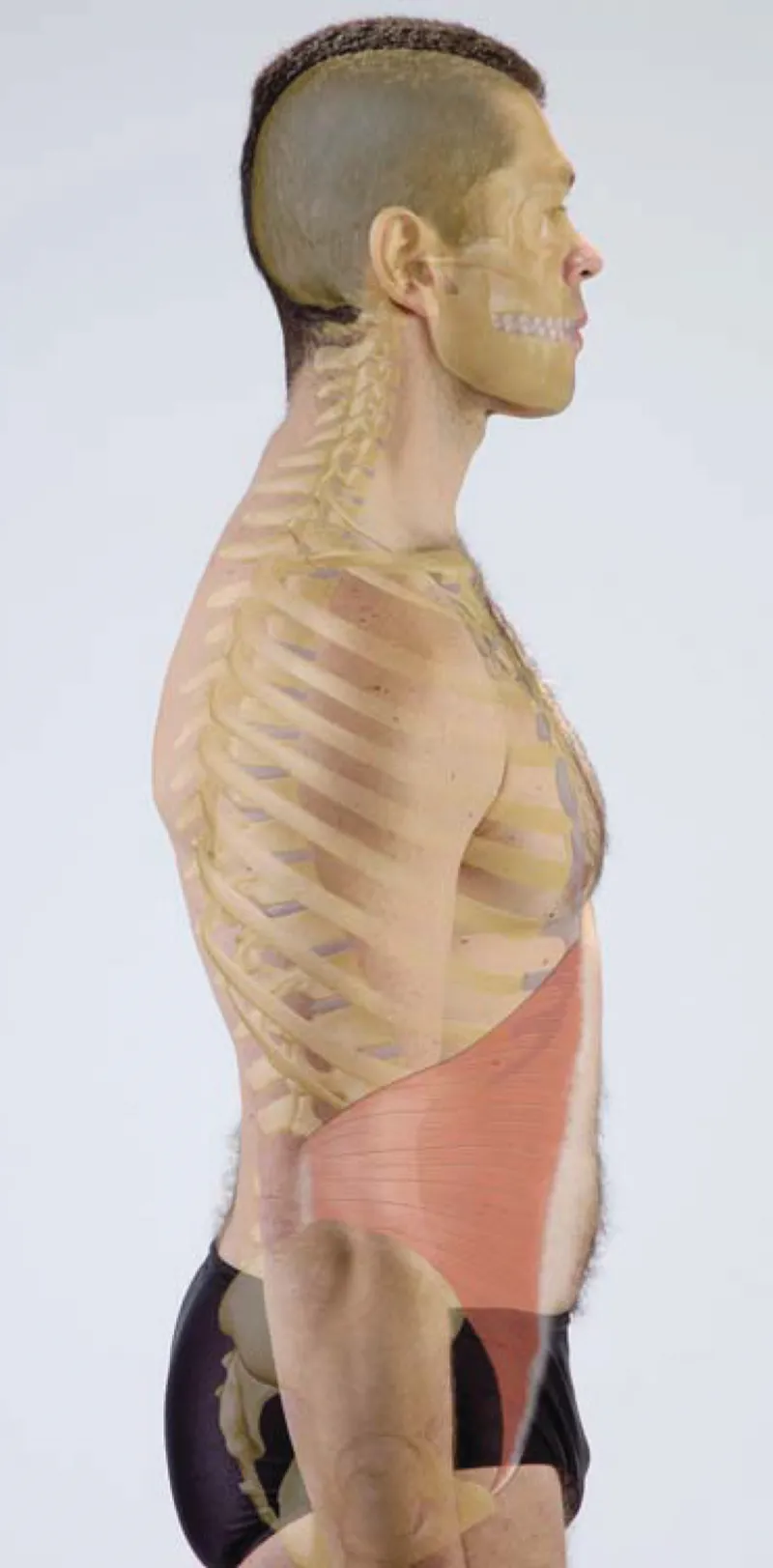
Attachments
Actions
Innervation
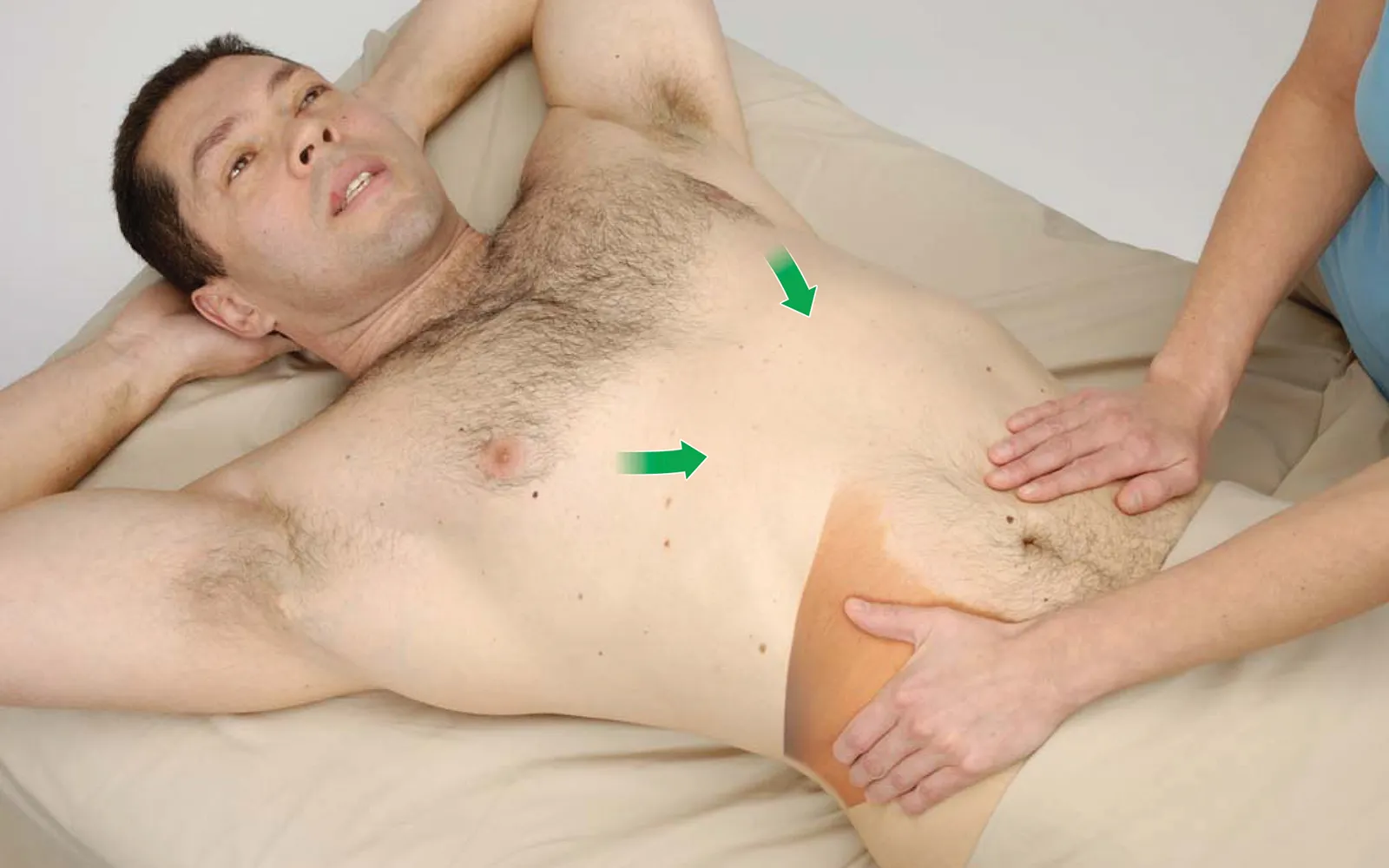
Positioning: client supine.

Editor’s note: The Client Homework element in Functional Anatomy is intended as a take-home resource for clients experiencing issues with the profiled muscle. The stretches identified in Functional Anatomy should not be performed within massage sessions or progressed by massage therapists, in order to comply with state laws and maintain scope of practice.
Understanding how the pericardium relates to breathing can in turn help clients relax into their massage session.
Superficial fascia may not get the same attention as deep fascia, but it plays an extremely important role in the organization of tissues and the structure of the body.
Understanding tendons—their shapes, lengths, and organization—improves an MT’s touch vocabulary and facilitates a more skilled touch.
While the neck is a bridge, a pathway, the position of the neck and head can also indicate a multitude of other things happening beneath the surface.