


Fascia: The Pericardium-Diaphragm Connection
Understanding how the pericardium relates to breathing can in turn help clients relax into their massage session.
The supinator muscle is located deep in the proximal posterior forearm. It lies deep to the brachioradialis and common extensor tendon at the lateral elbow. The supinator is a relatively flat muscle originating primarily on the dorsal surface of the proximal ulna, but also on the lateral epicondyle of the humerus, anterior fibers of the humeroulnar joint capsule, and proximal radioulnar ligament. The muscle wraps around the lateral surface of the radius, inserting broadly on the proximal radial surfaces, just distal to the radial head.
Proximally, the supinator is divided into superficial and deep layers. This division creates a channel for the deep portion of the radial nerve, also known as the posterior interosseous branch. The tendon of the biceps brachii is also located near this Y-shaped portion of the supinator. Caution should be exercised when palpating the insertion of the biceps brachii and the fibers of the supinator to avoid compressing the radial nerve.
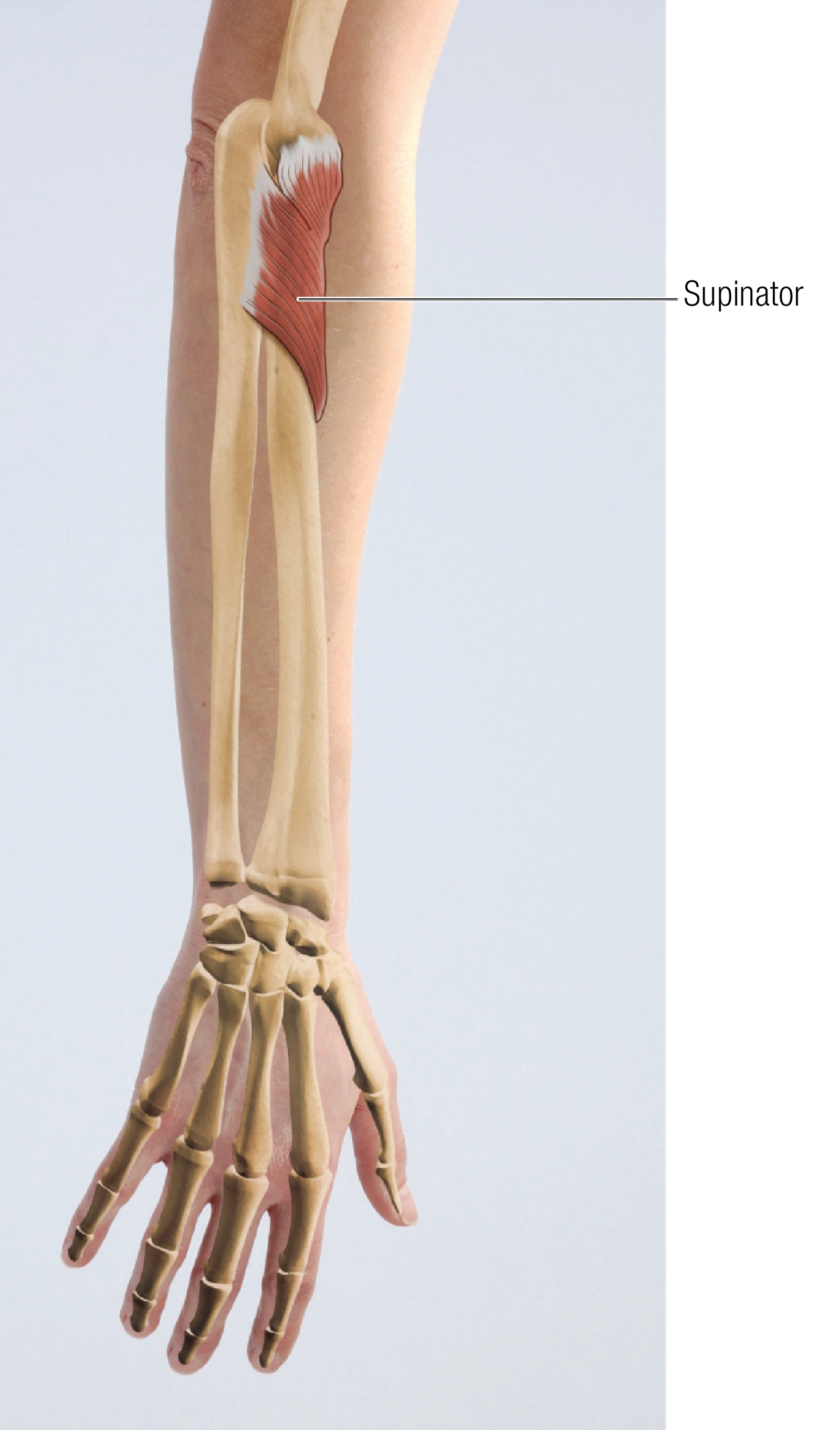
When the supinator is activated, it rotates the radius posteriorly and laterally, supinating the forearm. It works synergistically with the biceps brachii and brachioradialis to supinate the forearm, turning the hand palm up. Unlike the biceps brachii, the supinator is strongest when the elbow is extending or extended. Some of its fibers attach to the lateral epicondyle of the humerus, allowing it to assist with this movement.
The supinator reverses the action of the pronator teres and quadratus when turning a screwdriver or wrench. It is also activated when throwing a curveball in baseball. Here, the elbow extends while the forearm supinates, generating the characteristic spin of the curve ball. Excessive force production when throwing, carrying objects in a palm-down position, flipping objects from a palm-down to a palm-up position, or twisting movements may stress or injure the supinator.
Prolonged positioning with the forearm pronated, such as when typing, writing, or using a computer mouse, may lead to elongated tension in the supinator and associated muscles. Entrapment of the deep radial nerve, trigger-point activation, and poor joint mechanics may result. Trigger points in the supinator muscle refer pain to the lateral elbow and into the web of the thumb on the dorsal side.
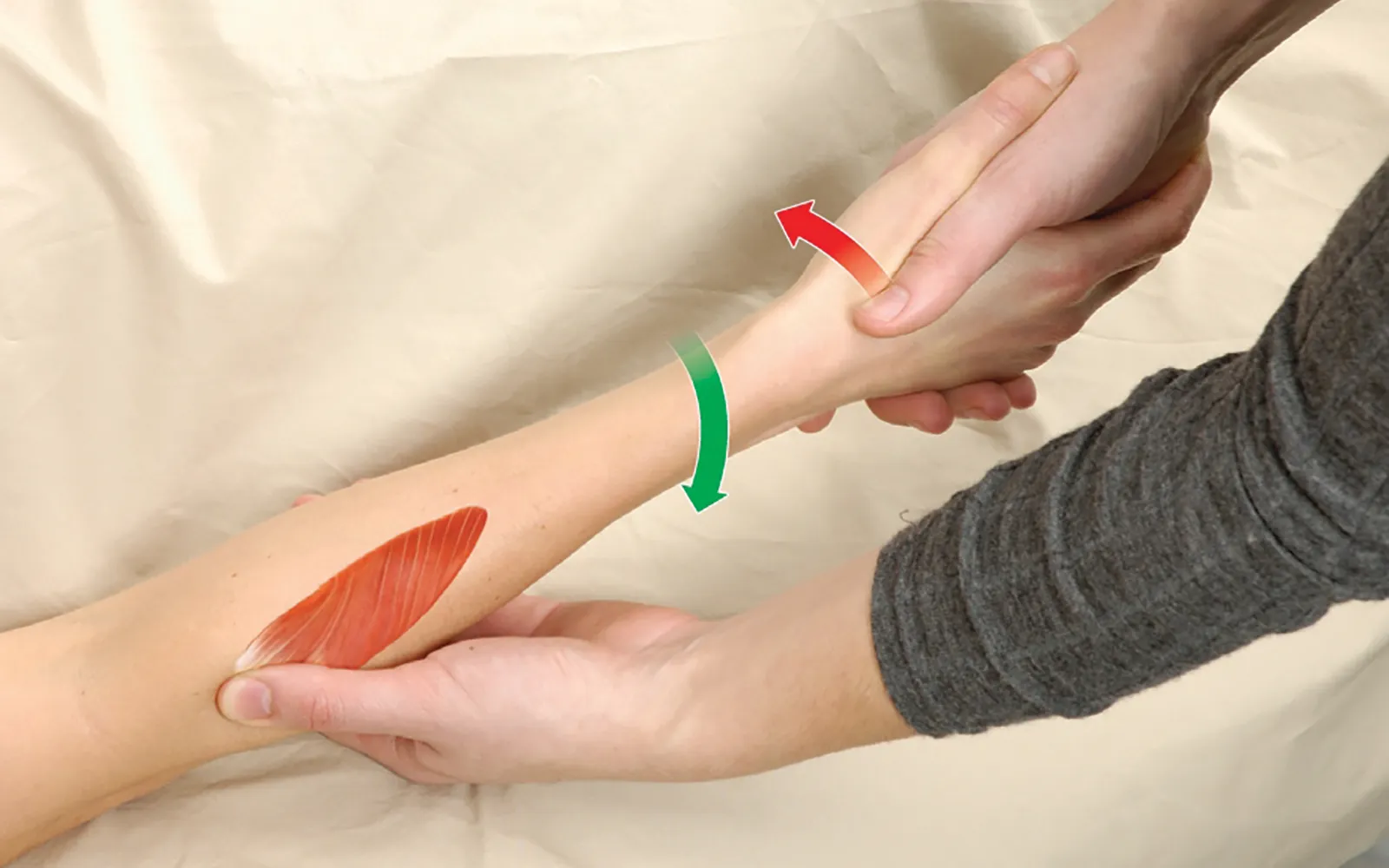
Position: client seated with forearm neutral (thumb up).

Editor’s note: The Client Homework element in Functional Anatomy is intended as a take-home resource for clients experiencing issues with the profiled muscle. The stretches identified in Functional Anatomy should not be performed within massage sessions or progressed by massage therapists, in order to comply with state laws and maintain scope of practice.
Understanding how the pericardium relates to breathing can in turn help clients relax into their massage session.
Superficial fascia may not get the same attention as deep fascia, but it plays an extremely important role in the organization of tissues and the structure of the body.
Understanding tendons—their shapes, lengths, and organization—improves an MT’s touch vocabulary and facilitates a more skilled touch.
While the neck is a bridge, a pathway, the position of the neck and head can also indicate a multitude of other things happening beneath the surface.