

Fascia: The Pericardium-Diaphragm Connection
Understanding how the pericardium relates to breathing can in turn help clients relax into their massage session.
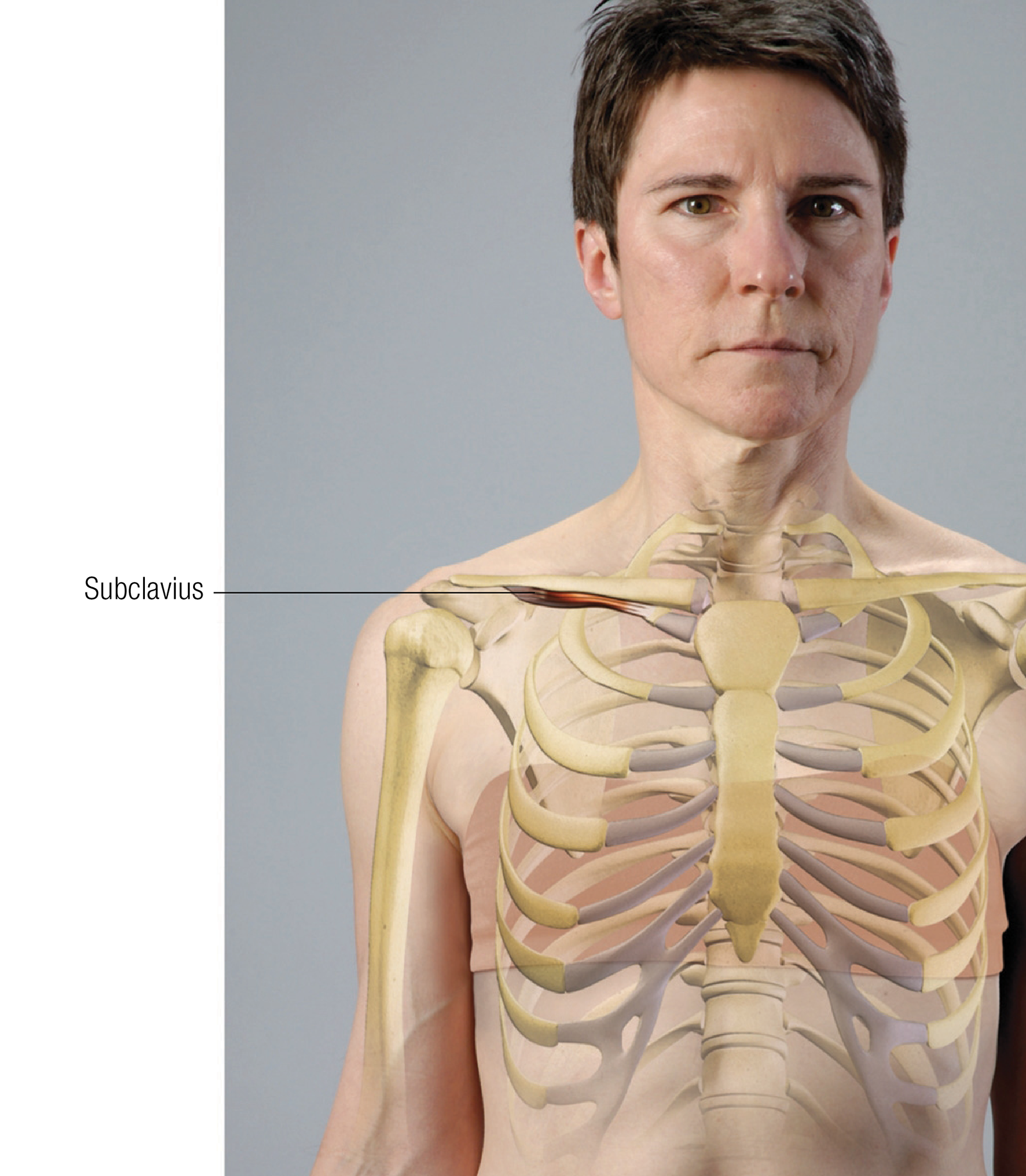
The subclavius is a small muscle located in the anterior shoulder girdle. It resides high on the chest between the clavicle and first rib and deep to the clavicular portion of the pectoralis major. The subclavius originates medially near the manubrium of the sternum on the costocartilage junction of the first rib. The muscle fibers run superiorly and laterally between the 1st rib and clavicle, then insert along a groove on the underside of the middle third of the clavicle. The subclavius muscle is in close proximity to the brachial plexus and subclavian vessels that run from the cervical region, between the first rib and clavicle, and into the upper extremity.
The subclavius functions mainly to stabilize or fix the clavicle during movements of the arm and/or shoulder girdle. When activated, it pulls the clavicle downward, closing the space between it and the first rib. The subclavius muscle works on the sternoclavicular and acromioclavicular joints, both of which have strong ligaments and therefore limited mobility. Most of the movement provided by the subclavius occurs at the sternoclavicular joint and accompanies movement at the glenohumeral joint.
Similar in function to the scalene muscles, the subclavius may assist with inhalation by elevating the first rib. Forceful inhalation or dysfunctional breathing may lead to hypertonicity and associated pain or dysfunction in the subclavius as well as synergistic muscles like the pectoralis major and minor, scalenes, and external intercostals. Other activities that may result in over-activation or shortening of the subclavius include repetitive lifting or prolonged positioning of the arm in front of the body, such as when driving or working on a computer. Forward-rolled shoulder posture and sleeping in a side-lying position with the arm overhead also contribute to shortening of the subclavius muscle.
Restrictions in the subclavius may present as limitations in shoulder mobility, rounded shoulder posture, and/or localized pain in the anterior shoulder girdle. Referred pain from trigger points in this muscle spreads across the front of the shoulder and down the front of the arm. It may also arise in the radial forearm and hand, skipping the elbow and wrist. This pattern is more lateral and distal when compared to trigger points associated with the pectoralis major. Tension and restriction in the subclavius may also mimic or even contribute to thoracic outlet syndrome and should be addressed in clients with this issue.
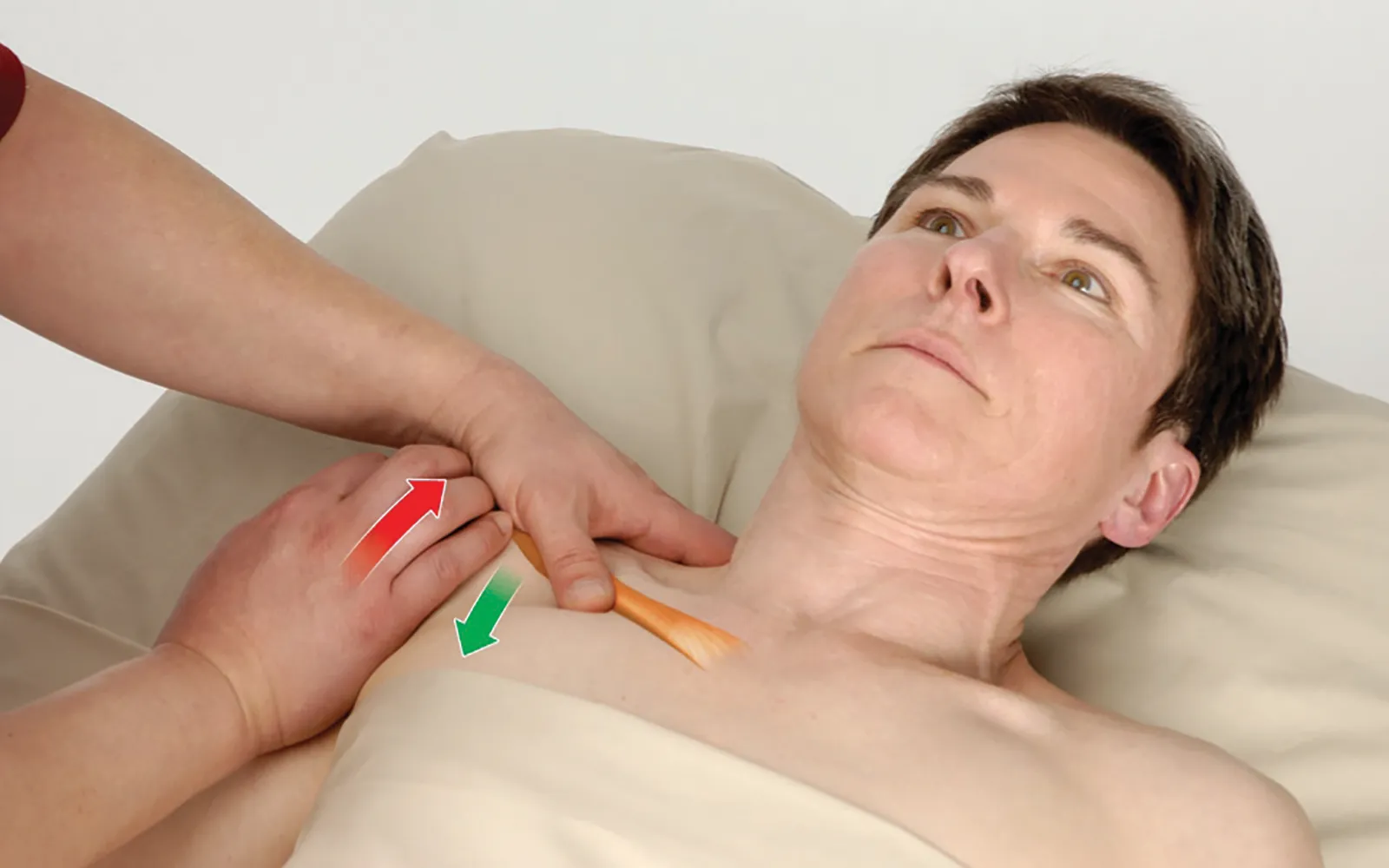
Position: client supine with arm at side.

Editor’s note: The Client Homework element in Functional Anatomy is intended as a take-home resource for clients experiencing issues with the profiled muscle. The stretches identified in Functional Anatomy should not be performed within massage sessions or progressed by massage therapists, in order to comply with state laws and maintain scope of practice.
Understanding how the pericardium relates to breathing can in turn help clients relax into their massage session.
Superficial fascia may not get the same attention as deep fascia, but it plays an extremely important role in the organization of tissues and the structure of the body.
Understanding tendons—their shapes, lengths, and organization—improves an MT’s touch vocabulary and facilitates a more skilled touch.
While the neck is a bridge, a pathway, the position of the neck and head can also indicate a multitude of other things happening beneath the surface.