


Fascia: The Pericardium-Diaphragm Connection
Understanding how the pericardium relates to breathing can in turn help clients relax into their massage session.
Many of the pain-causing muscular problems for which people receive bodywork affect joint position and motion. The joints of the limbs and spine need to be optimally aligned to minimize muscular holding around bent and/or unstable joints.
There are two categories of joint motion:
The articulating surfaces within joints move against each other in three primary ways: gliding, rolling, and spinning (Image 1). The type of movement in each joint depends on the shape of its articulating surfaces. Curved joint surfaces fit together in convex-concave pairs that come in ovoid (egg) or sellar (saddle) shapes (Image 2).
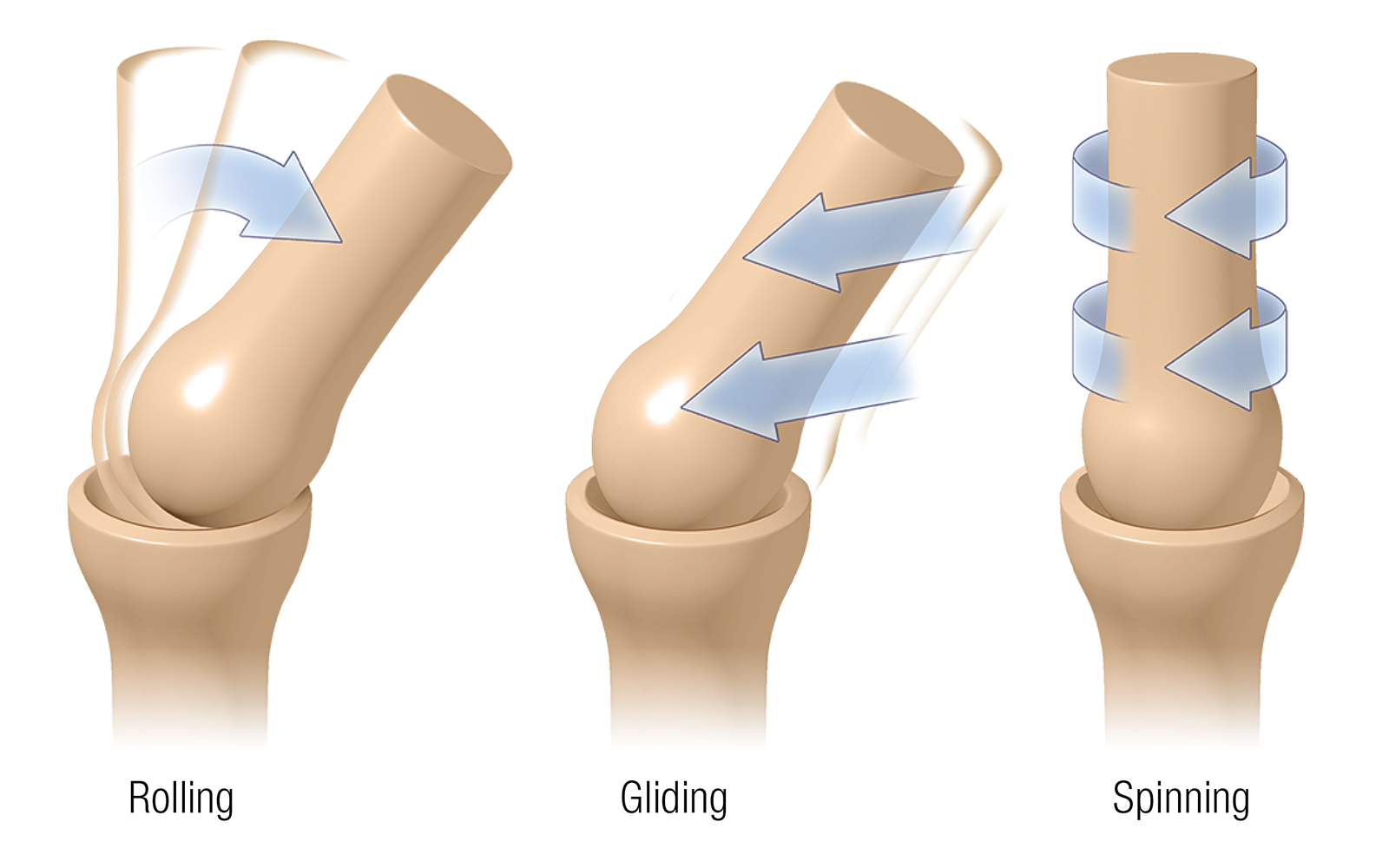
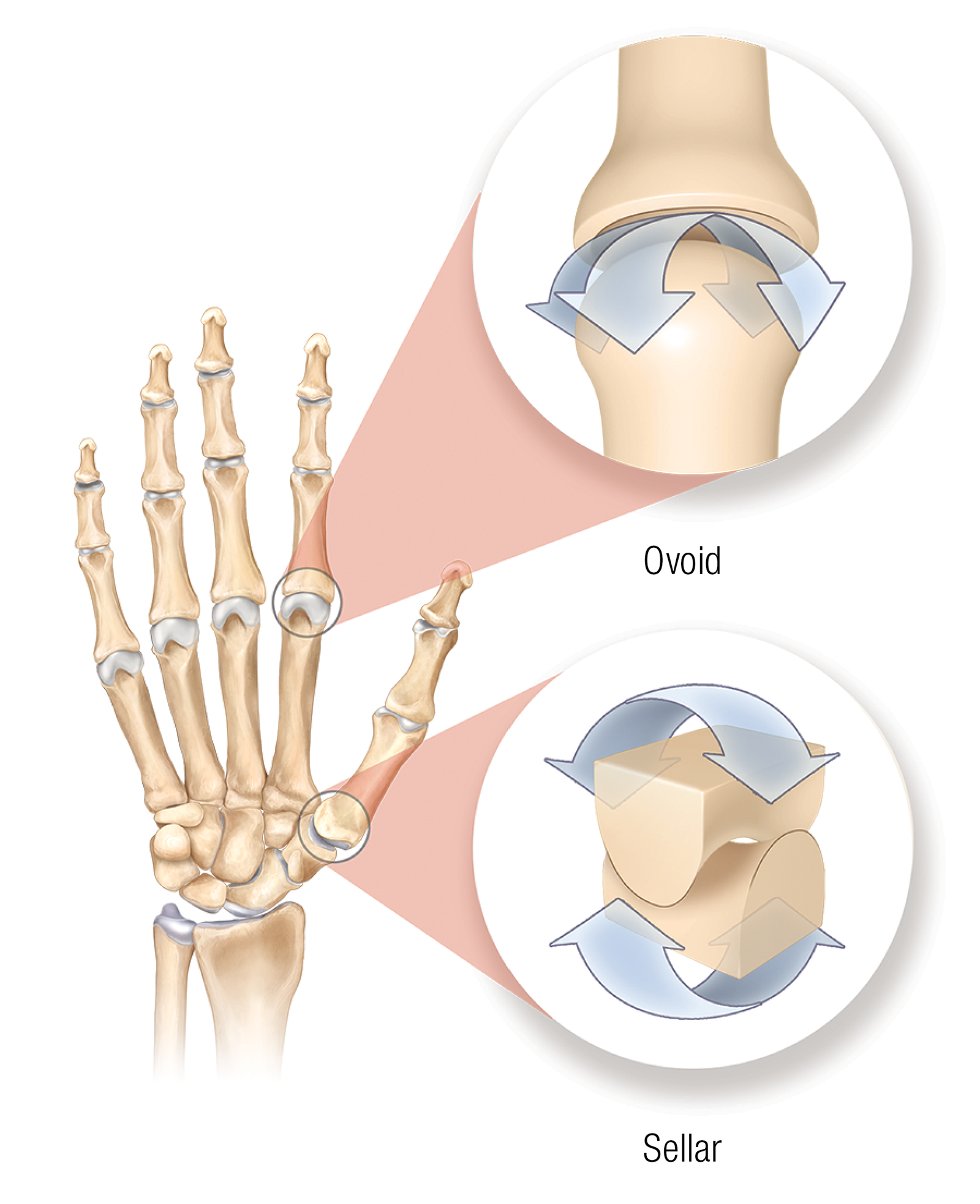
Techniques for joint motion are used to mobilize a joint, treat dysfunctional muscles acting on a joint, and improve overall neuromuscular patterning and client proprioception. When moving a joint, it helps to visualize movement between the articulating surfaces. The concave-convex joint surfaces of ovoid joints fit together in male-female pairs that allow for rolling and gliding; the many ovoid joints with shallow articular surfaces move in this range. Ovoid joints with deeper articular sockets, such as the ball-and-socket joints of the shoulders and hips, can spin in rotational movements.
The size and shape of the articulating surfaces determine the pathway of motion. For example, the medial condyles of the knees are twice as large and considerably longer than the lateral condyles, so as the knees bend and straighten, they move like asymmetrical runners on a rocking chair, tipping most of the weight to the inside of the joint.
It’s important to move joints slowly and steadily. Moving them too fast is like driving too fast, and we all know how speeding drivers miss road signs, get pulled over, and have more accidents. Slow and attentive movement decreases the risk of injuring a client, and allows time to visualize the specific joint you’re working with, sensing its shape and size.
Moving a joint slowly with focused attention also gives your client time to pay attention to subtle changes in position and motion. This can help your client relax into the movement with an active focus that resets muscle tone and relaxes muscular tension around the joint.
Joint approximation is a manual compression technique in which a joint is slowly compressed, then decompressed. Approximation loads and unloads the synovial lining and cartilage in the joint. This can improve fluid circulation and lymph drainage, which may explain why people suffering from arthritic joints tend to get pain relief with gentle approximation.
Joint approximation along a series of linked joints simulates the weight-bearing load on axial joints when a person is standing. Every pushing action you use during massage approximates a series of linked joints along a line of force.
Before working with your client, look at how his or her body rests when supine on the table, visualizing the skeleton at rest. How close are the joints to a neutral alignment? If you upended your client in this exact position, would he or she end up in an optimal posture?
This type of visual assessment can give you information on which direction to take a massage stroke. As you massage your clients, ask yourself, “Which direction does a massage stroke need to go to help ease the bones toward their optimal alignment?”
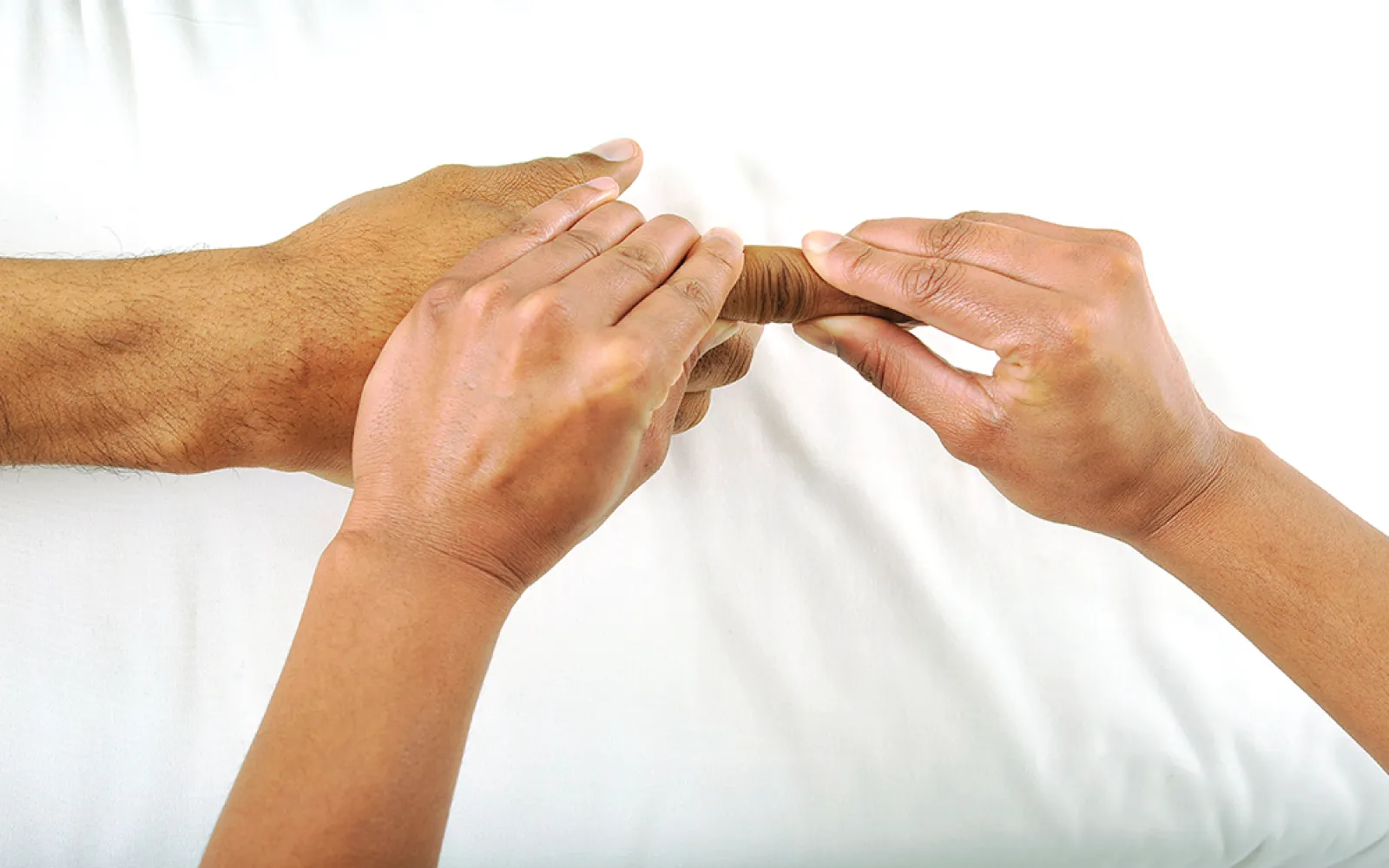
Use joint approximation in this exercise to explore the ovoid articulating surfaces in the fingers and stimulate fluid circulation in the synovium and articular cartilage.
Caution: If practicing this technique on someone with arthritic joints, it is important to be very gentle. Avoid squeezing the joint itself or pulling on the joint, which could exacerbate inflammation and pain.
Understanding how the pericardium relates to breathing can in turn help clients relax into their massage session.
Superficial fascia may not get the same attention as deep fascia, but it plays an extremely important role in the organization of tissues and the structure of the body.
Understanding tendons—their shapes, lengths, and organization—improves an MT’s touch vocabulary and facilitates a more skilled touch.
While the neck is a bridge, a pathway, the position of the neck and head can also indicate a multitude of other things happening beneath the surface.