


Fascia: The Pericardium-Diaphragm Connection
Understanding how the pericardium relates to breathing can in turn help clients relax into their massage session.
When your treatment plan calls for deep work, or when your client requests it, you want to feel confident in your ability to succeed. Bringing awareness to your postural alignment reduces your risk of injury and makes all the difference in applying force effectively.
Many therapists believe their lack of muscular strength prohibits them from effectively applying deep pressure. Often, however, the problem is not one of muscular strength, but rather weak positioning. If you are working from a place of misalignment, then attempting to deliver deep pressure could lead to joint weakness in the area of the body where your alignment is compromised. Image 1 shows a therapist applying pressure to both sides of a client’s back. Take a moment to identify the points of misalignment and weakness in this example.
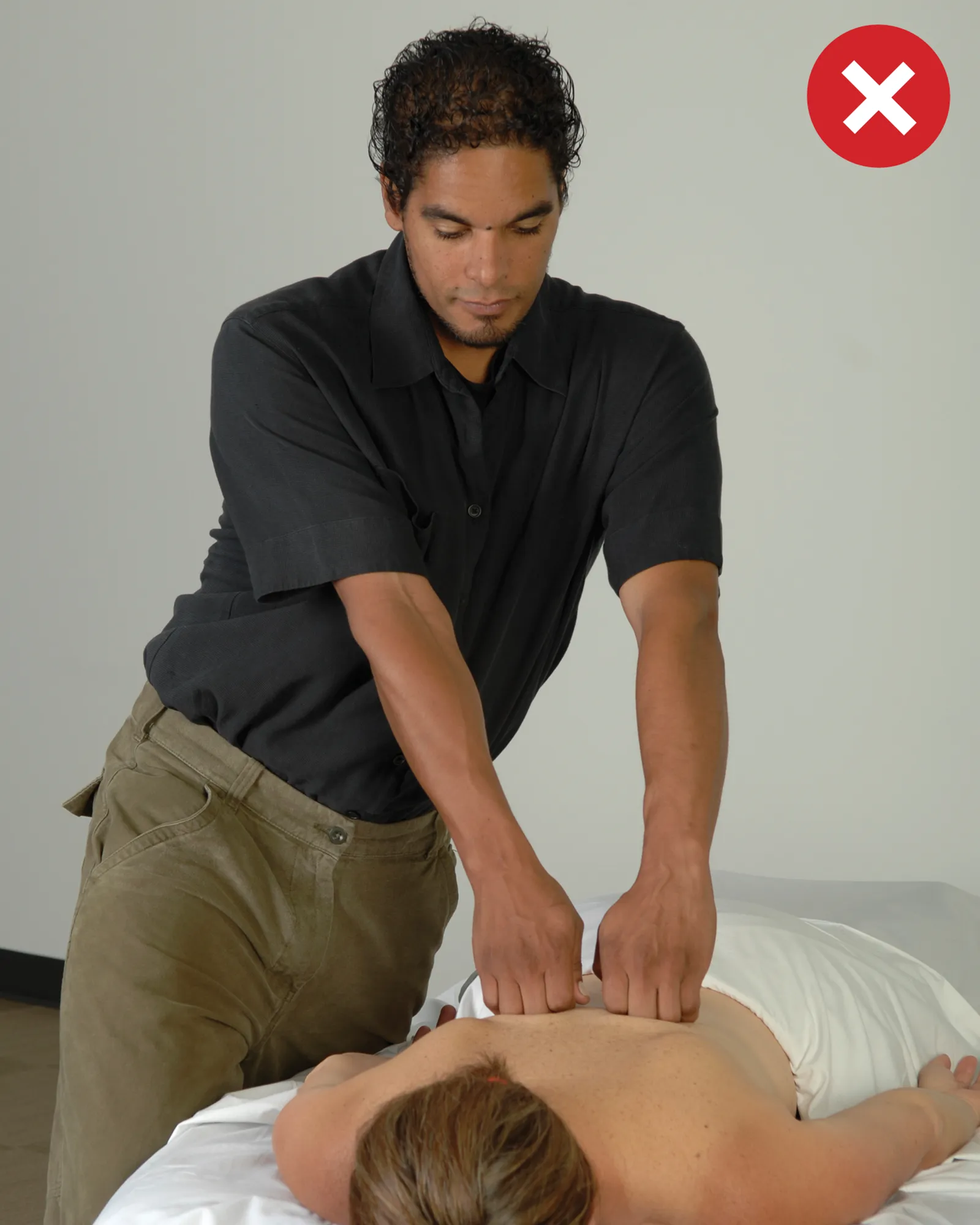
As you can see, the therapist’s choice to apply pressure bilaterally while working at the side of the table forces him into an asymmetrical position. From such a position, the therapist must lean into the table, misaligning his upper and lower body, especially his trunk. Consequently, he cannot work with gravity or generate force from his center of weight; rather, he must use his shoulders and back with extreme effort. Applying dynamic, gliding pressure from this stance is almost impossible because the therapist has “fixed” himself to the table. Furthermore, he is required to use the table and client for support, as his self-support is nonexistent. Is this a posture that you have used in the past? If so, consider the fact that the risk of low-back disorders is greater among therapists who work with an asymmetric trunk position, as seen in this example.
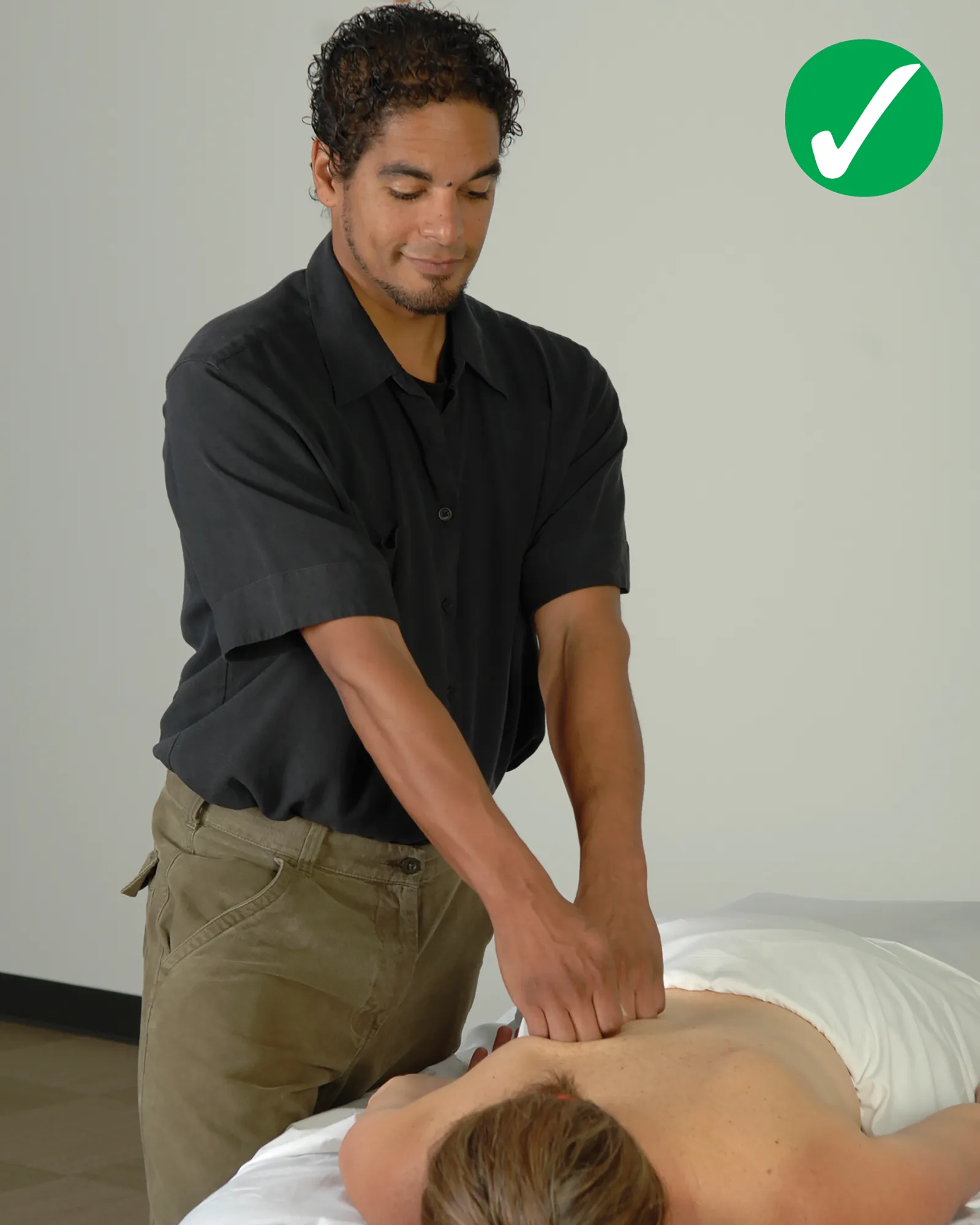
A better approach for applying deep pressure to the client’s back is to work with one side at a time; that is, unilaterally. This allows you to center your body over your work so that your alignment is symmetrical. Working in this way transfers force effectively by taking advantage of gravity and your center of weight. In Image 2, you can see how the therapist has changed his alignment so that he can deliver both static (direct) and dynamic deep pressure effectively. He can use gravity to his advantage, using his feet and legs to transfer the force from his center of gravity to his area of focus. His hip joints, knees, and ankles are aligned so that his movements can be fluid, and he is self-supported. Now, there is no question regarding strength—his body is in a position of postural strength, allowing him to work effectively, yet effortlessly.
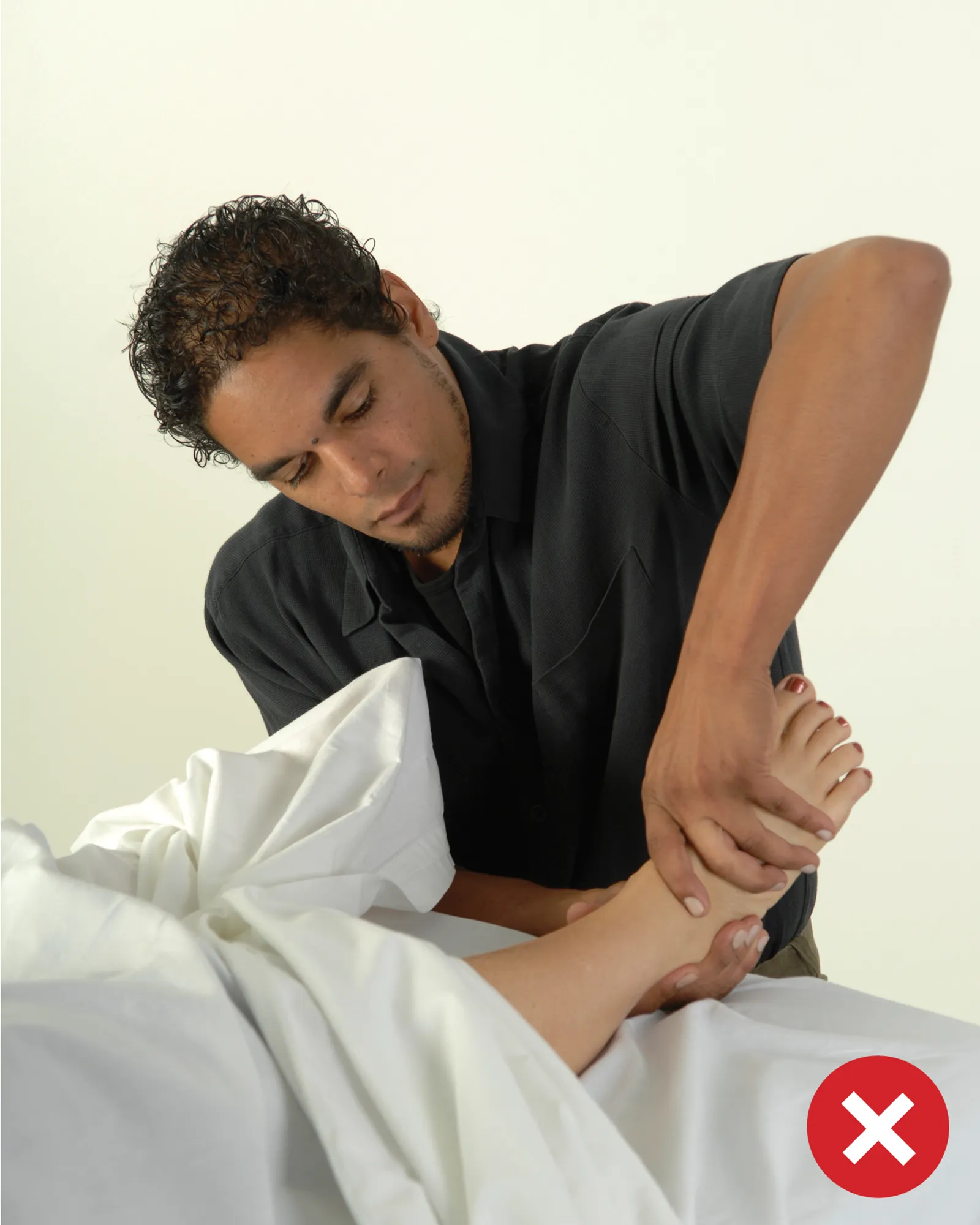
Proper postural alignment is also crucial when working from a seated position. Image 3 shows the therapist applying deep pressure while using a misaligned shoulder, arm, and hand position. Again, notice where the therapist’s areas of weakness are. We can see that his neck, shoulders, arms, and hands are not working from positions of strength, but rather from a weak asymmetrical posture. Furthermore, because of his awkward position, his entire upper body must overcompensate for his lack of alignment. Have you found yourself working from a similar position?
This kind of misaligned sitting posture is commonly seen when applying deep pressure on a table that is set too high. In this case, the distance between the therapist and client is too short. Not having enough distance between yourself and your client compromises your alignment, forcing you to work from a position of weakness. The muscles of the shoulder and upper back are recruited to generate the pressure needed.
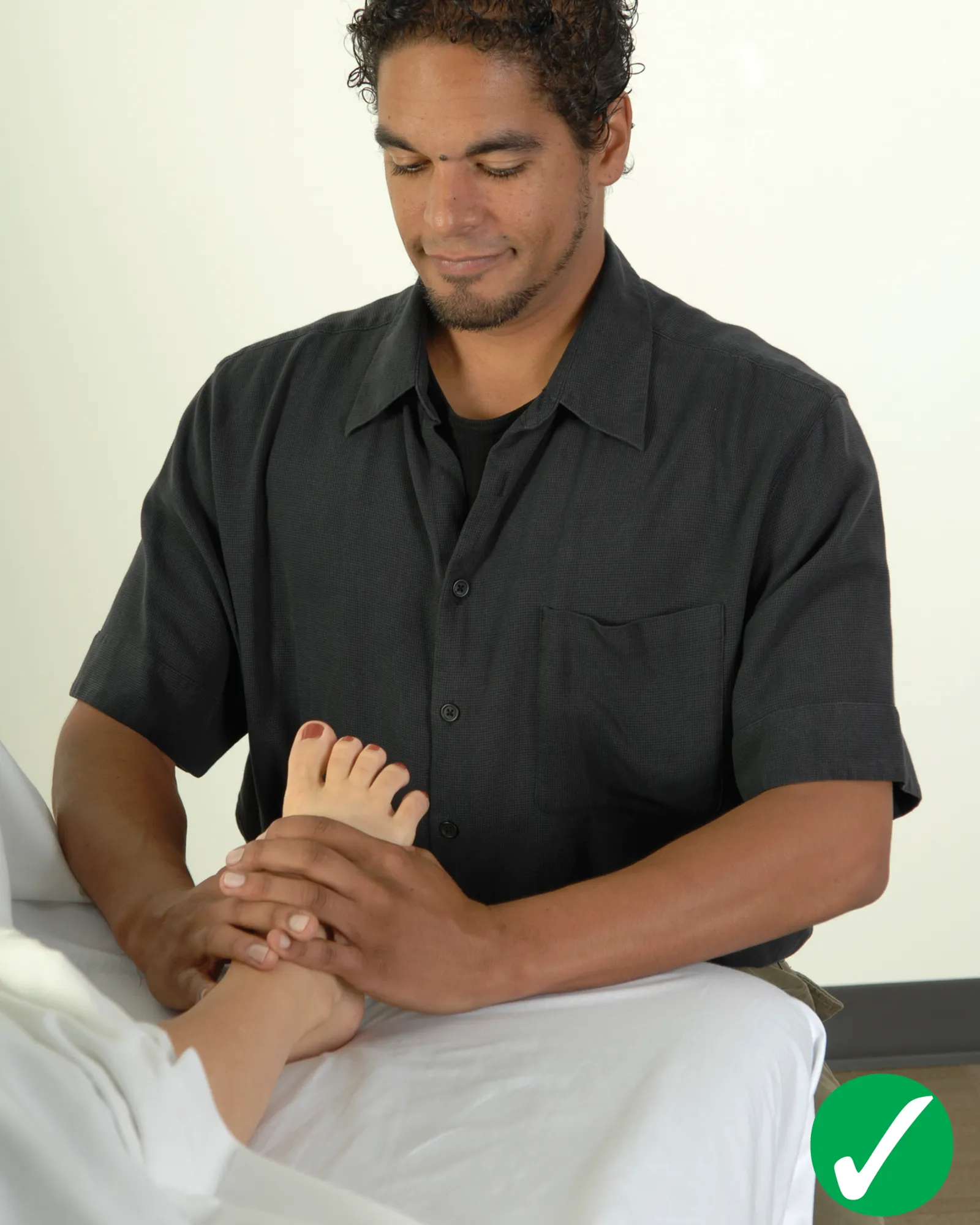
If you find yourself in a sitting position where you must raise your shoulder and/or elbow asymmetrically to apply deep pressure, chances are you need to adjust your table height. If you do not have an electric lift table and know before a session that you will be applying deep pressure, set your table appropriately. This means a height from which you can position yourself to apply force with proper alignment. In Image 4, the therapist is now working from a position of strength. His shoulders, arms, and hands are working symmetrically, allowing his upper body to stay in a neutral and comfortable position.
Understanding how the pericardium relates to breathing can in turn help clients relax into their massage session.
Superficial fascia may not get the same attention as deep fascia, but it plays an extremely important role in the organization of tissues and the structure of the body.
Understanding tendons—their shapes, lengths, and organization—improves an MT’s touch vocabulary and facilitates a more skilled touch.
While the neck is a bridge, a pathway, the position of the neck and head can also indicate a multitude of other things happening beneath the surface.