
Fascia: The Pericardium-Diaphragm Connection
Understanding how the pericardium relates to breathing can in turn help clients relax into their massage session.
Massage therapy emphasizes the power and practice of touch. Most of what we do involves skin-to-skin contact. In that simplicity, we interact with our clients’ deepest complexity. From moment to moment, their bodies give us palpable feedback. If we listen and respond well, the results of a massage can be extraordinary. Dermoneuromodulation is one way practitioners are making that happen.
Dermoneuromodulation (DNM) is a gentle method of interacting with clients to help them resolve pain, regain function, and feel better. It was developed by Diane Jacobs, a Canadian physiotherapist specializing in pain science and the treatment of painful conditions. During her 40 years of practice, Jacobs became interested in Ronald Melzack, who developed the original Gate Control theory of pain along with Patrick Wall, and who later developed the NeuroMatrix model of pain.
In 2007, Jacobs conducted a cadaver study that demonstrated how peripheral cutaneous nerves divide into rami, which spread outward into the underside of skin. This inspired her to develop a new conceptual approach to manual therapy for clients in pain: dermo (skin); neuro (nervous system); modulation (change); which equals dermoneuromodulation, or touching the skin to interact with the nervous system and effect change.
DNM is a pain-free technique that places little physical demand on the client or the therapist. In practice, it may be blended into relaxation massages and therapeutic sessions, or combined with specific modalities such as Active Isolated Stretching, myofascial release, orthopedic massage, strain-counterstrain technique, and others. The basic hands-on skills of DNM are similar to many forms of massage, but the underlying concepts are rooted in modern neuroscience.
For massage therapists, learning DNM is a paradigm change that emphasizes clinical reasoning based on neuroscience.
It is important to understand that pain and tight muscles are not evils to be banished, but are instead protective responses produced by the nervous system. Of these protective responses, the motor aspects are flinching and muscle tightness (“bracing”), and the sensory experience is pain or other discomfort. These may persist long after any injury or danger has passed. If we make the nervous system happy, however, it may abandon these protective responses.
Anatomically, the nervous system includes central components (brain, nerve roots, and spinal cord) and peripheral components (deep and cutaneous nerves). During embryological development, the brain, nerves, and skin all arise from the same ectodermic tissue. It might be said that the skin is the exposed portion of the brain; if the brain is a computer, then the skin is a keyboard.
As nerves proceed from the spinal cord to the skin, they pass through many tissue layers. These layers move and shift, and may be negatively impacted by both internal and external stimuli. The nerves pass through small, contiguous gaps, or tunnels, through these tissue layers. The points where nerves pass from one layer into another are subject to shearing forces that may impinge nerves and cause localized ischemia and nociception, which may lead to pain, increased muscle tension, and other protective responses. When this occurs, it is referred to as nerve compression syndrome, or tunnel syndrome. Myofascial pain can often more correctly be attributed to tunnel syndromes.
Moving nerves (neurodynamics) helps restore nerve health and well-being. Since tunnel syndromes often involve cutaneous nerves (found throughout the skin and subcutis), it would seem that moving nerves attached to the skin could resolve most musculoskeletal pain, i.e., by moving skin into areas where the nerves are embedded. This is done without pressure sufficient to damage or deform the underlying muscle, fascia, or other soft tissues. DNM uses body positioning and/or skin stretching to resolve discomfort from tunnel syndromes, and DNM practitioners may also use some form of athletic taping to assist clients between treatment sessions.
The skin is full of innervation, much of it right at the skin’s surface. Hilton law states: “The nerve supplying a joint supplies also the muscles that move the joint and the skin covering the articular insertion of those muscles.”1 Noting this, it would make sense then that whatever we do to skin affects motor output indirectly (reflexively).
Mechanoreceptors adapt at different speeds and in different ways. Fast adaptors fire when they detect movement, then shut off until new movement stimulates them again, similar to a motion detector light. Slow adaptors remain turned on, transducing information and firing action potentials into the spinal cord the whole time a stimulus is operating, regardless of whether it moves or doesn’t, like a bathroom scale.
When we stretch the skin, we shift multiple tissue layers and the nerves embedded within them, and nerve compression may be relieved. Slow-firing mechanoreceptors, such as Ruffini corpuscles, respond to the sustained pressure of slow skin stretching. Their input to the brain may trigger a positive response: descending modulation of pain and excess muscular contraction.
Skin can be stretched in a variety of ways to provide relief. Here are some examples of DNM applied to resolving pain and tightness in common problem areas.
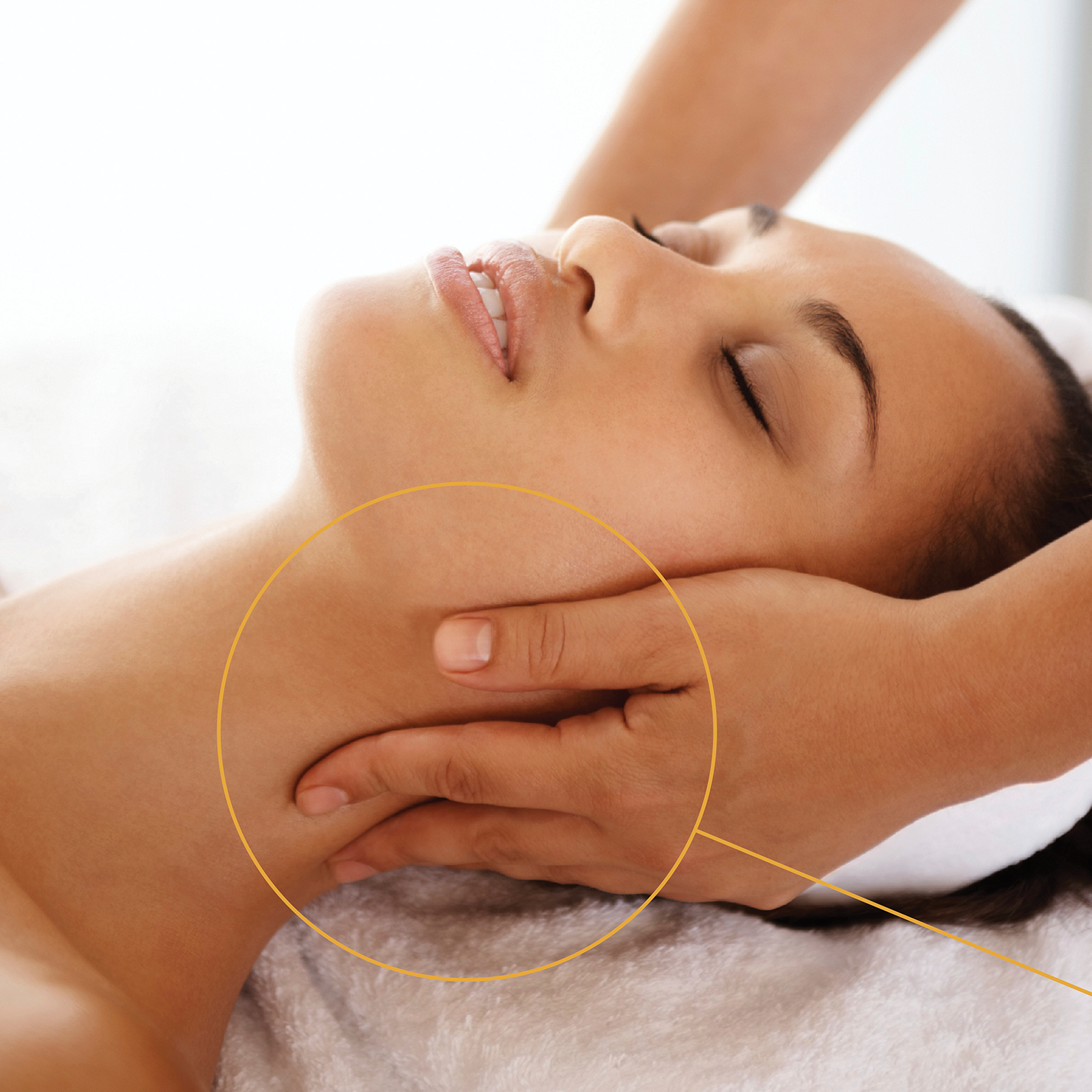
The anterior neck area is frequently involved in varied conditions such as headaches, jaw pain, torticollis, vertigo, whiplash, and many more. This example focuses on providing some relief to the superficial cervical plexus, a complex network of cutaneous nerves that determine whether the muscles will be relaxed or tight, and whether the area feels good, painful, or otherwise.
The posterior pelvis/gluteal area is frequently involved in gluteal pain, impaired gait, low-back pain, sciatica, and other conditions. This example focuses on providing relief to the cluneal nerves—long, lateral branches of dorsal rami extending downward from the lumbar spine that spread over the iliac crests and wrap around the buttocks down to the greater trochanter.
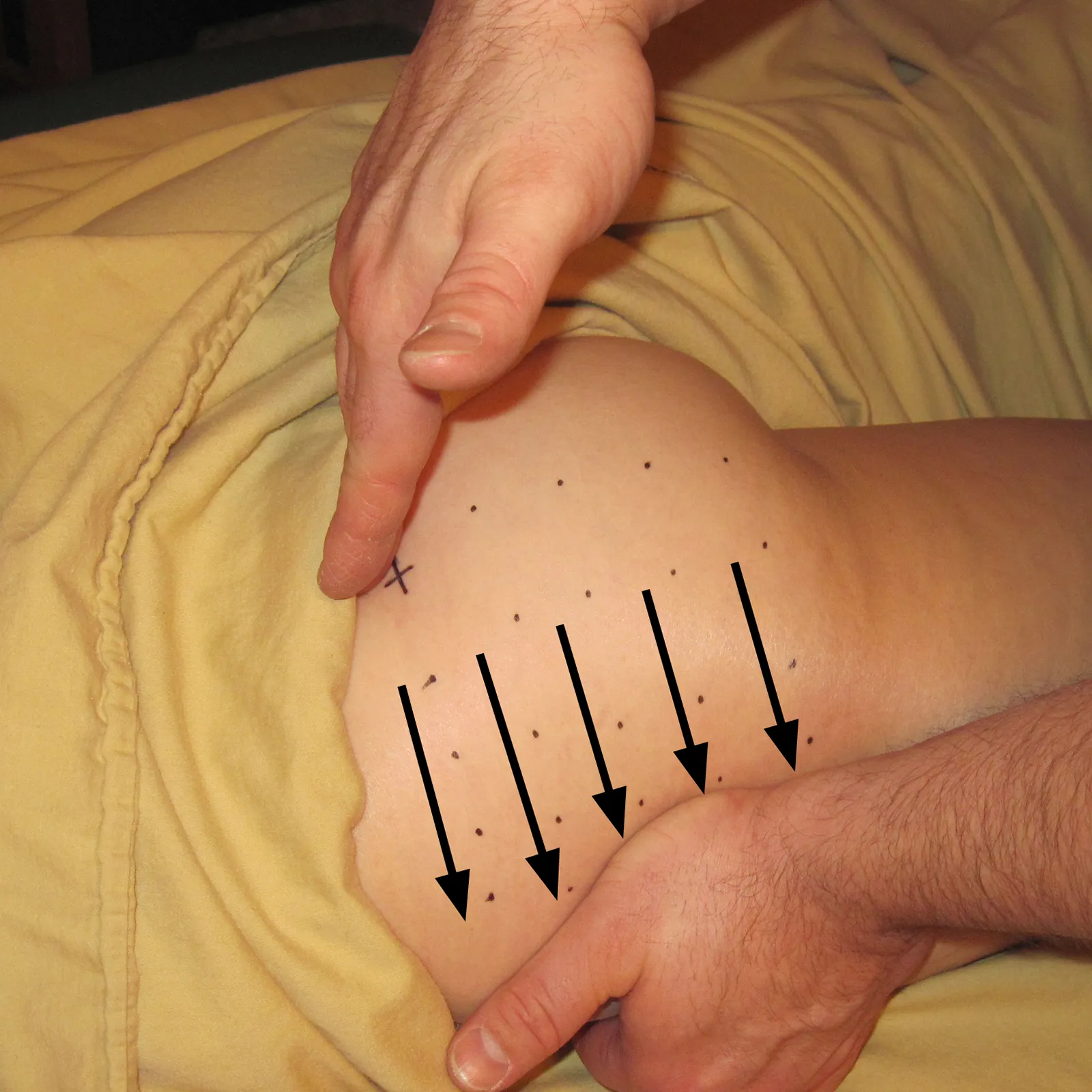
The anterior pelvis/iliopsoas area is often involved in groin pain, back pain, quadriceps tightness, knee pain, and other issues. This complex area is home to the superficial and cutaneous inguinal nerves, including the lateral cutaneous nerve of the thigh, branches of the femoral nerve, the genito-femoral nerve, and the ilioinguinal nerve. These wrap around the sides and front of the lower abdomen and anterior pelvis, around the thigh, and into the pelvic floor. This example focuses on providing relief to the femoral nerve.
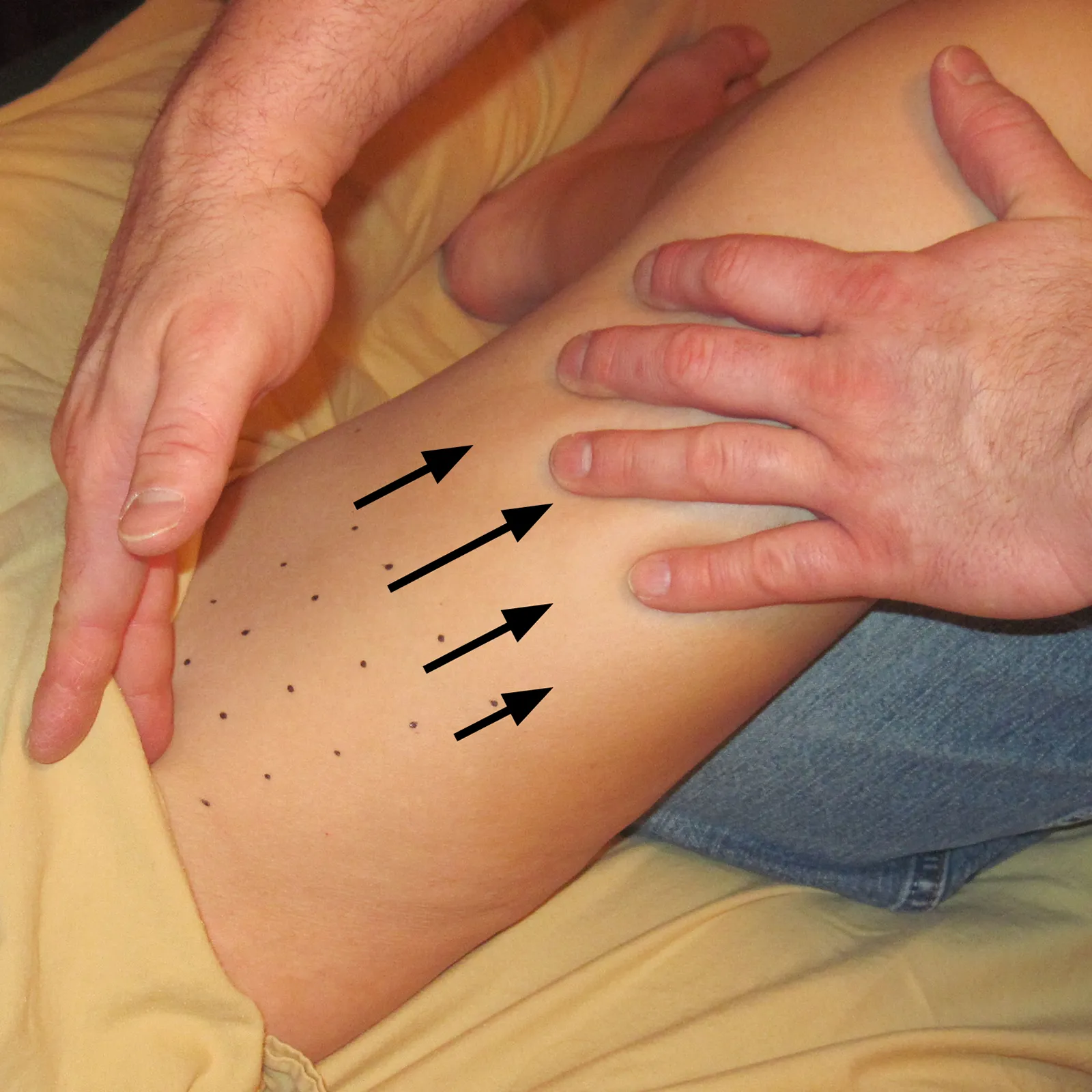
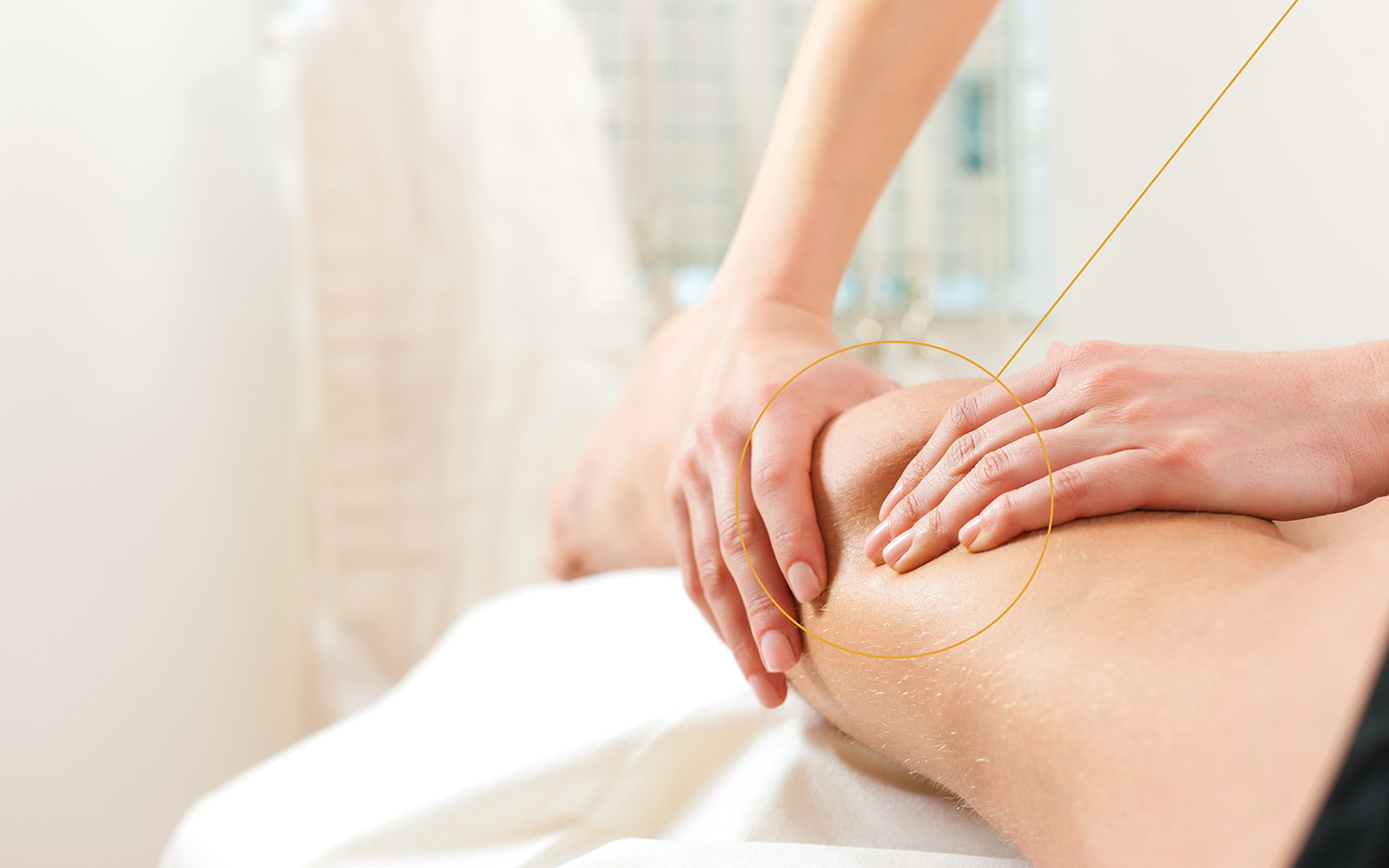
There are many situations that may arise with a client’s arms and legs. This example is a simple approach that can be tried for various types of arm and leg pain, not including fresh injuries.
Muscles cramp for many different reasons, but muscles cannot cramp if the nervous system does not initiate the contraction. Because the same nerves that innervate muscles usually have cutaneous branches further away, or cutaneous branches from some other nerve directly above and more superficially, DNM may be used to address muscle cramps. The brain can pinpoint the location and help correct the situation. Depending on the underlying cause of the cramps, DNM may or may not result in lasting relief; in practice it seems to provide a means of reducing duration and severity of common muscle spasms that are not caused by recent athletic activity (e.g., immediately after a marathon). This example presents a simple method of addressing muscle spasms in the legs.
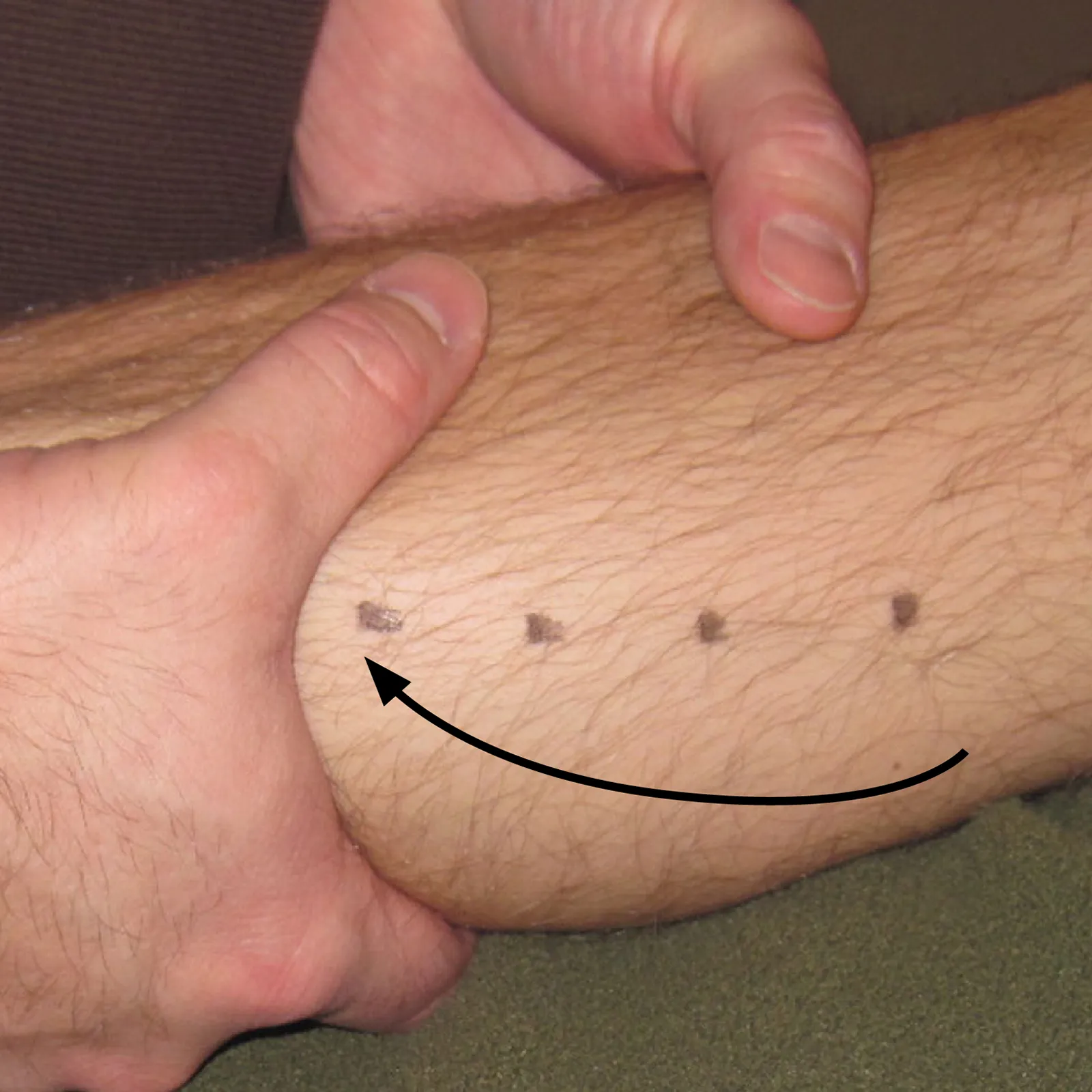
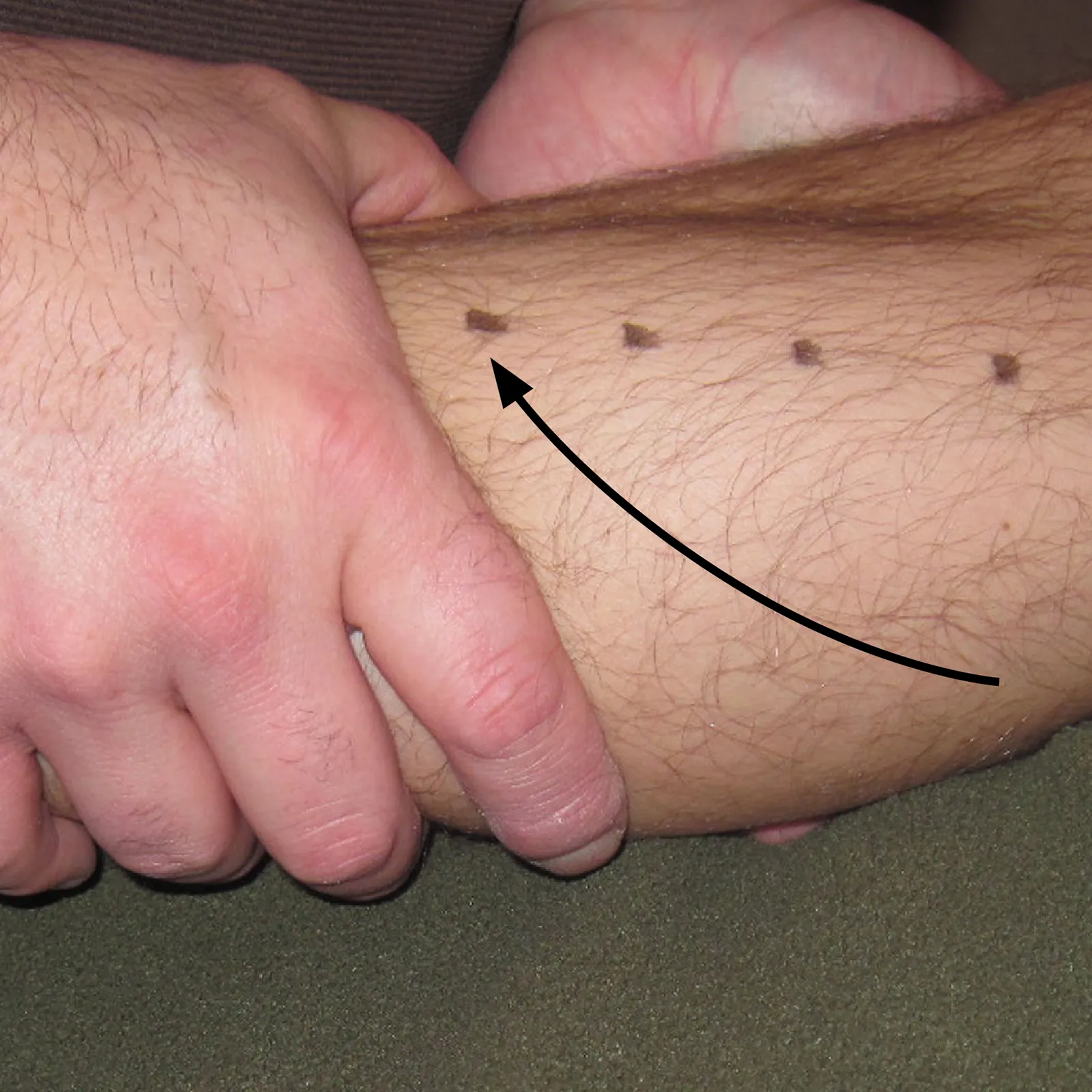
The examples provided here are easily incorporated into nearly any massage. Many more DNM applications exist for addressing pain and tension throughout the whole body. Some are performed with clients in a side-lying position; some incorporate bolsters, wedges, or more complex client positioning. A DNM practitioner may also develop novel applications to fit the needs of the moment, or use therapy tape to increase functional and pain-relieving benefits.
In my practice, DNM has revolutionized the way I work with clients suffering from chronic and/or complex pain problems, sports performance concerns, and chronic tension patterns. Educating my pain clients helps them manage their symptoms. Educating athletes about the basic neurology of their performance concerns is an important step toward improvement. Educating my chronic-tension clients about how their central nervous system may respond well to lighter, targeted work makes it easier for them to understand that it really is possible to experience lasting change and long-term relief.
When clients are new to DNM, I talk to them about the technique during the client intake. When I use DNM during a session (sometimes it is the only method used), clients usually remain aware and responsive, though many mention feeling a deep sense of relaxation. I may have clients verbally confirm the presence of tender points as I palpate, then give feedback once I have begun to stretch their skin. Most are surprised by how quickly pain and tension dissipate. Athletes are pleased when their flexibility and strength improve. Clients for whom traditional massage is contraindicated are happy to find a method that is safe and effective for them.
However, DNM is not a magic method that miraculously works on everyone. For example, “wind-up pain” (in which spinal nerve roots become increasingly sensitive to stimuli) may contraindicate DNM (and most other methods of massage or manual therapies). DNM is not very effective for fibromyalgia, nor does it significantly reduce the pain of acute new injuries requiring medical treatment, such as tears or fractures. DNM may reduce the pain associated with conditions like arthritis and tendinitis, but those clients may also need other forms of therapy to achieve maximum results.
DNM is a great fit for massage therapists who wish to improve their understanding of pain and tension patterns and conditions. Spa-oriented massage therapists may find that DNM is a profoundly relaxing addition to their skill set, particularly for challenging clients. For those who specialize in orthopedic, sports, or other massage niche markets, DNM provides a powerful means of leveraging knowledge into real results, even with stubborn cases that previously failed to respond.
1. Anne E. Jacobs et al., eds., Stedman’s Medical Dictionary for the Health Professions and Nursing, 5th ed. (Baltimore: Lippincott Williams & Wilkins, 2005), 673.
Understanding how the pericardium relates to breathing can in turn help clients relax into their massage session.
Superficial fascia may not get the same attention as deep fascia, but it plays an extremely important role in the organization of tissues and the structure of the body.
Understanding tendons—their shapes, lengths, and organization—improves an MT’s touch vocabulary and facilitates a more skilled touch.
While the neck is a bridge, a pathway, the position of the neck and head can also indicate a multitude of other things happening beneath the surface.