

Pricing Is an Identity Issue, Not a Math Issue
By
Elicia Crook
Give yourself the credit you deserve when considering a price increase.
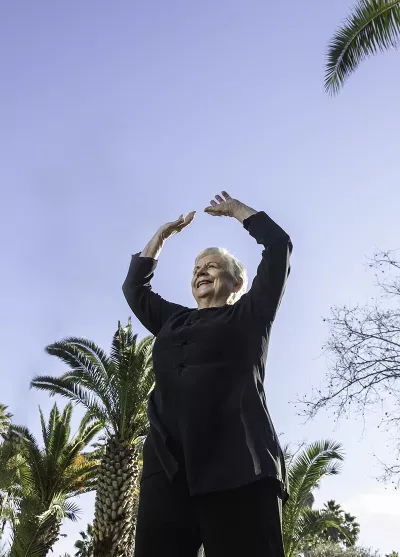
Massage & Bodywork: How long have you been practicing and how did you get started?
Lee Hodges: I started in 1991 after raising a family. Massage discovered me, not the other way around. I began reentry to the work world as an esthetician at my sister's spa in Modesto (California). She said, "We gotta get them in and out, but you're just taking way too long with the massage part." It's because I really did like finding the acupressure points. I read a book and started doing the points. People said they loved it. It encouraged me to do more.
M&B: What modalities do you practice?
LH: I work with neuromuscular reeducation, but I always close with acupressure shoulder release or Ida Rolf's sacrum sequence, depending on where the pain is. This work is not a go-to-sleep massage. It has expanded and grown from Swedish massage, and people come to me when they're in pain. Low-back pain, shoulder pain, frozen shoulder . . . It takes time to do this work. These are stretches, and we work together as a team on the table to get the muscles retrained. By golly, it works.
Give yourself the credit you deserve when considering a price increase.
Selling products can help support client outcomes even after they leave your treatment room and can provide a profit boost for your practice.
Through ABMP, members now have access to a streamlined, modern solution designed to help clients find and choose you more easily.
Receiving bodywork provides an important reminder of what to do (and what not to do) in your practice.