

Fascia: The Pericardium-Diaphragm Connection
Understanding how the pericardium relates to breathing can in turn help clients relax into their massage session.
The trapezius is a large, powerful muscle that covers a kite-shaped area, extending from the base of the skull downward over the thoracic spine and laterally to the clavicle and spine of the scapula. The trapezius can be divided into three distinct sections: upper, middle, and lower.
The upper portion begins at the occiput and nuchal ligament, then extends laterally and anteriorly to the spine of the scapula, acromion process, and clavicle, wrapping laterally around the neck from head to shoulder like a cape. The muscle is thickest where the fibers converge between the spine of the scapula and clavicle, as it curves around the shoulder girdle. When activated, the upper fibers are responsible for shrugging motions or elevation of the scapula, as well as extension, lateral flexion, and rotation of the head and neck to the opposite side.
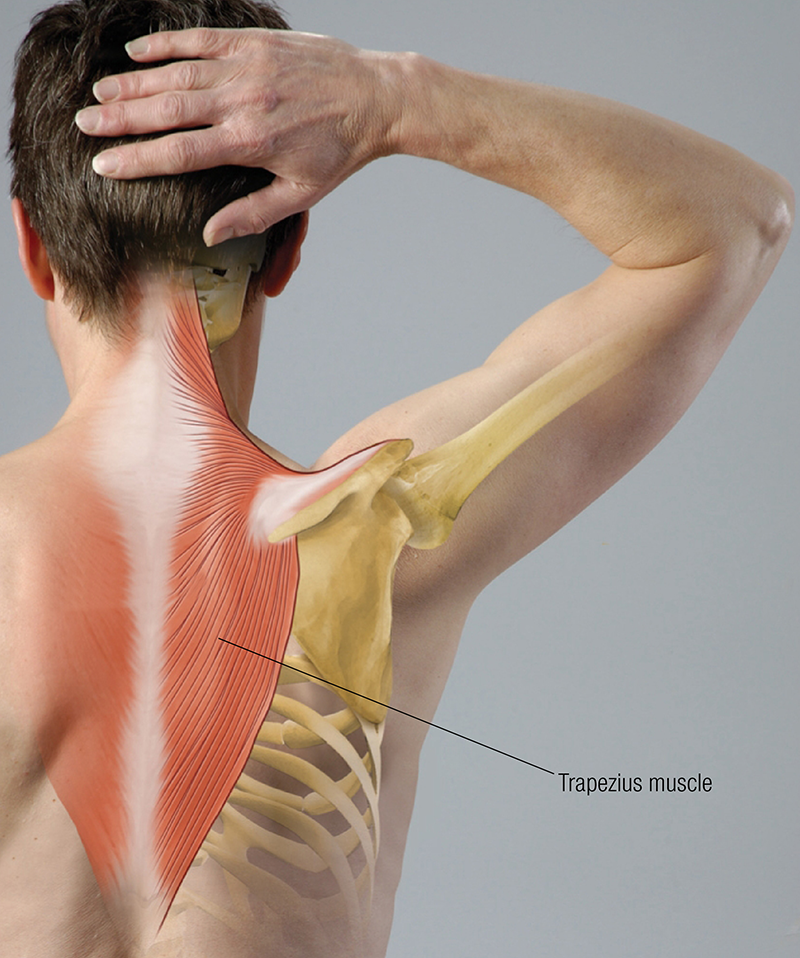
The middle portion lies horizontally, extending from the spinous processes of the seventh cervical and upper thoracic vertebrae to the spine of the scapula. This portion works in tandem with the rhomboids to pull the scapula toward the midline or retract the scapula. Both the middle and upper portions of the trapezius serve as important postural stabilizers of the head, neck, and shoulder girdle.
The fibers of the lower portion of the trapezius extend from the spinous processes of the lower thoracic vertebrae upward and laterally to the spine of the scapula. This orientation allows this portion to depress the scapula. The upper and lower fibers work together to upwardly rotate the scapula.
When all portions of the trapezius work together, the scapula is fixed on the rib cage, allowing strong support during weight-bearing and pushing activities. When the upper extremity is not fixed, the different fibers of the trapezius work with other synergist muscles to accomplish specific movements of the scapula, such as elevation, retraction, or depression. The trapezius's function in upward rotation of the scapula helps optimally position the shoulder girdle during overhead motions, thereby enhancing range of motion in the glenohumeral joint.
Despite the ability of the trapezius fibers to work together as a unit, the lower fibers are often weak and underutilized and the upper fibers are often tight and overutilized for lifting, carrying, and pulling, as well as maintaining a forward-head posture. This contributes to the commonly encountered elevated shoulder postural deviation. Additionally, prolonged kyphotic posturing, such as occurs with driving and computer work, may lead to shortening of the scapular protractors (serratus anterior and pectoralis minor) and excessive lengthening and tension in the upper and middle portions of the trapezius. The scapula will appear protracted with palpable tension and possible trigger points will be noted in the upper trapezius and levator scapula, as well as the middle trapezius and rhomboid muscles. Lengthening of the shortened scapular protractors is essential to relieving pain and dysfunction in the associated elevating and retracting musculature.
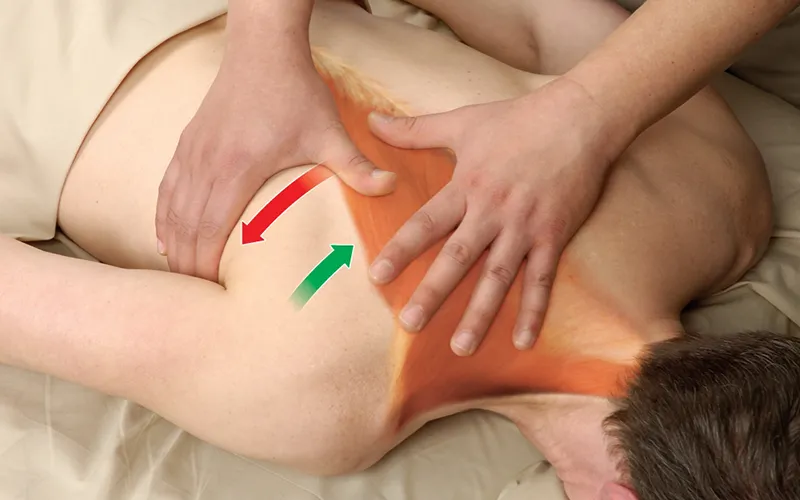
Positioning: client prone with arm at side.
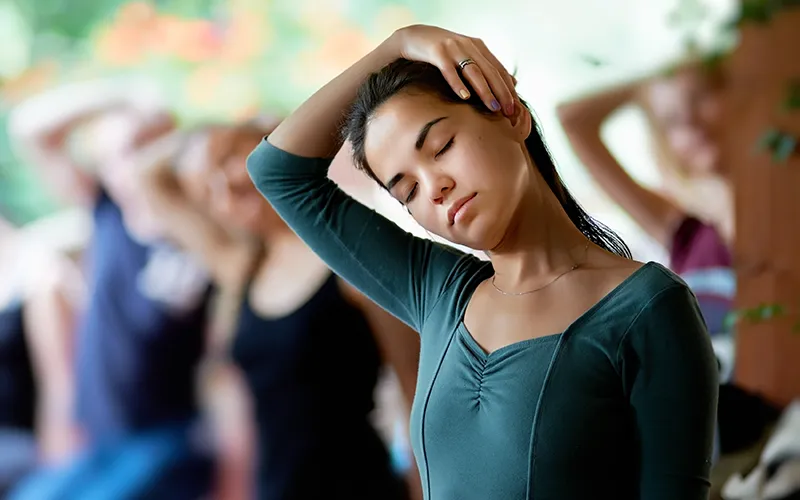
Editor's note: The Client Homework element in Functional Anatomy is intended as a take-home resource for clients experiencing issues with the profiled muscle. The stretches identified in Functional Anatomy should not be performed within massage sessions or progressed by massage therapists, in order to comply with state laws and maintain scope of practice.
Understanding how the pericardium relates to breathing can in turn help clients relax into their massage session.
Superficial fascia may not get the same attention as deep fascia, but it plays an extremely important role in the organization of tissues and the structure of the body.
Understanding tendons—their shapes, lengths, and organization—improves an MT’s touch vocabulary and facilitates a more skilled touch.
While the neck is a bridge, a pathway, the position of the neck and head can also indicate a multitude of other things happening beneath the surface.