



Superior Outcomes
Skip the Routines and Build Responsive, Results-Oriented Treatment Plans
Two clients walk in to your practice on the same day, both with a chief complaint of low-back pain. Randy is a 30-year-old weekend warrior who overdid it dead-lifting at the gym two days ago. His pain is sharp and localized; he is anxious to get back to training. Melinda is a 55-year-old office worker with chronic, aching low-back pain, high stress, poor sleep, and a belief that her back is degenerating. Should we give each the same treatment?

As practicing therapists, we’ve all felt the pull of the routine. It’s tempting to fall into a familiar script: the “60-minute low-back pain” routine, the “go-to” shoulder protocol. We see these as general patterns, but this is not clinical reasoning. When we apply a one-size-fits-all approach to diverse clinical presentations, we are, at best, inefficient. At worst, we can miss critical warning signs or even exacerbate our clients’ conditions.
A well-structured treatment plan is the key to achieving successful and lasting outcomes. And they should be adaptive—not static. Treatment plans are dynamic, fluid hypotheses—an educated “best guess”—that inform everything about our treatment. Let’s discuss the components of developing a treatment plan that transition us from routine to reasoning, resulting in superior outcomes.
The Foundation: Assessment as the Compass
You can’t plan a journey without knowing your starting point. In the massage profession, the most common and practical framework for this process is the SOAP note. This structure isn’t just a documentation chore; it’s a legal record of our work and a powerful tool for organizing our clinical reasoning. An excellent treatment plan follows the evaluations of “S” (subjective), “O” (objective), and “A” (assessment or analysis), culminating in the “P” (plan). Let’s explore these more.
Subjective “S”: Client’s Story Is the Map
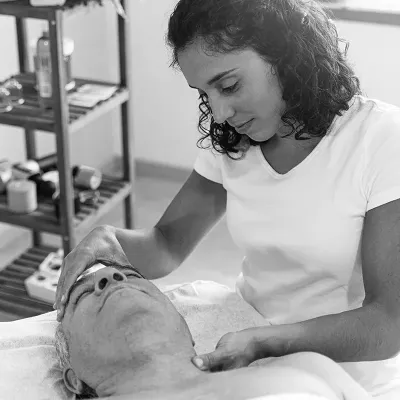
The Subjective assessment begins with the client intake form, which asks about relevant medical history, current known conditions, allergies or sensitivities, lifestyle, occupation, and treatment goals. But the client interview is the real workhorse here; it is where you will dig deeper into what is happening for the client. The client’s history of their pain and condition is mandatory for effective treatment. It is their personal, subjective experience. Gathering a great history is more of an art form than a science, yet it’s here that we often find the most crucial clues that will guide our treatment. The interview also builds rapport and trust with the client.
To truly understand the client’s pain, we must go beyond “Where does it hurt?” The OPPQRST system is an excellent tool for this:
-
Onset: When did it begin? (e.g., suddenly, two days ago, gradually over two years)
-
Provocative: What makes it worse? (e.g., sitting for more than 10 minutes)
-
Palliative: What makes it better? (e.g., walking, heat)
-
Quality: Can you describe it? (e.g., sharp, dull, achy, burning, shooting)
-
Radiation: Does the pain travel? (e.g., it shoots down
my leg) -
Site: Where, exactly, is it? (client points with a finger)
-
Timing: Is it constant, or does it come and go? Is it worse in the morning?
Finally, two of the most critical parts of the Subjective assessment are the client’s goals and beliefs.
-
Client’s goals (crucial!): We must ask, “What functional activity do you want to get back to?” One answer, “I want less pain,” is a symptom, not a goal. The goal is, “I want to be able to pick up my grandchild,” or “I want to sit through a movie without pain.” These functional, activity-based goals become the benchmark for our success.
-
Context and beliefs (yellow flags): We must also screen for psychosocial yellow flags. What do they believe is wrong? (e.g., “My doctor said I have the spine of an 80-year-old.”) Are they afraid to move? Is their stress level high? Are they sleeping poorly? These factors can be significant drivers of chronic pain.
Objective “O”: What We See and Feel
This aspect of assessment is what we find. There is a wide range of assessments that can be included in a treatment session, and to what extent the therapist might delve into them. Many prioritize palpation because it can be done mainly on the treatment table during a session. However, it is fairly common for massage therapists (and others) to skip or limit Objective assessment beyond palpation and a brief initial visual observation. For anyone treating pain and injuries, the more you know about the tissues involved, the better the outcome will be.
-
Visual assessment: What do we see? Observation involves paying attention to the movements and functions of our clients. We might observe their posture, gait, and mobility limitations. We look for any visible swelling, skin discoloration, or muscle asymmetry.
-
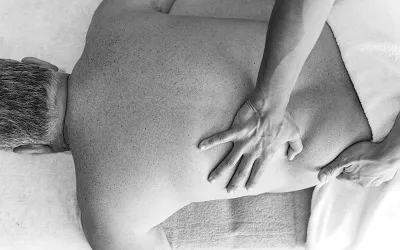
Palpation assessment: What do we feel? Our hands are essential assessment tools. We palpate for tissue texture differences, areas of muscle tension (hypertonicity) or spasm, differences in skin temperature (warmth can indicate inflammation), and the presence of swelling (edema) or trigger points.
-
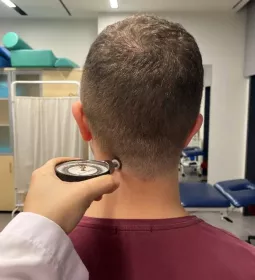
Orthopedic assessment: We also use specific physical testing to gain clues on what tissues are likely involved. These evaluations range from quick, passive tests to more involved active motion evaluations. They assess limitations in a client’s range of motion and identify pain associated with active or passive movement. Muscle resistance testing helps evaluate muscle strength and the type/levels of pain. Sometimes, special orthopedic screening tests help differentiate between involved tissues.
The Analysis “A”: The Clinical Hypothesis
This part of the SOAP note is the “So what?” section. This is where clinical reasoning lives. The Analysis is where you, the therapist, synthesize the “S” and the “O” to form a working hypothesis. This hypothesis—this educated guess—is what guides your treatment.
A lack of improvement is a clear indicator that the client requires more evaluation.
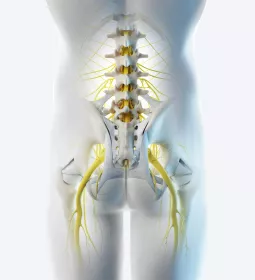
For example: “The client’s story (S) suggests pain on sitting and a desire to be able to drive for more than 20 minutes. My objective findings (O) show limited hip internal rotation, tenderness in the deep gluteal muscles, and some increased sensitivity with neural tension testing. My hypothesis (A) is that there may be nerve tissue (likely the sciatic nerve) involved with tightness in the piriformis muscle. It seems less likely that this is a primary lumbar disc issue. Therefore, my plan (P) will focus on . . .”
Without Analysis “A,” any plan that follows is merely a random guess, not an informed one.
Go/No-Go: Red Flags
The most essential part of any assessment is knowing when not to treat. A red flag is a sign or symptom that suggests a serious, underlying medical condition that is outside our scope of practice and requires immediate medical referral.
Key examples of red flags include:
-
Sudden, severe, or progressive neurological deficit (e.g., sudden foot drop, loss of coordination).
-
Saddle anesthesia (loss of sensation in the “saddle” area of the groin).
-
Bowel or bladder dysfunction (incontinence or retention).
-
Severe night pain that is unrelated to movement and does not change with position.
-
New-onset pain accompanied by an unexplained fever, chills, or night sweats.
-
Symptoms of deep vein thrombosis, such as unilateral (one-sided) swelling, heat, and redness in the calf, often with a palpable cord. This is a medical emergency.
Your action for a red flag is not to “wait and see.” It requires an immediate and appropriate referral. This action doesn’t reveal weakness; it demonstrates the highest level of professionalism and fosters essential trust with both the client and the broader medical community.
Plan Building “P”: An Art and Science
An effective treatment plan considers the “why,” “where,” “what,” “when,” and “how.” This process is essentially a decision tree that establishes the treatment plan for the client’s particular condition. Here, we consider the best techniques to use, their frequency and duration, and the intensity of their application. We also empower the client to practice self-care at home.
Part One: Technique
Clients in pain do not want to be part of an experiment. A trial-and-error treatment approach can prolong the client’s pain experience and even worsen the condition. Everything we have learned about the client’s problem during our initial evaluation and intake should be taken into consideration when selecting techniques. The techniques we will use must be directly linked to our condition hypothesis and treatment goals, and specify where the treatment will be applied.
Part Two: Frequency, Duration, and Intensity
Follow-up sessions are based on the healing timeline for the client’s condition and presentation, which I refer to as the “rehabilitation protocol.” A client in an acute phase of injury (within the first 72 hours) may benefit from shorter, more frequent sessions focused on managing inflammation and pain (e.g., 30 minutes, 2–3 times a week). A client with a chronic, persistent condition may see better results from longer, more spaced-out sessions focused on restoring mobility and addressing compensatory patterns (e.g., 60–75 minutes, once every 1–2 weeks).
We are always seeking the “therapeutic window”—an intensity that is great enough to create adaptation and change, but not so great that it causes a defensive reaction or a posttreatment flare-up.
Intensity will depend on what the tissues actually need to heal. Intensity is not just pressure. It’s the total physiological load we are introducing to the client’s system. We are always seeking the “therapeutic window”—an intensity that is great enough to create adaptation and change, but not so great that it causes a defensive reaction or a posttreatment flare-up. What the client can tolerate also comes into play.
We must be realistic. The Plan must be created in collaboration with the client to ensure it is both affordable and achievable for them.
Client Education and Home Care
The Plan must extend beyond the table. What happens in the hours and days between sessions is just as important as what happens during the session. This aspect of our care empowers the client to participate in their own healing. Home care should be simple, relevant, and tailored to the individual’s specific needs. Don’t overwhelm them with a list of 10 stretches. One or two key things are more likely to be accomplished. Excellent home care recommendations include: hot or cold therapies; one or two simple, specific stretches; postural awareness cues; simple self-massage; and stress-relieving techniques.
Steering the Ship: Measuring Progress
Measuring progress is how we know if our treatment approach had a positive outcome. Here, we check in with the client about their subjective experience of the treatment. We ask about the state of their pain and how they responded to treatment. We also determine if some of their physical therapeutic goals were met, such as increasing mobility, function, and ability to perform tasks. The client’s answers are the most important measure of success. Finally, we reassess objectively by performing a few tests.
Reassessment provides us with direct feedback for the second session and potentially future sessions. Positive results may indicate that the client’s functional goal is improving, suggesting we should stick to the plan. If the results are mixed, for example, there is a reprieve, but the pain returns with little improvement, then we might investigate other contributing factors or consider adjusting the plan. If the client experiences no results, we may need to reassess the problem or treatment, or determine that the condition requires more sessions to achieve improvement.
Troubleshooting: A Plan Goes Awry
Sometimes, despite our best efforts, our plans don’t work out. This result may not be a failure; it can be a critical part of the clinical reasoning process. Repeatedly doing sessions that do not work, however, is a sign that we need to do a more thorough assessment so the therapy can be better targeted. Mistaking one condition for another is also a possibility, as many conditions have similar symptoms, but their treatment can be very different. Doing too much, too soon for that client can also lead to poor outcomes.
In some cases, the treatment can have unintended consequences. For example, when the client calls you the next day and says, “I’m so sore, I can barely move.” This type of call is demoralizing, but it provides us with necessary information. It’s best to validate the client’s experience and assure them that future sessions will better meet their current needs.
Poor outcomes mean we must do something different in the treatment room. We must analyze what part of the treatment was most problematic—technique, intensity, duration, or an error in our assessment of the condition. Additionally, we should consider what aspects of the client’s situation might have contributed, such as poor sleep, engaging in problematic activities, or their particular sensitivities.
If you’ve done 3–4 sessions and the client’s functional goal is not improving, it’s time to revisit the “A” (Analysis). A lack of improvement is a clear indicator that the client requires more evaluation. Revisit the SOA part of your evaluation. Perhaps a different condition is at play. Or maybe a referral to another health-care professional is necessary.
In some cases, psychosocial factors are involved, such as negative thought processes. However, be cautious when drawing these conclusions, as they can be inherently disempowering for the client. It is best to re-evaluate the condition and treatment protocol first. But better sleep, less stress, and positive thinking are key to healing.
From Routine to Reasoning
A treatment plan is what elevates massage therapy from a service to a therapeutic profession. It is the tangible output of our clinical reasoning. By embracing a systematic approach—a thorough “S” and “O,” a thoughtful “A,” and a flexible, iterative “P”—we move beyond the “low-back pain routine” and into a responsive, client-centered, tailored process.
This dynamic, collaborative, and analytical process is the art of treatment planning. It is what defines a clinical professional, builds trust with our clients and medical colleagues, and ultimately leads to the most effective, efficient, and superior results.