Before YouTube tutorials and online CE courses, before the explosion of bodywork education we take for granted today, there were Art Riggs’s DVDs. His courses Deep Tissue Massage & Myofascial Release and Deep Tissue Massage: An Integrated Full-Body Approach were among the first comprehensive video courses available to bodyworkers. Schools worldwide built entire programs around them. Years later, practitioners still return to these seminal courses, finding new insights each time.
Learn More
Art Riggs’s landmark courses Deep Tissue Massage & Myofascial Release and Deep Tissue Massage: An Integrated Full Body Approach are available in a new NCBTMB-approved CE format online at advanced-trainings.com and are included in the Advanced-Trainings subscription.
Riggs’s book Deep Tissue Massage: A Visual Guide to Techniques (North Atlantic Books)
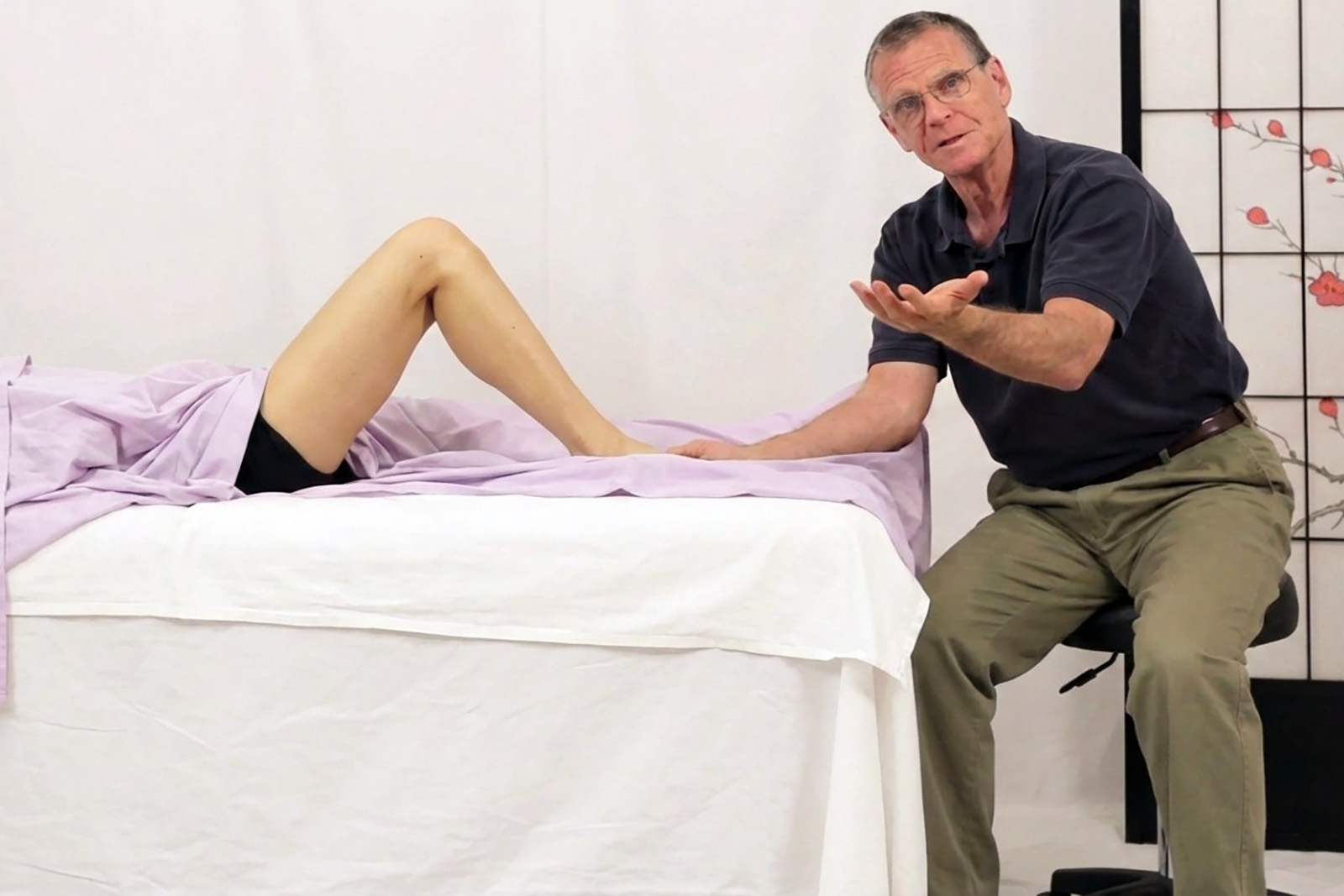
I recently sat down with Art to discuss what makes his work so enduring. At 80 years old and still seeing clients, he brings the same infectious enthusiasm he’s had for four decades, and a quality of presence that makes every conversation a learning experience (Image 1). This is our second conversation on The Thinking Practitioner podcast; we first spoke in Episode 32 about aging well and taking care of ourselves as practitioners, excerpted in The Somatic Edge column “Not Just Getting By.”
This time, we focused on Art’s landmark courses and the principles that make them timeless. This excerpt from a longer conversation (Episode 163 of The Thinking Practitioner) has been edited for clarity. Listen to our entire conversation at a-t.tv/ttp.
Til Luchau: When you first recorded these courses, there was nothing like them available. What gap were you trying to fill?
Art Riggs: To be honest, I don’t think I was trying to fill any gaps. Basically, people who had read my book or had it as their textbook in massage school would write and say some nice things, then ask, “Why don’t you do a video?” I saw one video on deep tissue massage that was only an hour—you can’t cover that subject in that amount of time. I thought, well, I could do one twice as long. Then I started rambling, and it was a lot longer.
I quite seriously would not have even attempted a video if I had seen Erik Dalton’s or yours first. I would have been too intimidated. But I’m glad I did.
Image 1. Art Riggs teaching in one of his landmark video courses. His emphasis on clear explanation alongside demonstration helped make complex techniques accessible to practitioners at every level. Image courtesy Art Riggs.
TL: I remember first seeing your DVDs when I was teaching at the Rolf Institute (now the Dr. Ida Rolf Institute). It was a mind-blower for me—here’s a Rolfer who has put all his structural-integration-inspired thoughts into a recording in an organized, clear, coherent way. You were an eye-opener for me, and I continue to learn things from you.
Refine Your Touch
AR: A quick story. When I took my first Rolf training, I met a fellow student the night before. I said, “Let me show you something with the neck”—my Rolfer used to get into the neck, and it was just amazing. So I got my hands on her, and within about five seconds, she pulled away and said, “Refine your touch!” It was probably the best advice I’d ever heard. That has been my goal for 40 years now. I’m still refining my touch.
TL: What do you mean by “deep tissue”? How does it differ from just pressing harder?
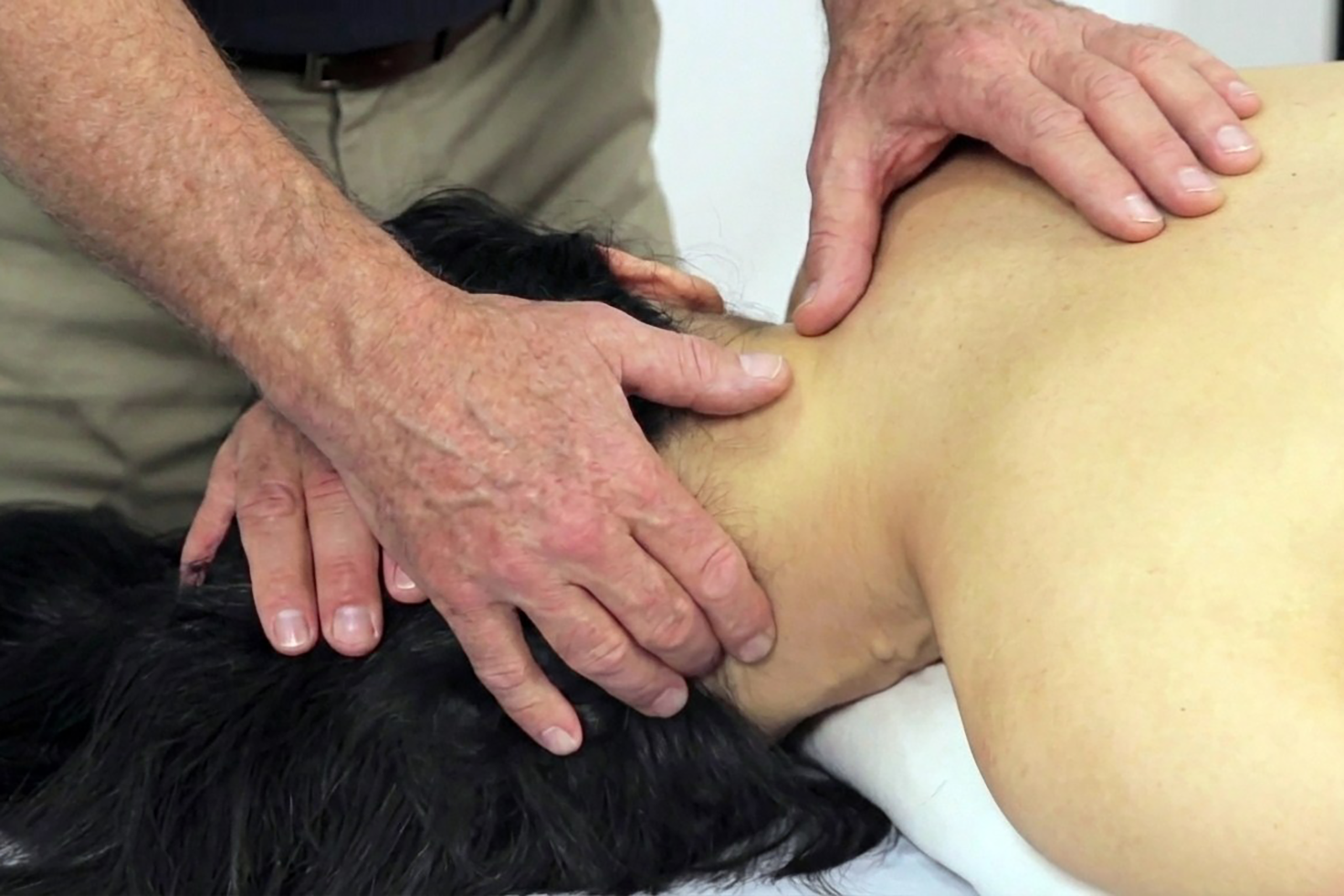
AR: I actually had physical therapists tell me their teacher said they weren’t “getting it” because she wasn’t seeing any bruises. That’s not what deep tissue is. The amount of pressure is one factor (Image 2) combined with the speed, the angle, the ability to have a conversation with the body—reading things, as opposed to doing cookie-cutter routines. It’s a conversation, not a lecture. It’s a back-and-forth.
The depth is one part of our vocabulary. How hard you press is maybe related to the volume of your speech when you’re talking. And how fast you work—people can assimilate work at different rates. If someone’s dealing with really held patterns, you have to slow down. Let people conceive of it.
Image 2. The refined touch Art describes: pressure combined with speed, angle, and the ability to have a conversation with the body. Image courtesy Art Riggs.
Timeless Principles
TL: Why do you think your work has remained so popular?
AR: I don’t know . . . I just got an email from somebody who bought the videos. He said he keeps them at his office and goes over them, because these things are not something you watch—you incorporate them.
TL: “Letting things happen rather than making things happen”—that might be one of the fundamental principles of so many paradigm shifts that came out of the era we cut our teeth in.
AR: One of the things I keep reminding myself is that I’m offering something for people to take. I’m not forcing it upon them.
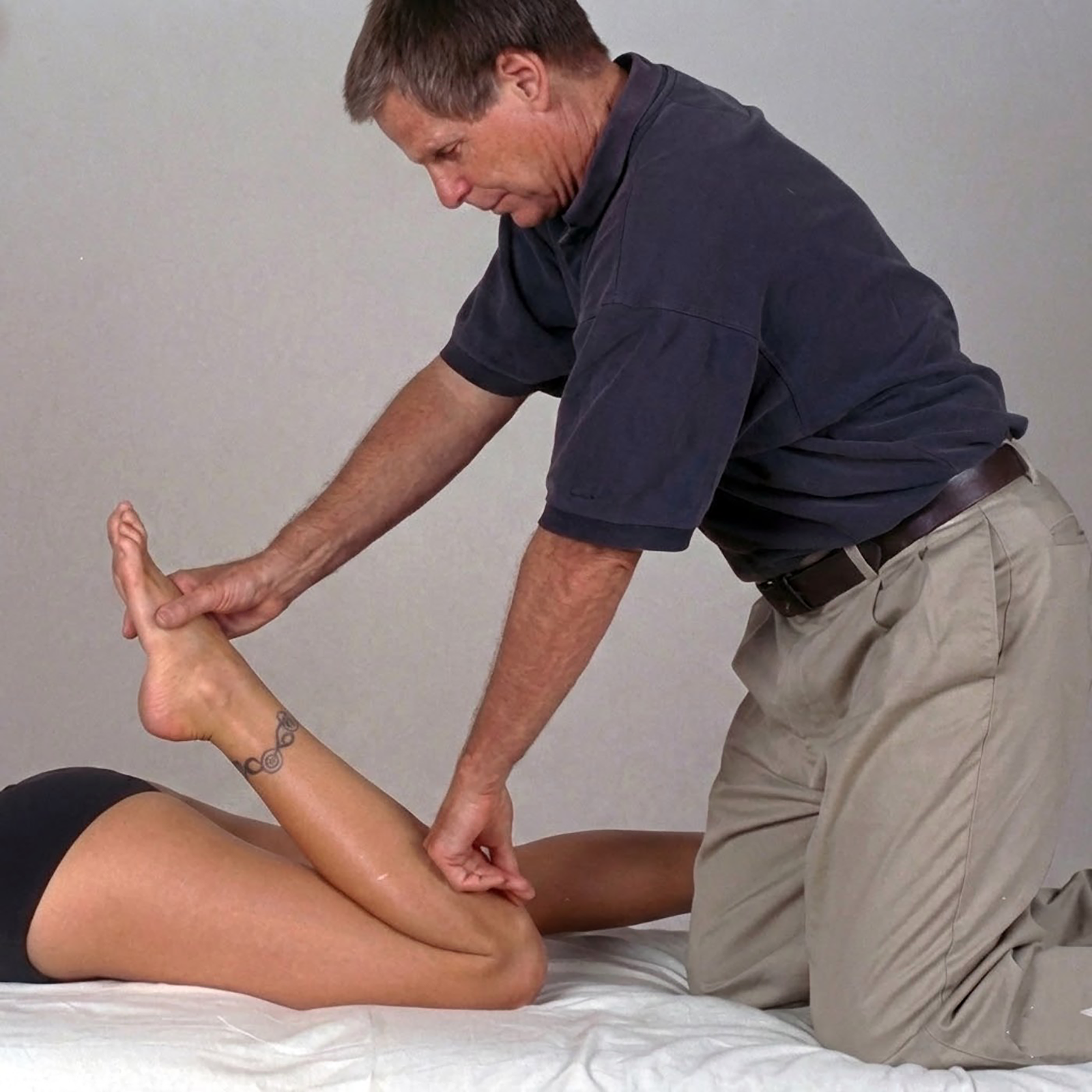
Movement is almost everything (Image 3). Getting clients off the table, having them walk, putting them in sidelying positions to work on lumbar extension and flexion. Be creative, try something. If you’re working with intention, some things aren’t going to work—and you can learn as much from what isn’t working as from what is. And make it fun. If it isn’t fun, decide why it isn’t fun.
Image 3. The use of active movement and working in nontraditional positions are hallmarks of Art’s approach that still differentiate his courses from standard massage training. Image courtesy Art Riggs.
TL: Words of wisdom. Thanks for being such an inspiration and a living example of finding the essential, letting go of the rest, and the love for the work itself.
AR: Like the movie Field of Dreams: build it, and they will come. Do the work that you love, and it may take a while, but that’s the way to do it.
To understand tissue-tension barriers, MTs must be constantly present and mindful. Too light and we will not become efficient at creating the healing change that is needed.


.png?language=en "SP_26_SomaticEdge_online_3_riggs 163 b riggs (4)")