There are only a few key hands-on skill sets in the world of massage, and one of them is stretching. For this reason, I believe that to be an effective clinical orthopedic manual therapist, one needs to be proficient at stretching. Most therapists know basic neck stretching, but stretching is not helpful unless it is directed toward the specific muscle in need of the stretch.
Stocksy.
Rubric to Stretch A Target Muscle
This article explains how to effectively stretch the client’s neck by beginning with a generic functional-group stretch for lateral flexors; then laying out a rubric for modifying it to focus on a desired target muscle within that group. To develop familiarity with this rubric, we will carry out this intellectual exercise for three of the muscles in that functional group. And for each of these muscles, we will apply a concept that is called the shortest rope.
Case-Study Scenario
Earn Free CE with ABMP
The course “Stretching the Neck” teaches you to effectively stretch the six major functional muscle groups in the neck.
Let’s take a typical scenario that occurs in the treatment room: A client presents looking for relief from pain and/or tightness in the back of their neck; and let’s say their discomfort is on the right side. We palpate the region and find a specific muscle in need of treatment; it might be the right upper trapezius, levator scapulae, splenius capitis, or any one of the other many muscles in the right posterior quadrant of the neck. After performing excellent soft-tissue massage therapy, we now look to build on that therapy with a stretch aimed at the target muscle. But how do we accomplish this?
One choice is to memorize all the stretch protocols for the many muscles of the neck and employ the one we need. But memorizing dozens of stretches for the neck, or even hundreds of stretches across the body, is a daunting task. Instead, we should think critically so we are empowered to figure out how to perform the specific stretch that is needed.
Generic Stretch for the Right Lateral Flexor Functional Group
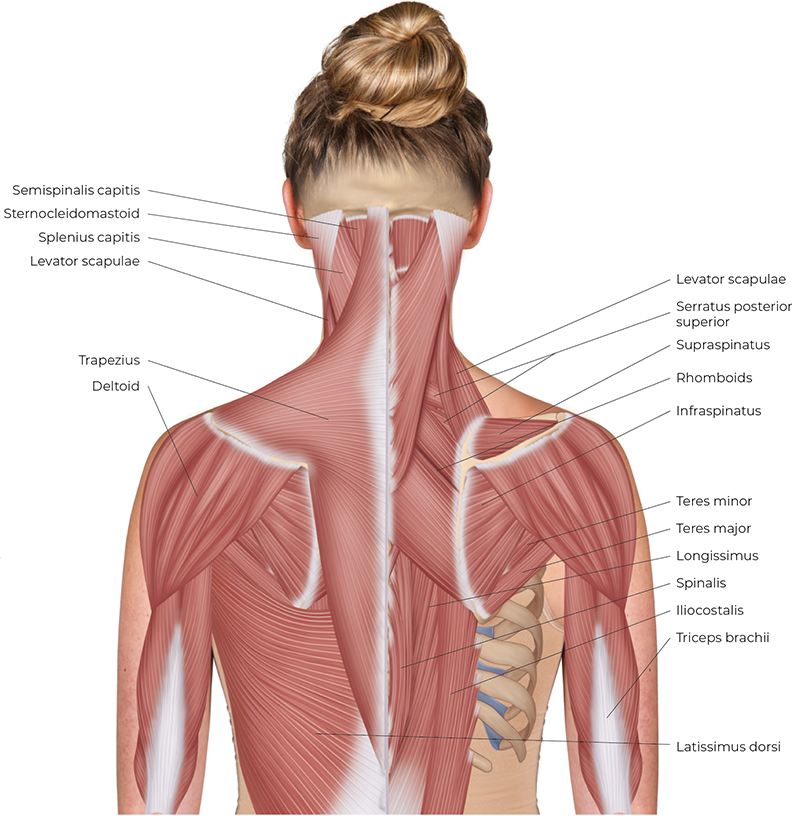
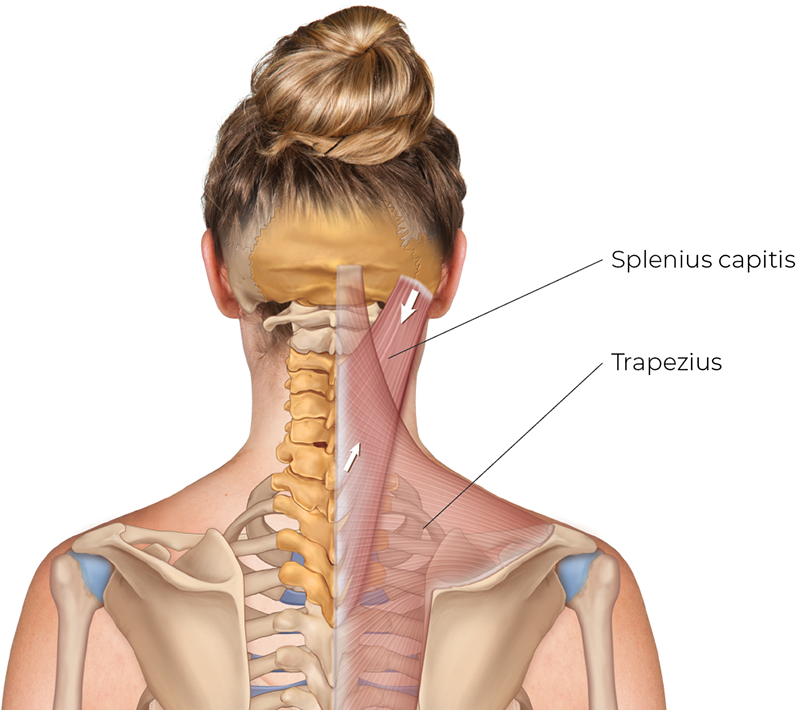
Let’s use a generic stretch for the right side of the neck as our starting point; we stretch the client’s neck into left lateral flexion. This theoretically stretches the entire frontal-plane functional group of right lateral flexors. In other words, we attempt to stretch every muscle on the right side of the neck (Image 1). However, it only stretches one of them—the right lateral flexor that is the tightest. This concept can be expressed by the shortest rope, an idea described to me by a massage therapy educator in Baltimore during one of my continuing education workshops.
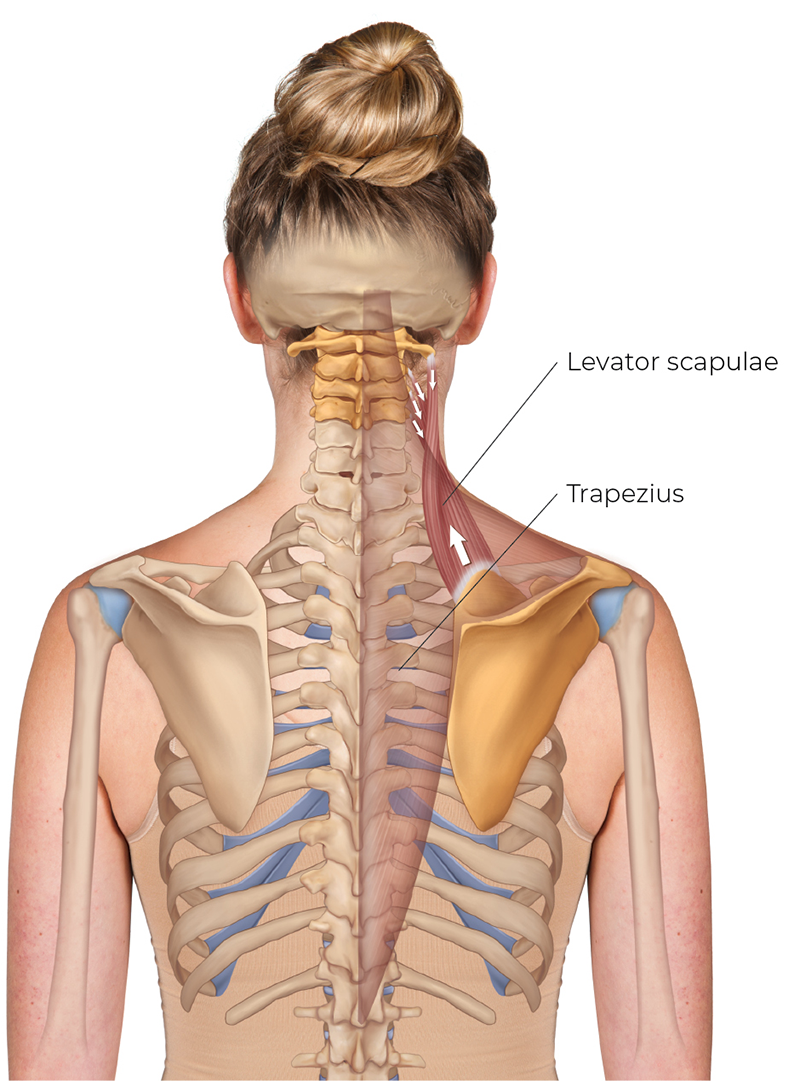
Image 1. Muscles of the posterior neck: a superficial view on the left and intermediate view on the right. Art by Giovanni Rimasti. Image courtesy Dr. Joe Muscolino.
The Shortest Rope
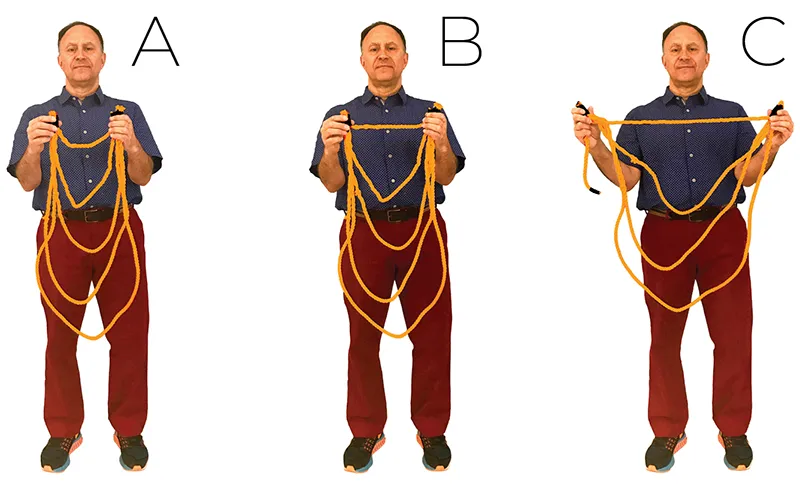
The concept of the shortest rope can be explained as follows: Imagine holding five ropes in your hands. One is 1 foot long, one is 2 feet long, one is 3 feet long, one is 4 feet long, and one is 5 feet long. One end of each of the five ropes is in one of your hands, while the other end of each rope is in your other hand. Your hands are close together, so all the ropes are slack (Image 2A).
Image 2. The shortest rope analogy. A: All five ropes are slack. B: The 1-foot rope is the shortest rope and stops the rest of the ropes from being stretched. C: The 2-foot rope is now the shortest rope and is effectively stretched. Images courtesy Dr. Joe Muscolino.
In this analogy, the group of ropes represents a functional group of muscles. When you move your hands away from each other, you begin the process of stretching the ropes. If you spread your hands far enough apart, you would stretch all five ropes, but only one of the ropes would be stretched to its full length—the 1-foot rope (Image 2B). Why? Because it’s the shortest rope and therefore will stop the stretch from being exerted on all the other ropes when it is fully extended. Now, if that shortest rope is your target muscle to stretch, then you’re good. Unfortunately, the tightest muscle (shortest rope) is not always the one that is most important to stretch.
So, the goal now is to learn how to modify the stretch to make our target muscle the shortest rope. We do this by adding in components to our stretch that add to the stretch of our target muscle, or by adding in components that decrease the stretch to the shortest muscle (1-foot rope)that was stopping the stretch from reaching the target muscle. In either case, the goal is to allow another one of the ropes, let’s say the 2-foot rope (our target muscle), to become the new shortest rope so it can now be stretched (Image 2C).
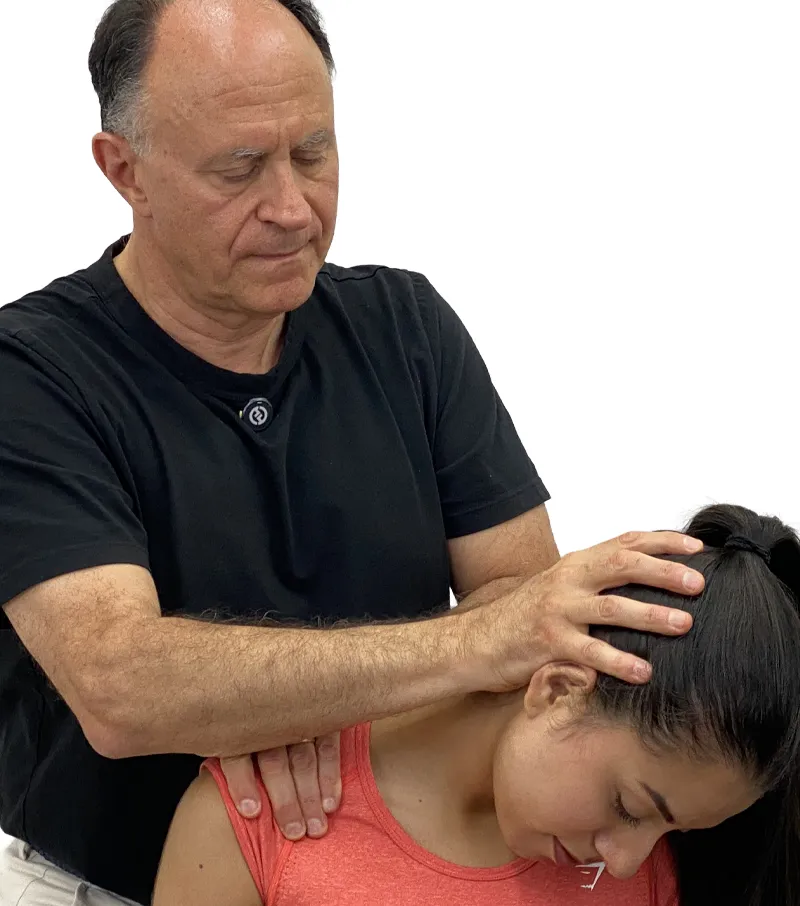
Let’s now work through this intellectual exercise to build toward evolving this generic stretch into the specific stretch we need. With a generic stretch into left lateral flexion, we theoretically stretch all right lateral flexors in the frontal plane (Image 3).
Image 3. A stretch of the neck into left lateral flexion places a stretch into the frontal-plane functional group of right lateral flexors. Image courtesy Dr. Joe Muscolino.
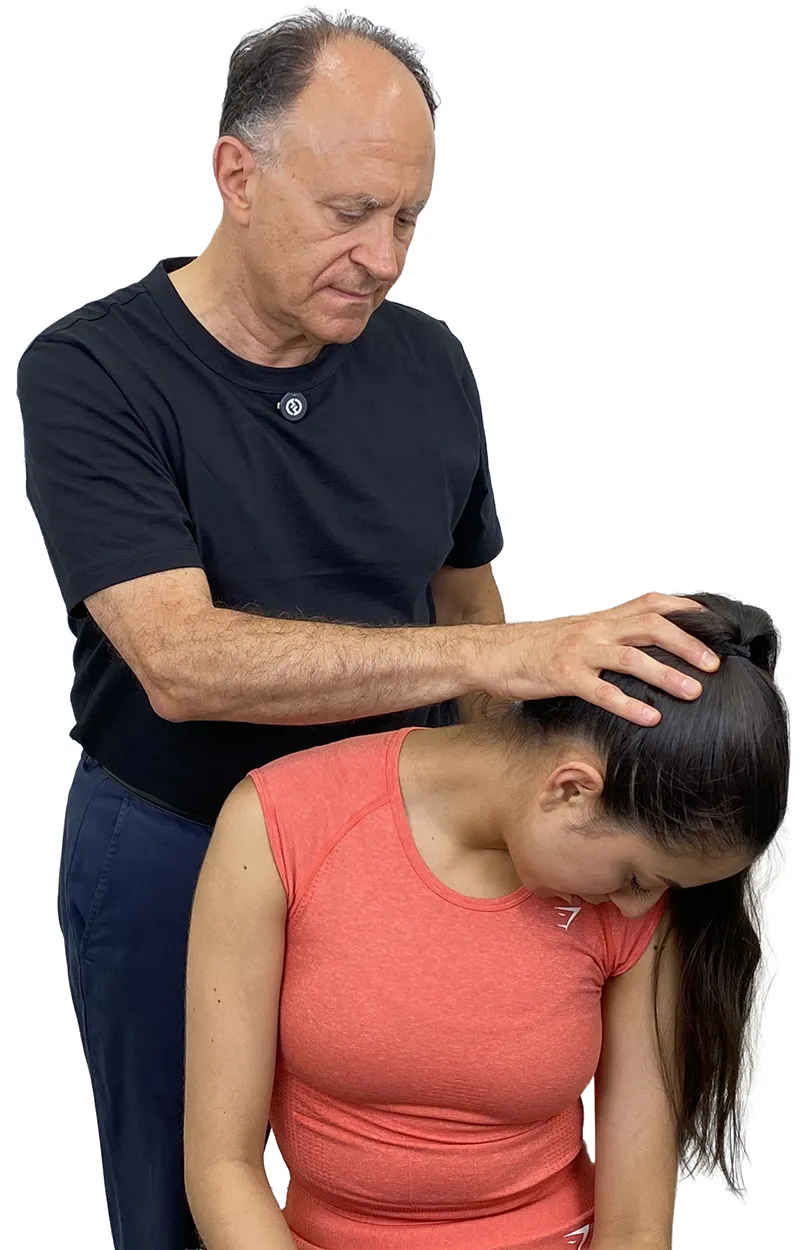
We know our target muscle is one of the right lateral flexors in the back. So, the first thing we need to do is add sagittal-plane flexion to the stretch. This will decrease the stretch to all right lateral flexors that are in front (i.e., that are also flexors) so they are slackened and cannot stop the stretch; it will also increase the stretch to all the right lateral flexors in back, because by being in back they are also extensors. At this point, we have now focused our stretch on the back-right quadrant of neck musculature (Image 4).
Image 4. Adding in sagittal-plane flexion focuses the stretch to the back-right quadrant. Image courtesy Dr. Joe Muscolino.
Target Muscle Example No. 1: Right Upper Trapezius
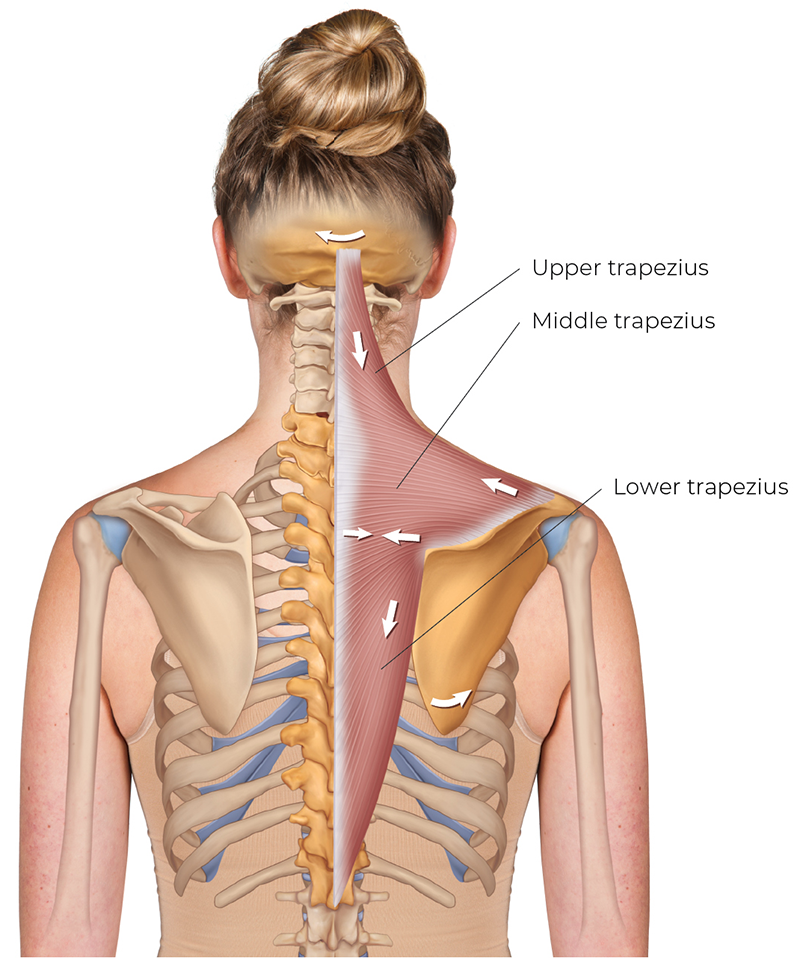
To determine how to focus the stretch even more specifically, let’s choose our example target muscle to be the right upper trapezius (Image 5). Working through the rubric, we will address each of the three planes of motion of the right upper trapezius, in the order of sagittal plane, frontal plane, and transverse plane.
Image 5. Right trapezius: upper, middle, and lower. Art by Giovanni Rimasti. Image courtesy Dr. Joe Muscolino.
In the sagittal plane, the right upper trapezius is an extensor, so we stretch it with flexion—sagittal plane done. In the frontal plane, the right upper trapezius, being on the right side, is a right lateral flexor, so we stretch it with left lateral flexion—frontal plane done. We must now consider the transverse plane. Some therapists struggle to learn the transverse-plane action of the upper trapezius. But it can be learned fairly easily by picturing the external occipital protuberance (the proximal/superior attachment) being brought toward the acromion process of the scapula (the distal/inferior attachment). By doing this, we see that the upper trapezius is a contralateral rotator, meaning the right upper trapezius does left rotation. Therefore, to stretch it, we need transverse-plane (ipsilateral) right rotation of the neck—transverse plane done.
Therefore, the most efficient position of the neck to stretch the right upper trapezius would be to have it flexed, left laterally flexed, and rotated (ipsilaterally) to the right. But, for the stretch to be effective, we must consider one more factor: What is the position of the other attachment of the right upper trapezius? Given that the upper trapezius attaches to the shoulder girdle (clavicle and scapula), it can move the shoulder girdle. How does it move it? The right upper trapezius elevates the right shoulder girdle because its other attachment (onto the neck and head) is higher.
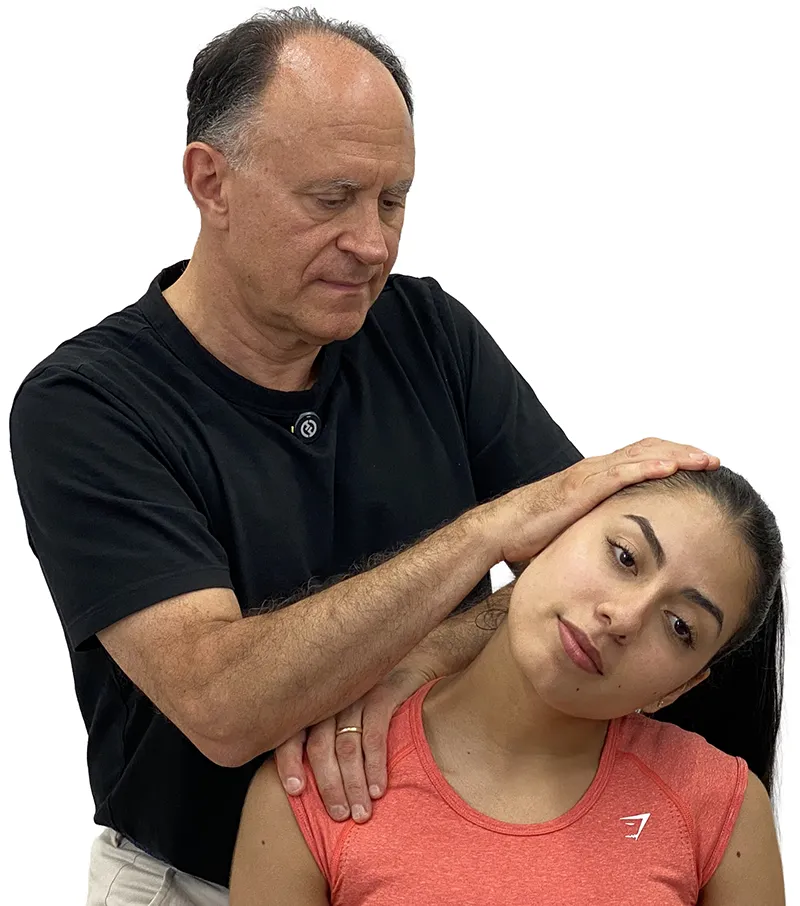
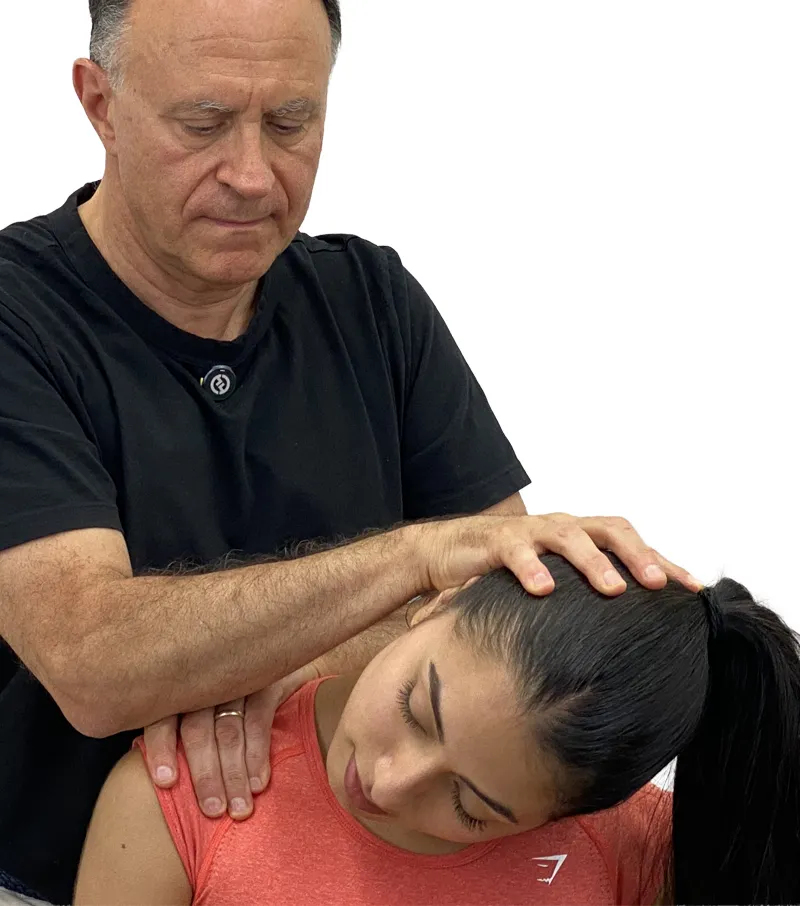
Thus, during the stretch for the right upper trapezius, we need to either stabilize the right shoulder girdle down to prevent it from elevating, or depress it to further increase the stretch. We now have the ideal stretch for the right upper trapezius (Image 6).
Image 6. Ideal stretch for the right upper trapezius with flexion, left lateral flexion, and right rotation of the neck; and the right shoulder girdle stabilized down into depression. Image courtesy Dr. Joe Muscolino.
Target Muscle Example No. 2: Right Levator Scapulae
Now, let’s work through creating the ideal stretch for the right levator scapulae (Image 7). Using the same reasoning, let’s work through the planes in the same order. In the sagittal plane, the right levator scapulae is in back. It extends the neck, so we stretch it with flexion—sagittal plane done. In the frontal plane, the right levator scapulae is on the right side. It does right lateral flexion of the neck, so we stretch it with left lateral flexion—frontal plane done.
Image 7. Right levator scapulae. Art by Giovanni Rimasti. Image courtesy Dr. Joe Muscolino.
So far, the stretch position of the neck is identical to that for the right upper trapezius. The difference occurs when we consider the transverse plane.
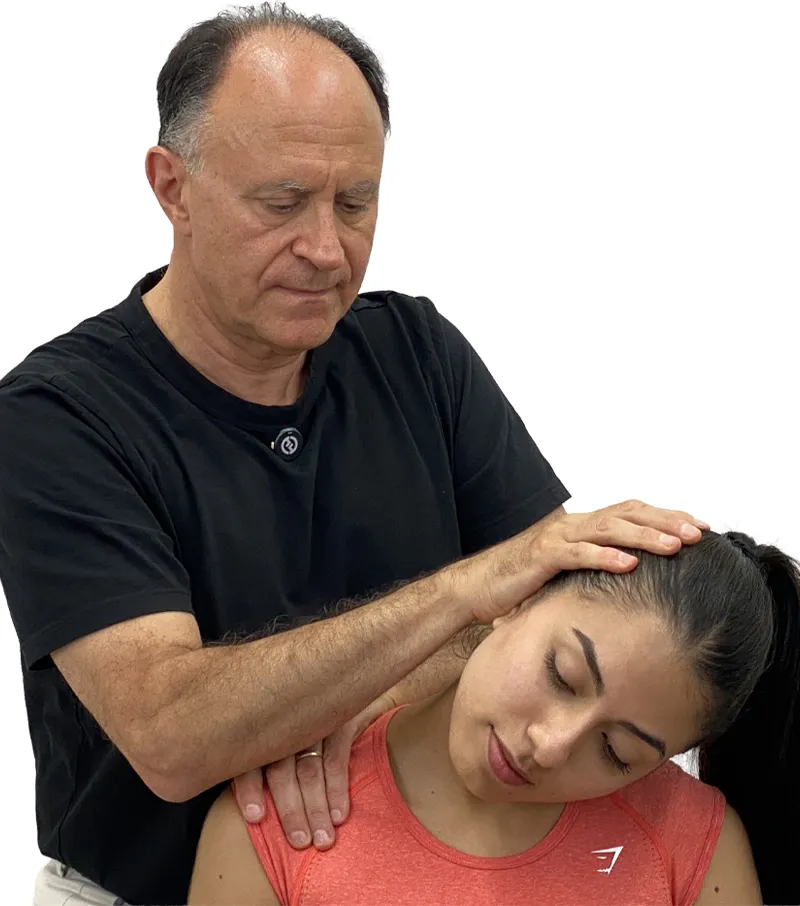
What does the levator scapulae do in the transverse plane? If we’re not sure, we can figure it out by using the earlobe as an approximation for the upper/transverse process attachment of the levator scapulae because the earlobe lies directly over the transverse process of C1 (the levator scapulae attaches to the transverse processes of C1 to C4). Try gently pulling the earlobe toward the superior angle of the same-side scapula, and you will see that the neck rotates to the same side; so, the levator scapulae is an ipsilateral rotator. Therefore, the right levator scapulae does right rotation of the neck, so we stretch it with (contralateral) left rotation—transverse plane done.
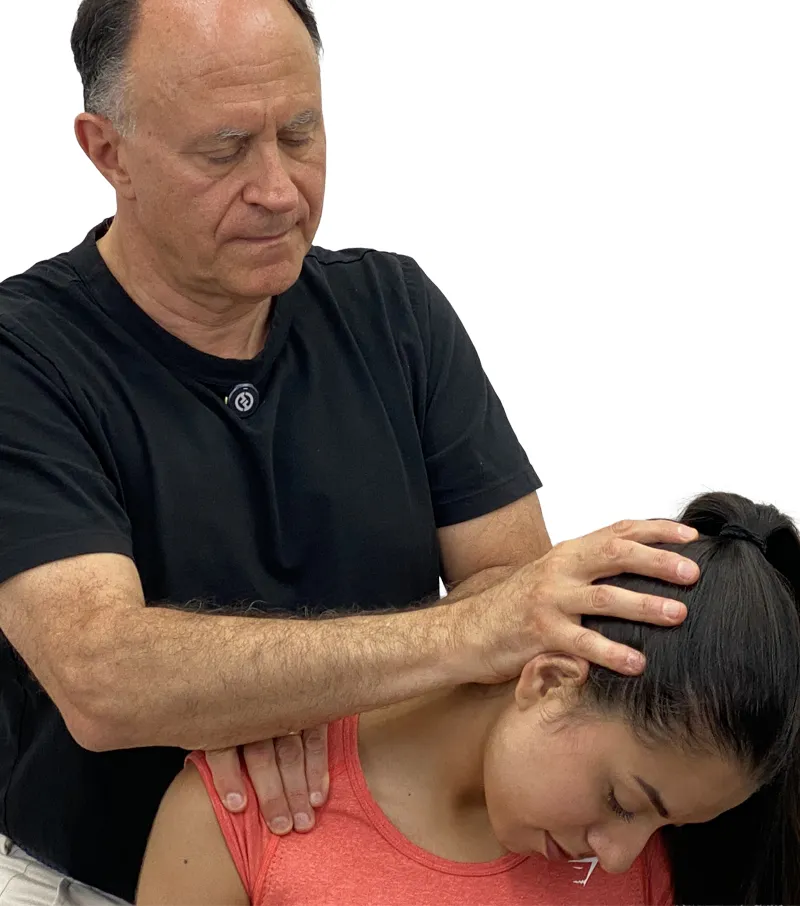
Turning our attention to the other attachment of the levator scapulae we see, similar to the upper trapezius, the levator scapulae elevates the scapula/shoulder girdle, so we need to stabilize the right shoulder girdle down into depression (Image 8).
Image 8: Ideal stretch for the right levator scapulae with flexion, left lateral flexion, and left rotation of the neck, and the right shoulder girdle stabilized down into depression. Image courtesy Dr. Joe Muscolino.
If we look at the two stretches—one for the right-side upper trapezius and the other for the right-side levator scapulae—we see that the critical difference is the transverse-plane rotation. The right upper trapezius is stretched with right rotation, whereas the right levator scapulae is stretched with left rotation. Everything else is the same. I cannot state strongly enough how much this transverse-plane rotation component matters. If this component of the stretch is done incorrectly, the target muscle will likely be slackened so much in the transverse plane that it will no longer be the shortest rope and consequently will not be effectively stretched.
Smell the Armpit, Listen to the Armpit
Many years ago, an assistant of mine told me a wonderful way to remember the difference between these two stretches: Smell the armpit . . . Listen to the armpit. Smell the armpit (for the levator scapulae, Image 9A) and listen to the armpit (for the upper trapezius, Image 9B). When recommending these two stretches to my patients for home self-care, I tell them to smell their armpit and then to listen to their armpit. They laugh, but more importantly, they remember the two stretches!
Image 9A: Smell the armpit.
Image 9B: Listen to the armpit. Images courtesy Dr. Joe Muscolino.
Target Muscle Example No. 3: Right Splenius Capitis
To complete this exercise, the final question is: How can we focus our neck stretch specifically on the right-side splenius capitis (Image 10)? I recommend working through the same rubric from sagittal to frontal to transverse plane and then considering the other attachment.
Image 10. Right splenius capitis. Art by Giovanni Rimasti. Image courtesy Dr. Joe Muscolino.
In the sagittal plane, the right splenius capitis is in back, so it is an extensor of the neck, so we stretch it with flexion—sagittal plane done. In the frontal plane, the right splenius capitis is on the right side of the neck. It is a right lateral flexor, so we stretch it with left lateral flexion—frontal plane done.
Now we consider the transverse plane rotation component. The splenius capitis attaches onto the mastoid process of the temporal bone, so again, we can use the earlobe as an approximation of its superior attachment. Imagine pulling the earlobe toward the lower attachment of the splenius capitis on the cervicothoracic spine. Just like with the levator scapulae, the splenius capitis is an ipsilateral rotator of the neck. The right splenius capitis is a right rotator, so we stretch it with left rotation—transverse plane done. Looking at our stretch position at this point, we see we have the identical stretch position for the neck (flexion, left lateral flexion, and left rotation) as we had for the levator scapulae.
How do we distinguish between the stretch for the levator scapulae and the stretch for the splenius capitis? We consider the other attachment. Whereas the levator scapulae attaches onto the shoulder girdle, the splenius capitis attaches onto the spine.
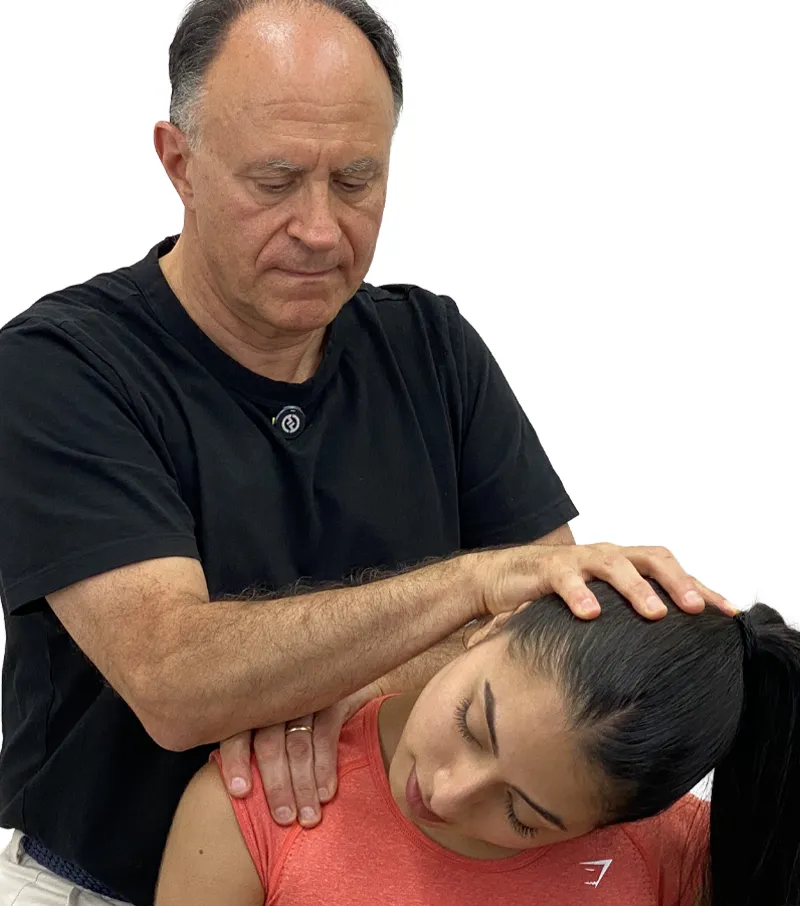
So, to stretch the splenius capitis, we do not need to stabilize the right-side shoulder girdle down into depression. We are better off letting the right shoulder girdle elevate, because if it elevates, the levator scapulae slackens, allowing the splenius capitis to more likely become the shortest rope and be effectively stretched (Image 11).
Image 11. Ideal stretch for the right splenius capitis with flexion, left lateral flexion, and left rotation of the neck, but not stabilizing the right shoulder girdle down toward depression. Image courtesy Dr. Joe Muscolino.
The Key to the Shortest Rope: Spot the Difference
I hope the logic of the shortest rope concept, as well as the rubric of working with all the planes of the target muscle and considering its other attachment, is clear. The key, when focusing the stretch on one specific target muscle within a functional group of muscles (in our case, we began with the functional group of right lateral flexors of the neck), is to find a difference between each muscle within that group.
If we can find a difference, we can take advantage of it to effectively focus the stretch on our desired target muscle. The difference between the upper trapezius and the levator scapulae is the transverse-plane rotation. The difference between the levator scapulae and splenius capitis is the action at the other attachment. Using this rubric is not limited to only the neck; following this rubric empowers us to be able to figure out the ideal stretch for a target muscle anywhere in the body!
A Deeper Dive—Putting It All Together
What are the keys to being an excellent stretch therapist? We need to be able to accomplish the following:
Know the muscle attachments of the target muscle.
Critically think to be empowered to figure out its joint actions.
Do the same for all the other muscles in the target muscle’s functional group.
Use that knowledge to find the difference between the target muscle and each of the other muscles in the functional group.
Use that knowledge of the difference to modify the functional-group generic stretch so the target muscle becomes the shortest rope in that group—and can be effectively stretched.
To understand tissue-tension barriers, MTs must be constantly present and mindful. Too light and we will not become efficient at creating the healing change that is needed.