


Strengthen Your Vagal Tone
Use this self-care technique to generate a state of calm alertness.
Let’s face it—even with the best body mechanics, doing massage is tough on our bodies, especially the low back. Both strength and flexibility are needed to maintain our range of movement while helping our clients recover and maintain theirs. The exercise ball is a fabulous tool you can use to build your core and low-back strength and flexibility.
Strength
A unique benefit of an exercise ball is its ability to position the body with proper alignment and simultaneously challenge a muscle or group of muscles. Maintaining proper alignment on the ball stimulates the body’s natural motor reflexes and encourages the body to react as an integrated unit. In other words, the ball challenges the whole body to participate in order to maintain correct posture and balance while performing a dynamic movement.
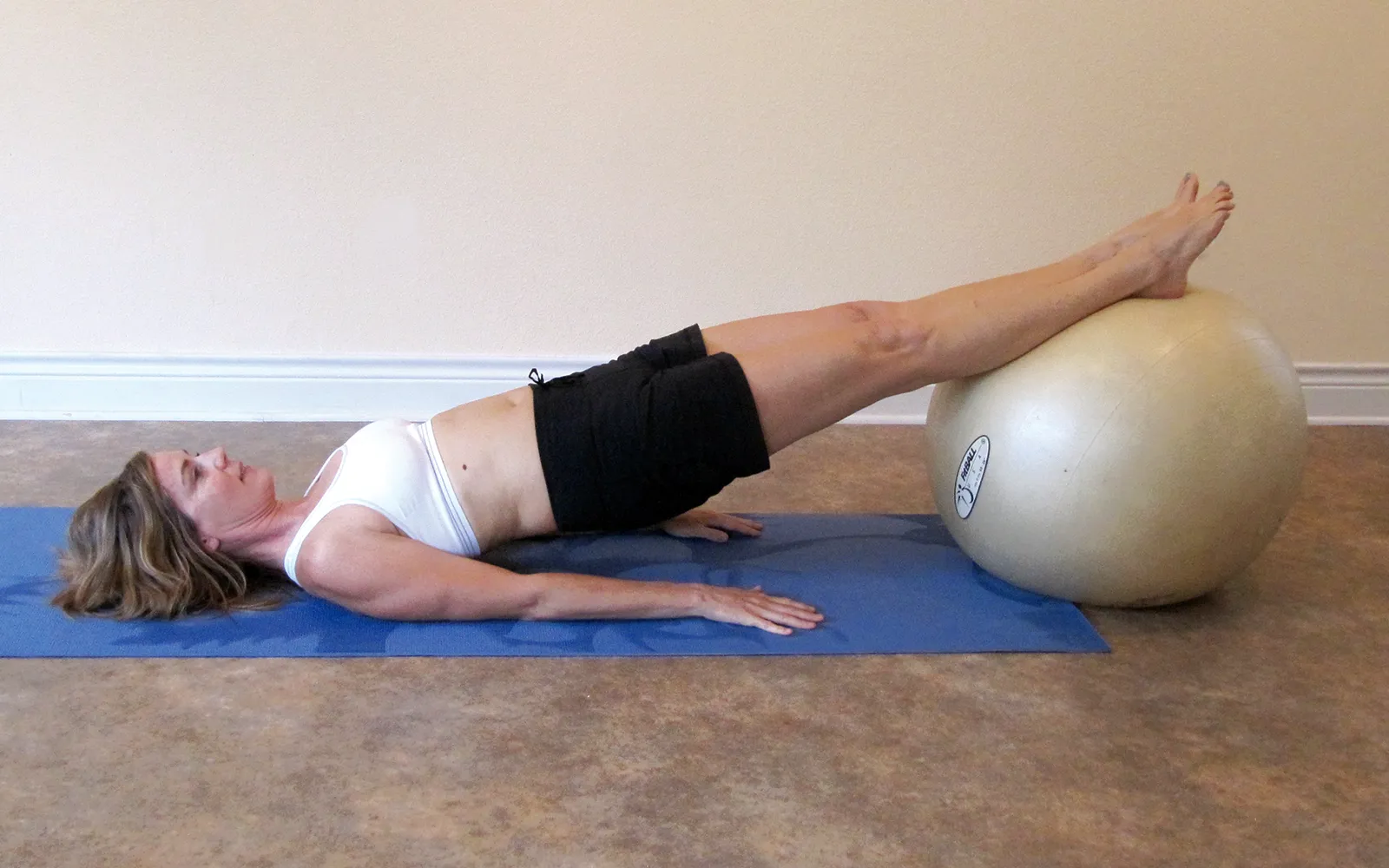
The Supine Bridge is a great exercise for strengthening your low back and core. Your arms should be on the floor by your side in a comfortable position.
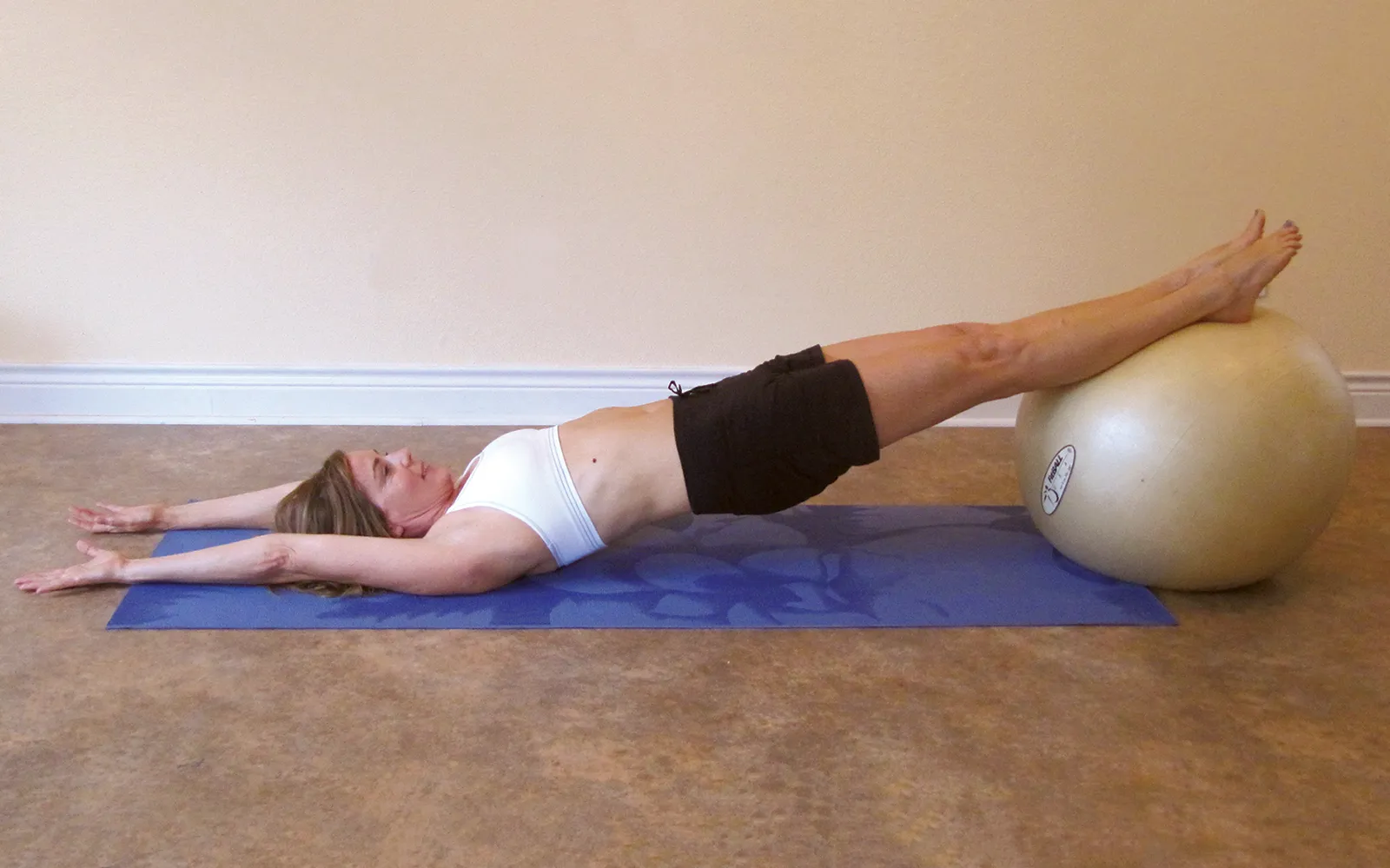
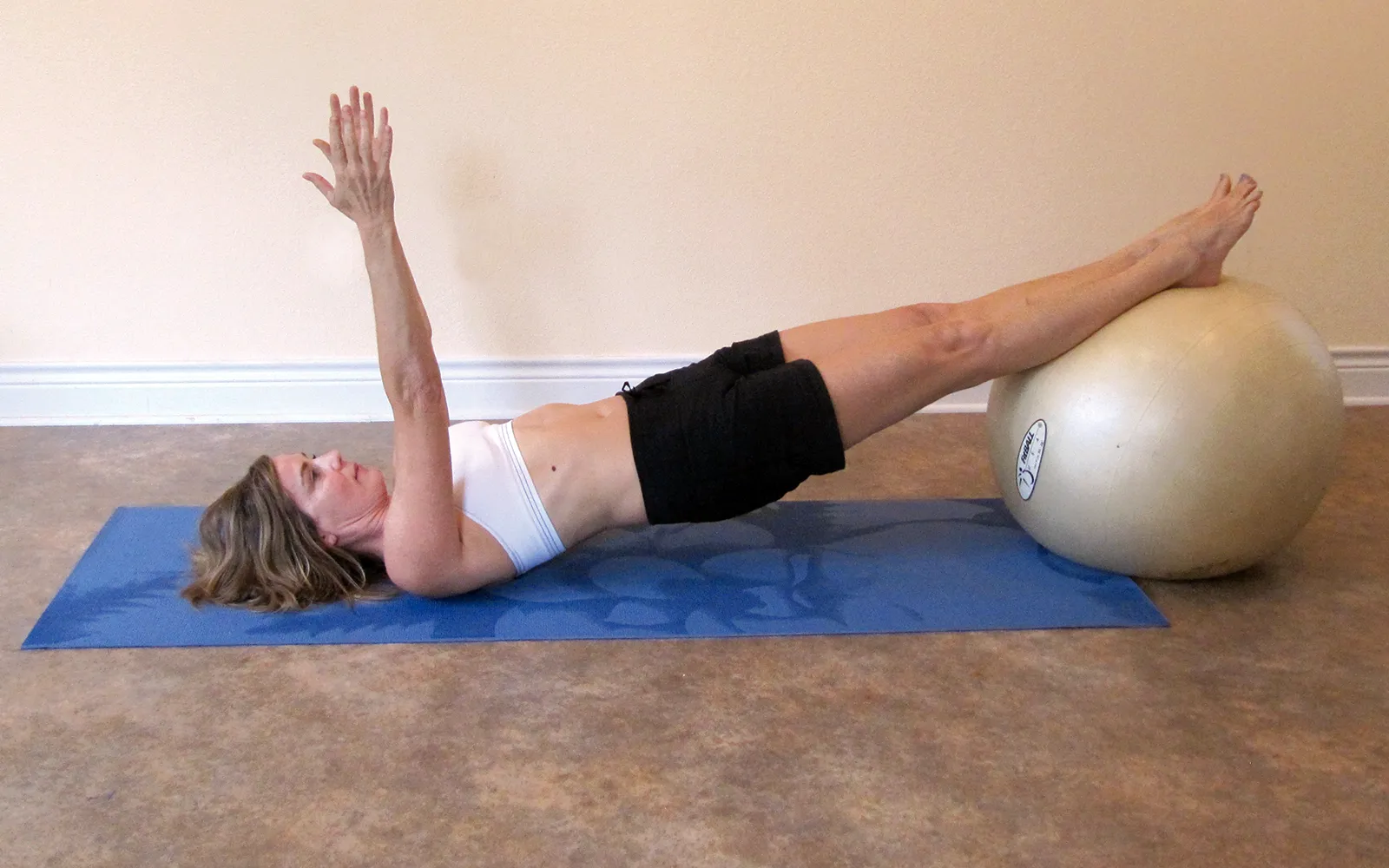
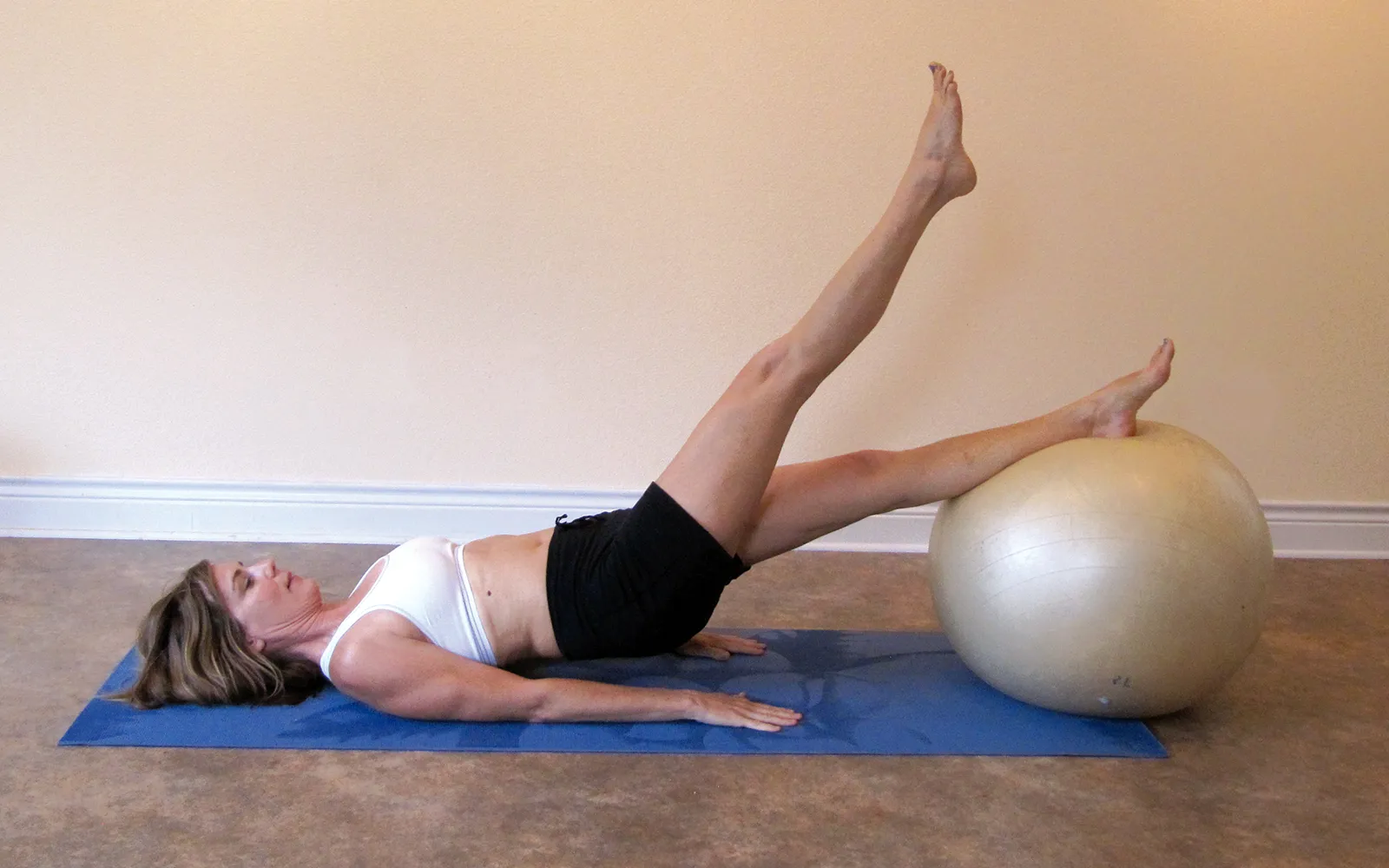
One of the great things about an exercise ball is that a simple change of arm position totally changes the difficulty of an exercise. After gaining mastery of the supine bridge, challenge your balance and coordination by changing your arm position (Images 2 and 3). Once you’ve mastered those variations, try the ultimate version of this exercise by lifting one leg off the ball (Image 4).
Flexibility
Stretching with an exercise ball offers many unique advantages:
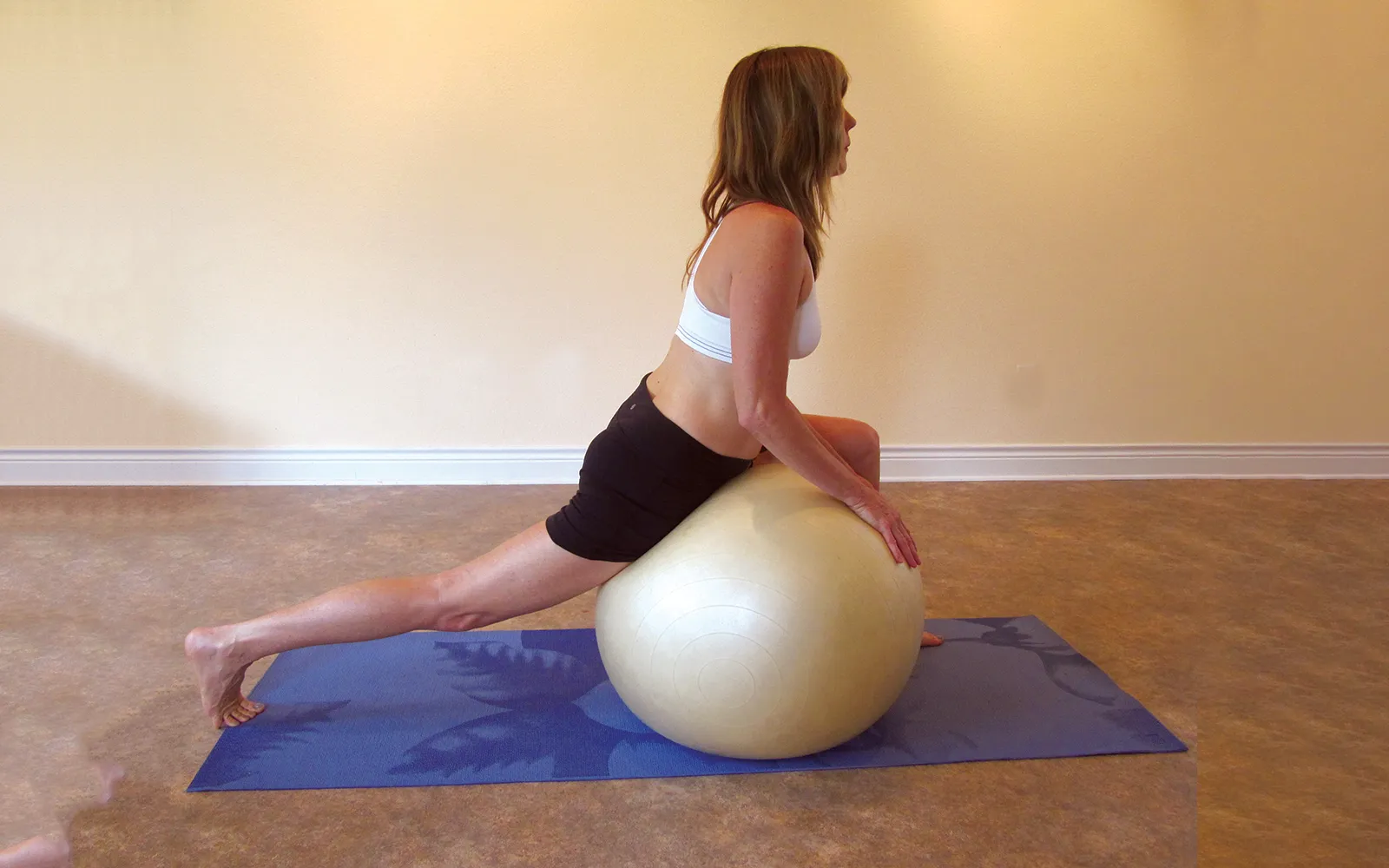
The iliopsoas is a prime-time player in low-back and core health. Because we spend too much time with our thighs in flexion, they and the secondary thigh flexors tend to be locked short. Good flexibility in these muscles is crucial for a healthy low back and core.
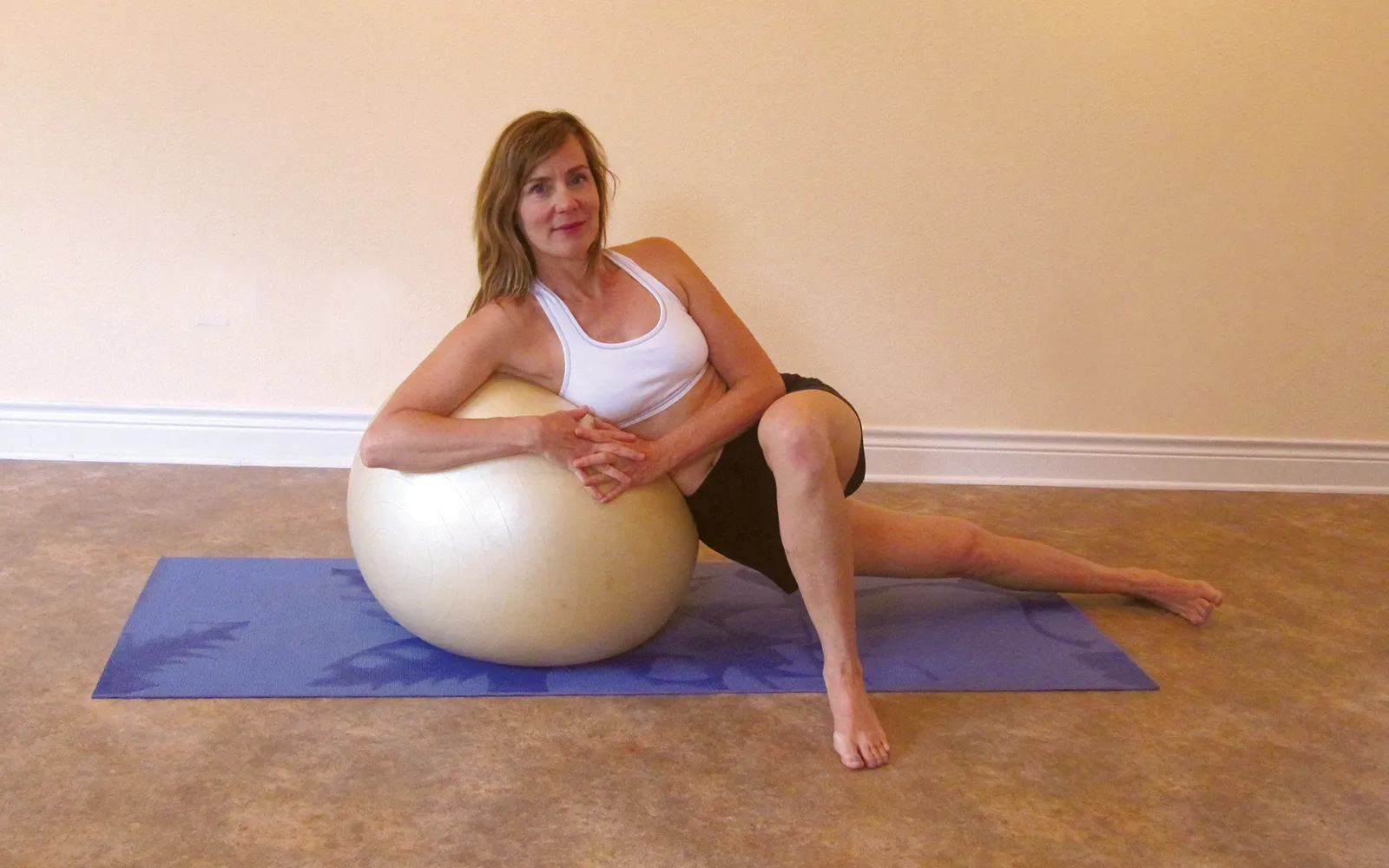
The quadratus lumborum is another prime-time player in low-back and core health. Keeping it supple is vital to moving through life with fluidity and ease.
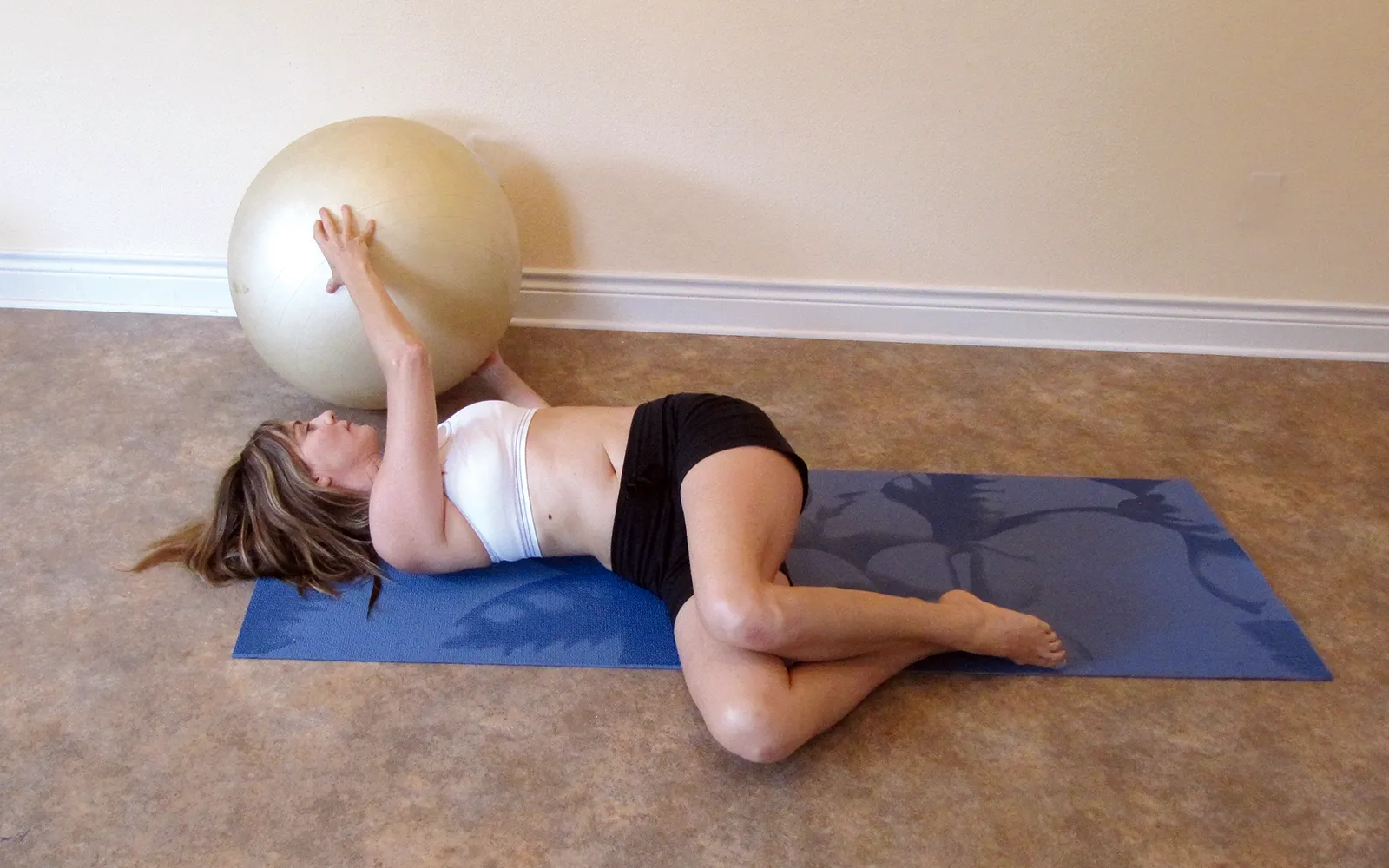
This nurturing spinal twist stretch is simple to do. It’s excellent for the paraspinals and rotatores.
Use this self-care technique to generate a state of calm alertness.
Use this cord-cutting exercise to reclaim your energy and restore your vitality.
Sound healing can be easy to incorporate into your practice and into your daily self-care routine.
It’s easy for us to get stuck in our work—physically, mentally, emotionally. Let’s look beyond the usual self-care routines to find better ways to get unstuck and back to the work you love.