According to the US Centers for Disease Control and Prevention, 16 adults are newly diagnosed with diabetes and two people die of diabetes-related causes every five minutes. There are many treatments to help this dire situation, such as a change in diet, physical activity, and prescription medications. Even with treatment options, most diabetics develop complications associated with their disease. Peripheral neuropathy is one of the most common complications, affecting up to 50 percent of diabetic patients and causing pain, numbness, and tingling in the feet and sometimes hands.
A new article by Uraiwan Chatchawan discusses a study that focused on massage therapy for peripheral neuropathy.1 Enrolled in the study were 60 subjects aged 40–70 with type 2 diabetes, peripheral neuropathy with sensory deficit, and the ability to walk 10 meters without a walking aid. Subjects were excluded from this study for acute illness, unstable hypertension, and angina; dependence on alcohol and/or drugs with known effects on the central nervous system; foot deformity and neuroarthropathy; foot ulcer; fracture of the lower limb within the six months before the study; myocardial infarction; partial or complete blindness; Parkinson’s disease and stroke; and severe cognitive disability.
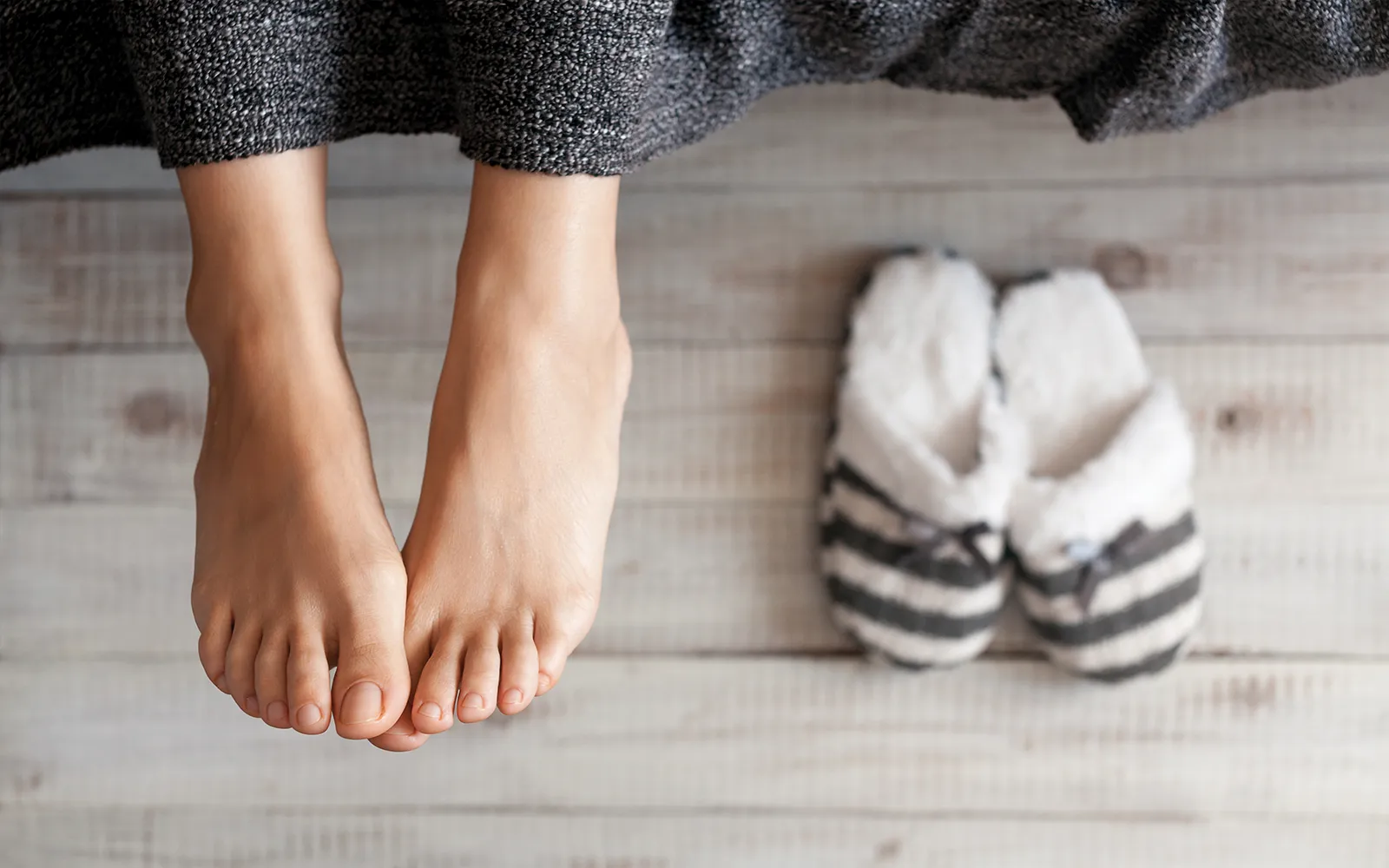
Shutterstock.Thirty subjects were randomized to receive six Thai massages over two weeks for 30 minutes per session. Each session’s massage was completed by a traditional Thai massage therapist and focused only on the feet, ankles, and lower legs by holding pressure points along three Thai meridian lines. In addition, each of the toes were distracted and the joints in the feet and ankles were stretched.
The other 30 subjects were randomized to an active control group. Like the massage group, each subject in the control group came in for three 30-minute sessions per week for two weeks. During these sessions, the subjects received health education from a physical therapist, including guidelines for foot self-care, and were trained to do daily active foot exercises.
The outcomes of this study were measured at baseline, after the first treatment, and at the end of the two-week treatment period. The primary outcome was the timed up-and-go test, where the subject was timed to get up from a chair, walk 2 meters, turn around, and walk back to the chair as fast as possible, in order to assess functional dynamic balance. The best of three trials was recorded as the time in seconds. The secondary outcomes included a one-leg standing test on each leg with eyes closed; range of motion of the first metatarsophalangeal, ankle, and knee joints; and sensation of the foot measured by the Semmes-Weinstein monofilament test (SWMT) that uses a probe pushed in different places on the bottom of the foot to determine lack of sensation.
After two weeks of treatment, both groups showed improvement in all measured factors. However, when comparing one group to the other after the two weeks of care, the massage group was significantly faster in the timed up-and-go test than the control group (p<0.001), demonstrating a higher improvement in balance with the massage group. The amount of time faster was 1.13 seconds, which is also considered a clinically significant difference in time.
The outcomes for the SWMT measurement showed a significantly higher level of improvement in the massage group than the control group in terms of sensation in the feet. The massage group also showed an improvement over the control group in terms of range of motion in the feet and ankles, except for the right ankle plantarflexion and knee extension. In contrast, the results of the one-leg standing test did not differ between the two groups.
There are several limitations of this study. First, the study was conducted in Thailand, which may have different forms of health care and lifestyles affecting diabetic outcomes. Second, there appeared to be only one massage therapist. While this may have led to a consistent treatment within the study, it may not lead to reproducible results in other therapists’ offices. Third, the timed up-and-go results may have been affected by factors other than diabetic issues, such as arthritis, tinnitus, or even motivation to accomplish the task in a timely fashion. Finally, we do not know the results of a treatment combining massage and the active control methods, which may have been the most beneficial for diabetic patients.
Conclusions
The bottom line of this study includes the following:
- In type 2 diabetic patients with peripheral neuropathy, six 30-minute sessions of Thai foot and leg massage over two weeks appears to improve the timed up-and-go test results compared to a control group, demonstrating a statistical and clinical significance in improved functional dynamic balance.
- Range-of-foot and ankle motions and skin sensations of the foot also significantly improved in the Thai massage group compared to the control group within this study.
- More research is needed to confirm these results and to determine long-term effectiveness.
- Each client is different in terms of condition severity and massage tolerance, and each client may need a different form of care. Be sure to communicate with your clients and their health-care team to determine the best form of care for each individual.
Note
1. U. Chatchawan et al., “Effects of Thai Foot Massage on Balance Performance in Diabetic Patients with Peripheral Neuropathy: A Randomized Parallel-Controlled Trial,” Medical Science Monitor Basic Research (April 20–21, 2015): 68–75.