

Strengthen Your Vagal Tone
Use this self-care technique to generate a state of calm alertness.
I believe burnout is one of the most prolific diseases or causes of “lack of ease” in the modern world. Unfortunately, you don’t know you’ve caught it until you are symptomatic, and by then, you’re too tired to do anything about it.
The most popular antidotes for a full-blown case of burnout are physical in nature. These include altering your diet, exercise level, and work schedule, and if you’re lucky, indulging in a much-needed beach vacation. Utilizing bodily solutions, however, depends on your access to resources, including time and money.
The good news is there is a different type of treatment. It’s free. It’s easy. You can do it anywhere. And it takes almost no energy to apply. It’s subtle energy healing, which uses subtle energy (also called psychic or spiritual energy) to supercharge your burnout therapy. This column highlights three easy subtle energy healing processes that can help you deal with burnout at any of its major stages.
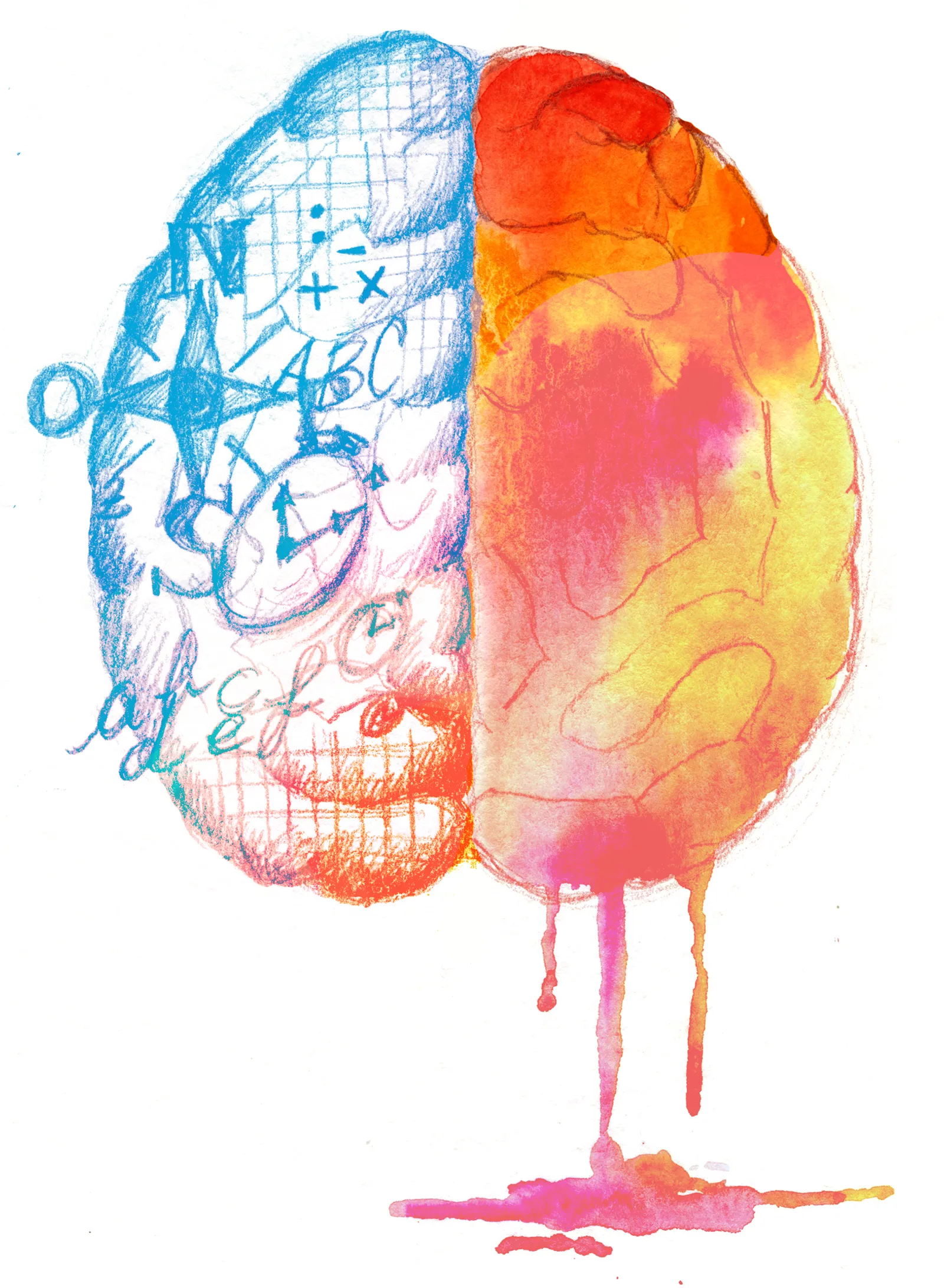
Before showcasing these techniques, I want to first examine the state of burnout, and, specifically, why bodyworkers are so susceptible to it.
Burnout, called caregiver burnout when related to those who serve others, is a state of exhaustion.1 As a bodyworker, you experience daily the fatigue associated with physically and emotionally helping others. Imagine the professionally related chronic and acute stress you incur on an ongoing basis. And how about that personal life? Most likely, at some points in your life, you have struggled with at least some of the numerous signs of burnout, which include changes in appetite, sleep, or weight; exhaustion; getting sick frequently; irritability; loss of interest in life or its pleasures; mental fatigue; mood changes; and more.2 My own personal indication that I’ve gone too far is that I don’t even have enough energy to care that I have no energy!
The physical and professional demands of massage therapy can be challenging. So challenging, in fact, that many new massage therapists, eager to work on as many clients as possible, end up biting off more than they can chew.
Referring to a recent study of membership patterns by Associated Bodywork & Massage Professionals (ABMP), ABMP President Les Sweeney says, “The most challenging period for massage therapists seems to be the first 18–36 months after graduation.” Because of this, many schools advise you see no more than 4–6 clients per day and take breaks between sessions, especially in busier employment environments.3
This practical advice is vital, as are other concrete burnout solutions. For most of us, however, attempting to control the often-uncontrollable situations of our lives is equivalent to putting a Band-Aid on a bleeding artery. It’s for this reason I recommend incorporating subtle energy solutions into your burnout recovery or prevention regimen.
Subtle energy is the invisible stuff of quantum physics that forms and supports measurable reality.4 Shift the subtle energy involved in a problem and you’ll experience equivalent, if not greater, changes in physical reality. One way to perform this shifting is with intention, or focus, which means you really don’t need to spend a dime or lift a finger to improve your situation.
In order to figure out which subtle energy techniques to use for burnout, it’s important to figure out which stage of burnout you might be experiencing. According to Hans Selye, who studied stress in the 1950s, the first stage of stress is the alarm reaction. The second stage is resistance and the third is exhaustion.5 As implied, burnout doesn’t begin with a bang. It starts with a whimper and slowly upsurges until we’re afire. Solutions differ from stage 1 to stage 3, just as they would when dealing with a small or large fire.
Following are some subtle energy ways to cool down the growing flame of burnout, divided by stages.
Stage 1: Alarm Reaction
The alarm reaction is typified by our immediate reaction to stress or a stimulation, which includes the release of stress hormones in the body.6 Symptoms might include anxiety, persistent irritability, insomnia, forgetfulness, and unusual heart rhythms.7 For the most part, this is a short-lived state. I know I’m in it when I’m feeling an adrenal rush that makes it hard for me to calm down, sleep, or stop thinking compulsively.
The central goal in stage 1 is to use the stress you are experiencing for your own benefit. This way, it’s less likely to cause long-term damage.
What? Can stress be beneficial? Yes! Science shows that short bursts of stress can be helpful and encourage productivity. That sudden beating of the heart, or “get it moving” response, is our fight-or-flight response to protect ourselves, act quickly, or deal with an emergency. Short-term stress boosts brainpower, bolsters immunity, creates resilience, motivates success, and, in children, can temporarily enhance development.8
So go for it! First, deal with the cause of the stress. Is there an event calling for your attention? A person with a need? Are you the person with the need? Use your energy where it will count the most in practical reality, and then consider transforming the leftover subtle energy to meet additional goals.
I find the easiest way to do this is to incorporate the chakras into the formula. Chakras are subtle energy organs. The primary chakras regulate various aspects of your body, mind, and soul, and are localized in specific bodily regions. By “dragging” your stress-energy into the chakra and its correlated area, you empower that chakra to bolster a particular aspect of your life.
To move energy into a chakra, focus on your stress, feeling it in your body if possible. You will sense the stress as tingly or frenetic. Figure out which chakra you want to engage with that excess energy and breathe into the chakra’s location. Then, ask your wise self or your Higher Power to transfer that superfluous energy into the selected chakra, first cleansing the energy so it’s neutral and ready for use. You can use the outline below to figure out which chakra you might want to boost, based on its location and functions.

We enter the resistance stage if we’re unable to obtain relief during the alarm stage.
Maybe your energy expenditure didn’t result in resolution, or the energy you did spend backfired, causing more problems. Either way, during this stage, we want to keep fighting the perceived danger, but instead we start running out of energy. Indications of this stage are anxiety, compulsive behaviors, cynicism, depression, and weariness.9 In a nutshell, we sense the resistance to stress resolution and don’t know how to achieve a solution.
From a subtle energy point of view, the best way to power through resistance is to stop. Press your inner pause button and open yourself to guidance from your inner self or Higher Power. Inevitably, this stage is an opportunity to transform a behavior, coping mechanism, or perception that’s not working for you into one that can.
If we’re fighting the good fight and nothing is happening, it’s because we are called to perceive the situation or ourselves differently. One grace-filled way to do this is to conduct an Intuitive Vision Quest (see sidebar).
Stage 3 is characterized by complete burnout or exhaustion. Indicators can include chronic sadness, the desire to pull away from others, headaches, mental and physical fatigue, and stomach problems.10
Once you’ve reached this stage, you need to fill in energy—not only move or release it. The stressor—or your stress about it—has been operating so long, you are on empty. The stressor isn’t even the issue anymore; it’s the fact that you are used up. The best gas tank is found at the subtle energy service station.
Subtle energy lies all around us. The most positive subtle energies emanate from fine art, nature, poetry, and spiritual wisdom. Blessings flow constantly between our Higher Power and the self. I find a good-sized portion in my morning tea or sitting at my son’s baseball games.
Of course, there are subtle energies that are detrimental as well as beneficial. Don’t take in both! Instead, ask your wise self or Higher Power to only let you absorb those subtle energies that nourish you. Saturate yourself with the green of the leaves, the blue of the sky, the joy of the child in the restaurant. Allow your soul to bask in the sunshine of life and grow anew. The key to restoring ourselves energetically in stage 3 of burnout is to know we get to choose what we take in. It is this power of choice that frees us to become the butterfly instead of the caterpillar.
As poet John Muir advised: “Climb the mountains and get their good tidings.… The winds will blow their own freshness into you, and the storms their energy, while cares will drop off like autumn leaves."11
An intuitive vision quest is a process that invites insight and inspiration from your wise self, your Higher Power, and even the external world. The objective is to set aside a specific amount of time to be intuitively or spiritually open to guidance in regard to the stressor.
1. WebMD, “Recognizing Caregiver Burnout,” accessed October 2015, www.webmd.com/women/caregiver-recognizing-burnout.
2. Ibid; UNWomen, “Staff Well-Being and the Challenge of ‘Burn-out,’” accessed October 2015, www.endvawnow.org/en/articles/1556-staff-well-being-and-the-challenge-of-burn-out.html?next=1557.
3. Massage Therapy Schools Information, “3 Things You Should Know Before Becoming a Massage Therapist,” accessed October 2015, www.massagetherapyschoolsinformation.com/becoming-a-massage-therapist.
4. Beverly Rubik, Foundation for Alternative and Integrative Medicine, “Measurement of the Human Biofield and Other Energetic Instruments,” accessed October 2015, www.faim.org/energymedicine/measurement-human-biofield.html.
5. Paul J. Rosch, Bioelectromagnetic and Subtle Energy Medicine, 2nd ed. (Boca Raton, Florida: CRC Press, 2015 ebook): 84.
6. The Adrenal Fatigue Solution, “Stress 101: Causes, Symptoms & Coping Strategies,” accessed October 2015, www.adrenalfatiguesolution.com/stress-101/.
7. Texas Medical Association Continuing Medical Education, “Three Stages of Burnout,” accessed October 2015, http://smhp.psych.ucla.edu/qf/burnout_qt/3stages.pdf.
8. Amanda MacMillan, ABC News, Health.com, “5 Weird Ways Stress Can Actually Be Good for You,” accessed October 2015, http://abcnews.go.com/Health/Wellness/weird-ways-stress-good/story?id=25085508#.
9. Ryan Sawyer, “Stress, the Silent Killer,” accessed October 2015, www.jacobgan.com/Stress/Stages-of-Stress.html.
10. Texas Medical Association Continuing Medical Education, “Three Stages of Burnout.”
11. John Muir, Our National Parks (1901): 54, accessed October 2015, http://vault.sierraclub.org/john_muir_exhibit/writings/favorite_quotations.aspx.
Use this self-care technique to generate a state of calm alertness.
Use this cord-cutting exercise to reclaim your energy and restore your vitality.
Sound healing can be easy to incorporate into your practice and into your daily self-care routine.
It’s easy for us to get stuck in our work—physically, mentally, emotionally. Let’s look beyond the usual self-care routines to find better ways to get unstuck and back to the work you love.