Acute sustained stress erodes the very fabric of our being, while acute trauma can tear it. Whether prolonged or sudden, traumatic life experiences wound a person in body, emotions, mind, and soul, and can result in posttraumatic stress disorder (PTSD), a condition that affects more than 5.2 million Americans every year.1 Compassionate bodywork, including reflexology, can help heal the body and the person.
Everyday life can create sustained stress. An unstable economy can affect our ability to provide necessities, such as clothing, food, shelter, and transportation. Physical stress (inadequate nutrition, pollution, sleep, and so forth), emotional stress (how one feels about what is happening), and mental stress affect all aspects of our lives. Daily, sustained stress undeniably disrupts physiological and energetic processes at the cellular level, creating stress patterns that have devastating short- and long-term effects.
The primary difference between a person experiencing the everyday stresses of living and one experiencing PTSD is that the person suffering from PTSD has been exposed to extreme trauma.
Categories of Symptoms
Events leading to PTSD are wide-ranging, and the American Psychiatric Association groups them into different categories in the current version of the Diagnostic and Statistical Manual of Mental Disorders (DSM).2
Intentional Human Events (man-made, deliberate, malicious)
This includes stress suffered as a result of assault, alcoholism, loss of a body part, physical or emotional abuse, sexual trauma, the suicide of a loved one, torture, or wartime or terrorist situations. The victims of any type of criminal activity can be grouped under this category.
Unintentional Human Events (accidents, technological disasters)
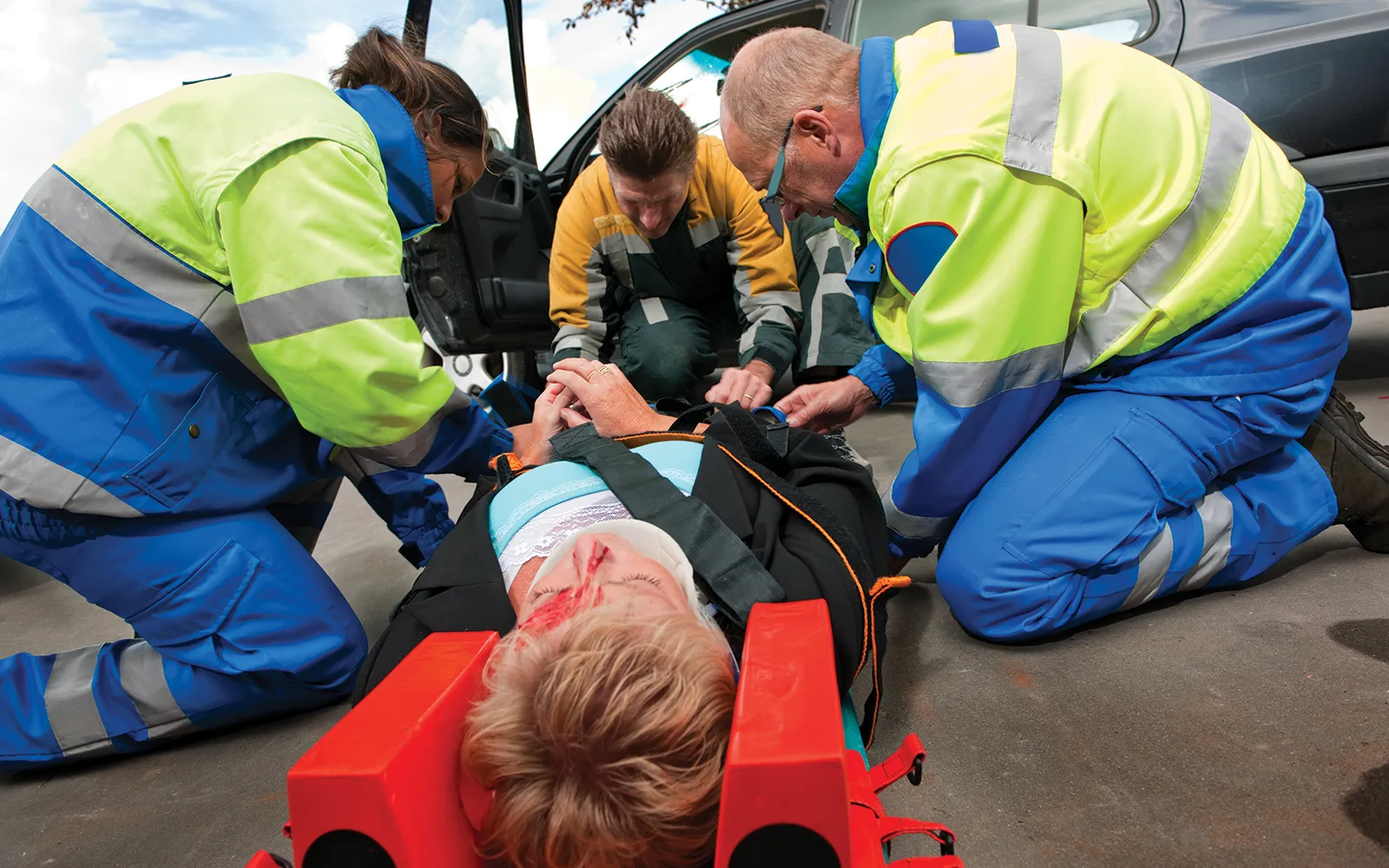
This category includes vehicle crashes, disasters such as explosions or nuclear catastrophes, structural collapses, and accidental damage caused by a planned surgery or other medical procedure that goes wrong.
Shutterstock.
Acts of Nature
This includes animal attacks, fire, natural disasters, and the loss of an infant by natural causes.
The effects of intentional human traumas, such as rape, terrorism, or torture, are generally the most complex and longer in duration, says Glenn R. Schiraldi, PhD, author of The Post-Traumatic Disorder Sourcebook (McGraw and Hill, 2009). Trauma from natural disasters typically results in a less difficult recovery, due in part to the community bonding that often occurs in the wake of such events.
For bodyworkers, considering the DSM categories helps assess the stress level of the client and the resulting physiological and biochemical changes, which aids in developing a treatment plan. How each person responds to stress is highly individualized. Each person copes depending on preexisting strengths and vulnerabilities, as well as the actions taken or not taken at the time of the trauma.Research shows that the healthier a person is before the trauma, emotionally, mentally, and physically, the fewer symptoms that person experiences following the trauma. Intensity of the incident is another key factor. Also, the more support a person has following the incident, the less intense the acute stress reaction tends to be.3
Special Populations
While categories are convenient to organize symptoms, PTSD is anything but simple. Experiences may combine and overlap. The following examples demonstrate the complexity of experiences bodyworkers may encounter in their clients.
Shutterstock.
Natural Disasters
On April 27, 2011, a tornado left a path of destruction 5.9 miles long and a mile wide through Tuscaloosa, Alabama. In less than six minutes, 12 percent of the city was destroyed, 52 people lost their lives, more than 1,200 were injured, and more than 7,000 lost their jobs.4
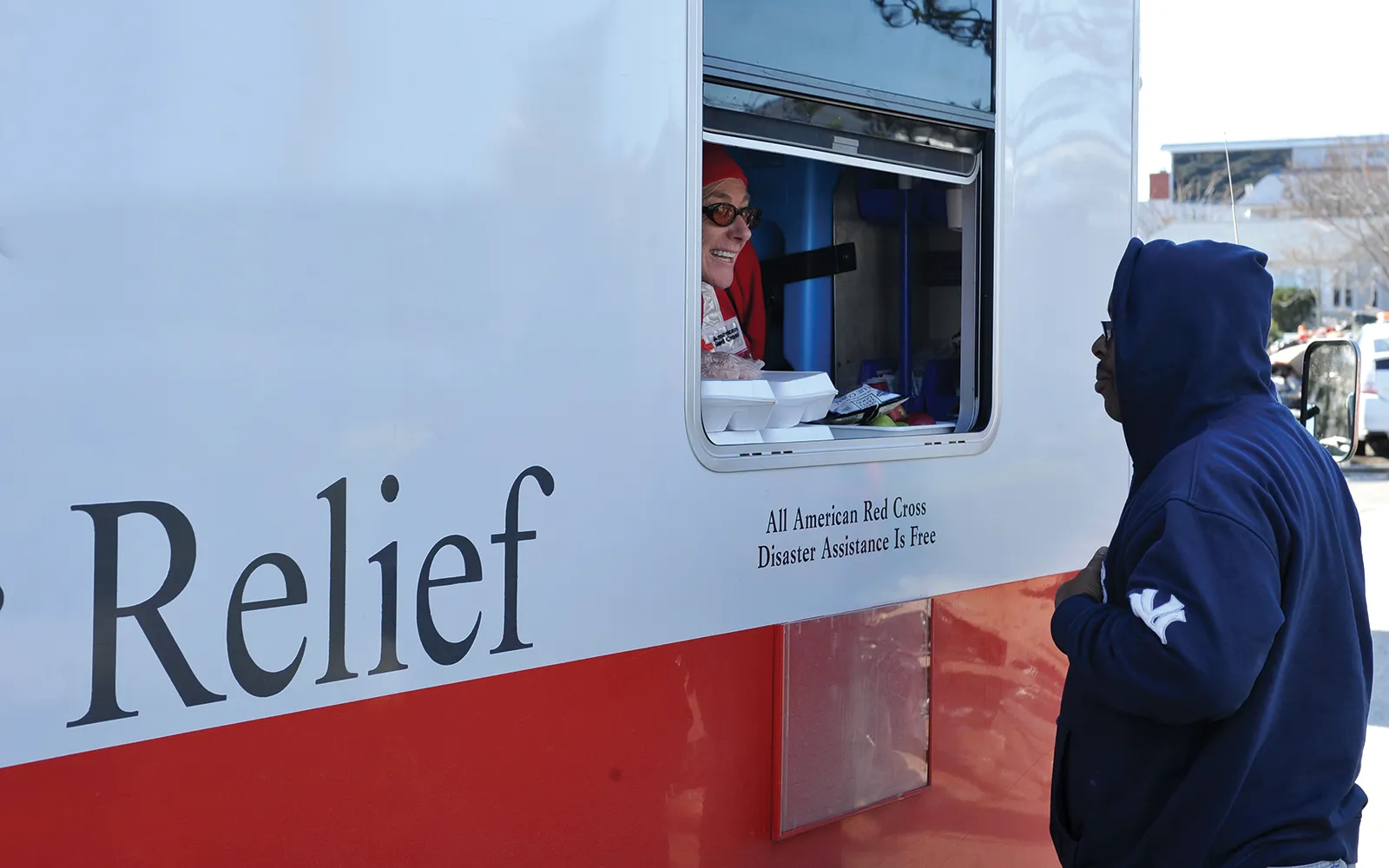
An act of nature such as this produces sudden death of loved ones, injuries ranging from mild to serious, emotional trauma from witnessing devastation, death and injury, total destruction of property, fires, and more—a complex series of experiences that includes several types of traumatic events and stressors. PTSD can possibly occur in anyone who experienced the event, especially those more closely involved, including health-care workers, firefighters, and police officers.
Veterans—No Neat Diagnosis
PTSD in veterans is a highly complex area. In his book Once a Warrior, Always a Warrior (Globe Pequot Press, 2010), Charles W. Hoge, MD, a retired US Army colonel, writes that PTSD is “full of contradictions” and “means different things to different people. To mental health professionals, it’s one of nearly 300 diagnoses detailed in the … DSM. To others, it’s a catchall phrase for the various ways that service members and veterans react to things after coming back from war, synonymous with terms from past years, such as battle fatigue and shell shock. PTSD as a result of combat is almost always associated with various physical reactions, emotions, and perceptions that do not conform to neat diagnosis.”
Hoge writes, “There is controversy over when normal reactions to combat or stress become PTSD … Most warriors, even after going through extreme stress and trauma, do not develop PTSD. But they are also not the same person after deployment as they were before.”5
Abundant information on PTSD and veterans is available through the US Department of Veterans’ Affairs at www.ptsd.va.gov.
Refugees
The United States is host to populations of immigrants from concentration camps and refugee camps, as well as displaced persons, all of whom may experience PTSD after enduring violent and inhumane confinement and brutalization. This population can present special challenges: many do not speak English, or are just learning; skills learned in their country of origin may not be useful in the US economic structure; religious viewpoints may present special challenges; US citizens may not be able to relate to their experiences; and they may be homeless or in federally funded camps until they can be integrated into society.6
Trauma in the Tissue
Professional reflexologists have a unique opportunity to work as part of a team to help people toward self-healing from stress and trauma.
“However much [trauma] messes up our mind, trauma is fundamentally a ‘body thing.’ It is not that trauma can be reduced to physiology … but neither can it be separated from it.” writes Jasmine Lee Cori in her book Healing from Trauma: A Survivor’s Guide to Understanding Your Symptoms and Reclaiming Your Life (Marlowe & Company, 2007).7 The therapist’s touch, behavior, and language can help the client adapt and recover from stress, if the client permits the healing to occur.
To appreciate the role of bodywork in trauma, it helps to understand the physiology of stress. At the heart of all stress is a change in intracellular metabolism and production of energy and processes. This process starts immediately with everyday and acute stress which can get locked in when that stress becomes chronic, as in PTSD.
According to Jack Tips, certified clinical nutritionist and certified classical homeopath who operates the Apple-a-Day Clinic in Austin, Texas, connecting with a person who is dedicated to healing, such as a professional reflexologist, can allow the “cellular memory” of traumatic events to release and dissipate. “The healing touch communicates with the body’s epigenome [chemical compounds that modify or mark DNA] that the need for the stress response is past, and then the cellular metabolism returns to a peacetime function of optimal health.”
Stresses in the body show up first in the feet, Tips says. “Often, people with PTSD show an increase in stress lines in the soles of the feet. These lines emanate from the inside arch and spread out like a fan. Reflexively, the lines show stress on the central and enteric (pertaining to the intestines) nervous systems” (see image below). Using a holistic approach supports the healing process. As people heal, the lines become fewer in number and fainter, indicating the move toward better health.
Professionally trained reflexologists can identify a whole range of conditions by observing the feet for anatomically verifiable deposits in the tissue, color, congestion (fluid located on a reflex), stress lines, temperature, texture, and other features.8 All are indicators of an imbalance in the reflexive tissue in the body. Reflexology nudges the body toward balance, helping the body reset its mechanisms into a state of wholeness and health.
According to Martine Faure-Alderson, DO, author of Total Reflexology: The Reflex Points for Physical, Emotional, and Psychological Healing (Healing Arts Press, 2007), reflexology helps bring the body to a healthy balance by restoring circulation in contracted tissues and moving lymph to cleanse the body. This “gently erases the imprint [in the feet] made by stress,” she says. Reflexes on the foot no longer exhibit signs of imbalance or “poor nervous and hormonal functioning of the corresponding organ.”9
Advantages of Reflexology
A benefit of using reflexology for clients with PTSD is that it can be utilized when massage and other touch therapies are contraindicated. Also, the beneficial effects of reflexology on mental health are clinically documented. Reflexology improves the client’s sense of well-being, improves sleep, reduces anxiety, and often reduces the need for pain medications, especially following surgery or cancer treatments.
Other advantages of reflexology when working with acute stress and PTSD include:
A person remains clothed. This can be highly significant for a client who was brutalized, raped, tortured, or otherwise feels vulnerable.
Reflexologists start at the feet with the client supine. Far from the head, viscera, and sexual organs, feet are generally perceived as a nonthreatening place to begin bodywork. Clients can talk with reflexologists face-to-face and see what is going on, allowing them to feel safe and comfortable as the session progresses.
Reflexive actions occur instantly to relieve tension and stress, promoting deep, restorative relaxation and sleep.
A reflexive area in the feet exists for every organ, gland, and part of the body.
Foot reflexology improves the function of all body systems: immediately noticeable are improvements in the flow of bioelectrical energy, blood, lymph, and nerve impulses.
Reflexology protocols address health challenges particular to the client, such as depression, diabetes, headaches, menstrual issues, respiratory conditions, and more. Protocols follow physiology, making reflexology a direct path to nudging the body toward wellness.
Reflexology also works energetically by balancing the body’s energy systems. It works in harmony with a broad spectrum of energy therapies, such as polarity therapy and Asian medicine.
Considerations in Setting the Atmosphere for Healing
As with other forms of bodywork, a soothing environment nurtures the healing process. It is important to ask the client if the treatment details and setting are OK, as the reflexologist may unknowingly recreate aspects of the traumatic event that may actually increase stress. For example, lavender has a relaxing effect on many people. However, if an abuser wore lavender scent, the client may perceive lavender as a stressor that triggers memories of the trauma.
PTSD clients who feel victimized and powerless may be unwilling or unaware of how to communicate personal needs to the reflexologist. The client must be assured that any and all aspects of the session can be altered or stopped at any time.
Reflexology Protocol
Professional reflexologists employ a full-body protocol, typically in a 50-minute session. This allows time to work reflexes for each system of the entire body, plus additional work for any health challenges unique to the client. It is best to work on all the reflexes of the body first, then budget time for protocols for specific health challenges. The important point is that all reflexes are worked during the time allotted and nothing is missed or short-changed.
The Full-Body Protocol for Stress and PTSD (sidebar) provides a step-by-step sequence for working with clients who are dealing with the effects of stress and trauma. Refer to the image at left for the locations of foot reflexes.
Reflexologists and other bodyworkers can support clients’ healing, regardless of what type of stress they are living through. Whether clients are experiencing everyday stress or PTSD, approaching them with compassion, communicating effectively, and allowing them to feel safe, even for one hour, can make a world of difference.
Notes
1. National Center for PTSD, US Department of Veteran’s Affairs, “How Common is PTSD?” accessed February 2013, www.ptsd.va.gov/public/pages/how-common-is-ptsd.asp.
2. American Psychiatric Association, Diagnostic and Statistical Manual of Mental Disorders: DSM-IV-TR (Washington, D.C.: American Psychiatric Association, 2000).
3. Acute and Post-Traumatic Stress Disorder, DVD (Naples, FL: National Educational Video, Inc., 2006), www.nevcoeducation.com.
4. Tuscaloosa Forward, “Tornado Facts,” accessed February 2013, http://tuscaloosaforward.com/wp-content/uploads/2011/11/Statistics2.pdf.
5. Charles W. Hoge, Once a Warrior, Always a Warrior (Guilford, CT: Globe Pequot Press, 2010).
6. Richard F. Mollica, Healing Invisible Wounds: Paths of Hope and Recovery in a Violent World (Nashville: Vanderbilt University Press, 2008).
7. Jasmine Lee Cori, Healing from Trauma: A Survivor’s Guide to Understanding Your Symptoms and Reclaiming Your Life (Washington, D.C.: Marlowe & Company, 2007).
8. Paula S. Stone, Therapeutic Reflexology: A Step-by-Step Guide to Professional Competence (Upper Saddle, NJ: Pearson Education, 2011), 18, 55.
9. Martine Faure-Alderson, Total Reflexology: The Reflex Points for Physical, Emotional, and Psychological Healing (Rochester, VT: Healing Arts Press, 2007), 140.
A Deeper Dive—How to Communicate with PTSD Clients
Do say:
You have temporarily lost your sense of security and safety. You will feel better over time.
It is understandable that you feel this way.
This is your body’s and mind’s way of dealing with what has happened to you. Your reactions are normal.
Feeling intense emotions and having thoughts that you never had before is normal.
Don’t say:
It could have been worse. You’re lucky that …
It’s best if you just stay busy.
You should count your blessings. It will make you feel better.
I know just how you feel.
He/she is in a better place now.
You need to get on with your life.
(Department of Justice, Office of Justice Programs, Office for Victims of Crime, Mental Health Response to Mass Violence and Terrorism Field Guide, accessed February 2013, http://store.samhsa.gov/shin/content/SMA05-4025/SMA05-4025.pdf.)
To understand tissue-tension barriers, MTs must be constantly present and mindful. Too light and we will not become efficient at creating the healing change that is needed.