In the last column (May/June 2013, Massage & Bodywork), we looked at improving mechanical advantage with optimal posture by aligning the center of weight in each body mass—the head, thorax, and pelvis—along the line of gravity. Ideal posture is maintained by the slow (tonic) contractions of core postural muscles that stabilize the weight-bearing joints in a neutral position. A joint-neutral posture reflects muscle balance, which is the relative equality of muscle length and strength between opposing muscle groups.1
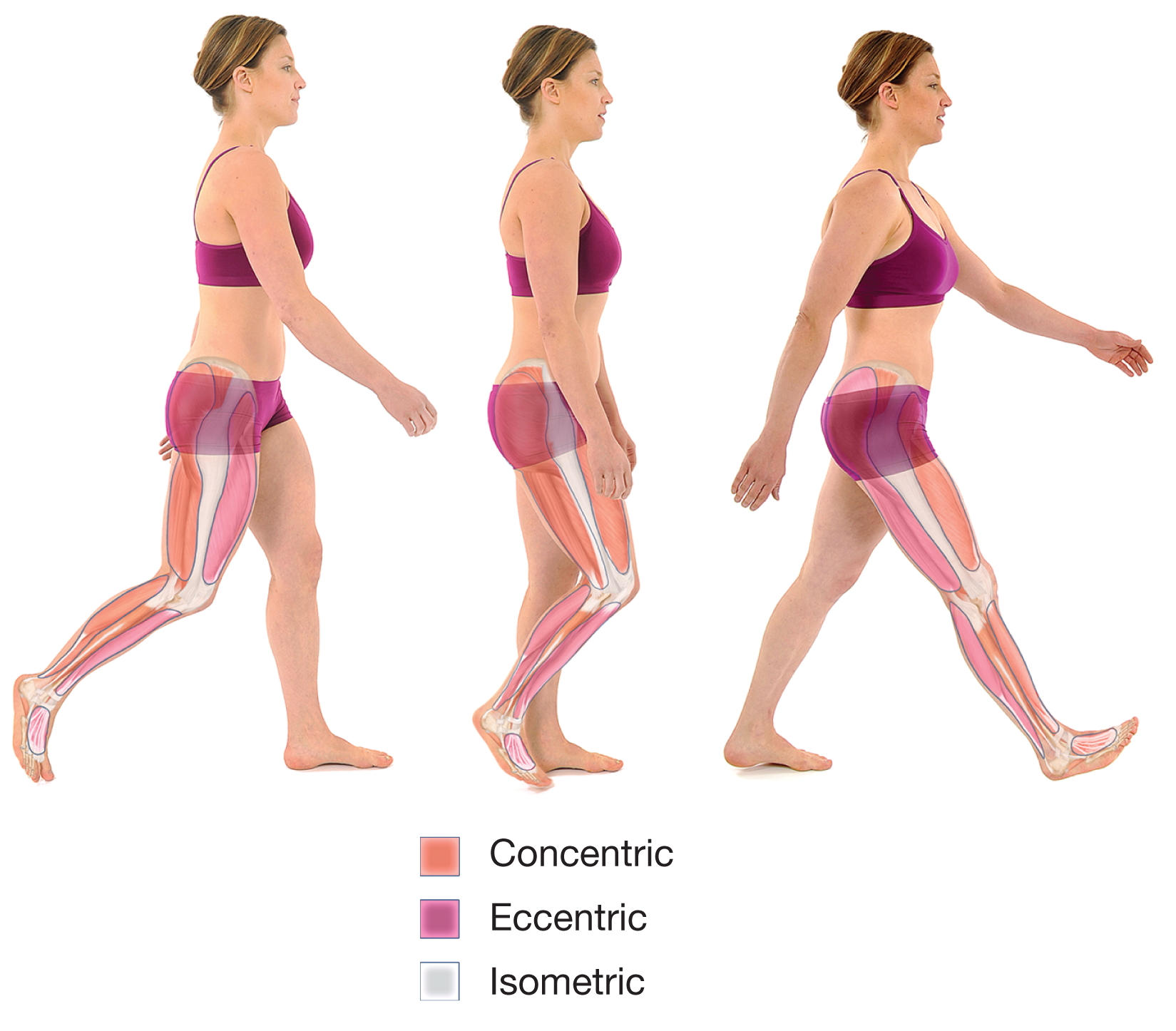
Ida Rolf’s analogy of a “core and sleeve” to describe postural muscles and prime movers gives us a way to visualize muscle balance.2 In a standing posture, a “core” of postural muscles works quietly and efficiently to stabilize the weight-bearing joints in centered, neutral positions. In a moving body, the alternating concentric and eccentric pulls of a “sleeve” of prime movers power the motion cycle (Image 1).
Image 1.
Adaptive Muscle Changes
Muscle imbalances often begin as protective responses to pain and worsen under the prolonged mechanical stress of poor posture. Ongoing adaptive changes in muscles can result in myofascial pain and dysfunction in three primary ways:
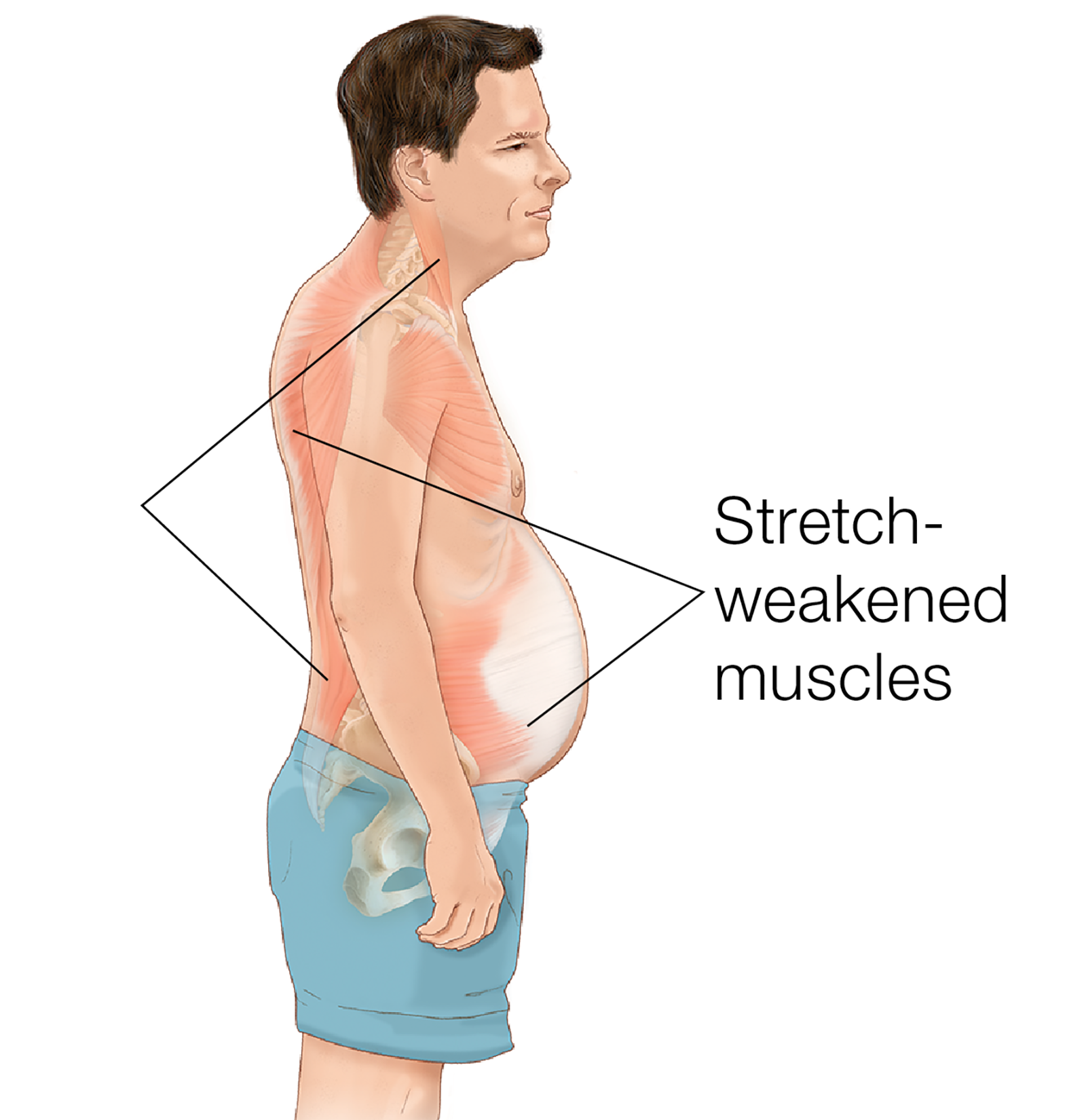
Muscles held in a shortened position for a prolonged period of time undergo adaptive shortening on the flexed side of a joint (Image 2). In a shortened position, a muscle can generate little or no tension upon contraction. Held in this restricted position, the muscle actually changes its shape, growing shorter and thicker to gain room to contract, but the adaption also reduces range of motion.
Adaptive shortening on one side of the body causes adaptive elongation of opposing muscles on the other side. Over time, elongated muscles undergo stretch weakening from working at a mechanical disadvantage in a stretched, loaded position (Image 2). In the case of a flexed posture, the posterior thoracic muscles are eccentrically loaded with the weight of the thorax. The body adapts to the load with a buildup of collagen fibers to shore up the weakened, overstretched muscles, which then become taut, ropy, and stringy.
Under conditions of poor posture and pain, postural muscles become inhibited, failing to fire when needed. This leaves the prime movers without core support or stability. To compensate, the muscular sleeve recruits more workers, which reduces the economy of effort and further compounds the overall muscle imbalance.
Image 2.
Treatment Strategies
As a general rule, each type of muscle imbalance responds best to a specific type of treatment. Adaptively shortened muscles need to be stretched and lengthened, whereas stretch-weakened or inhibited muscles need to be approximated and activated to shorten them. It is important to avoid elongating already stretch-weakened muscles, which could exacerbate the imbalances and increase a client’s pain.
Stretch-weakened muscles can be activated and toned by using active or resisted movement techniques with concentric contractions. Unless a person makes a conscious effort to contract and control stretch-weakened or inhibited muscles with a goal of restoring normal tone, the problem will grow worse.
Inhibited postural muscles can also be activated with active or resisted movement. Because postural muscles work isometrically, activating them with isometric contractions is even more effective. In neuromuscular patterning, a practitioner has the client isometrically contract a core muscle to stabilize the spine or proximal joints while the practitioner manually stretches another part of the body. This is an effective way to integrate postural education into hands-on work to improve muscle balance.
Exploring Technique—Muscle Approximation
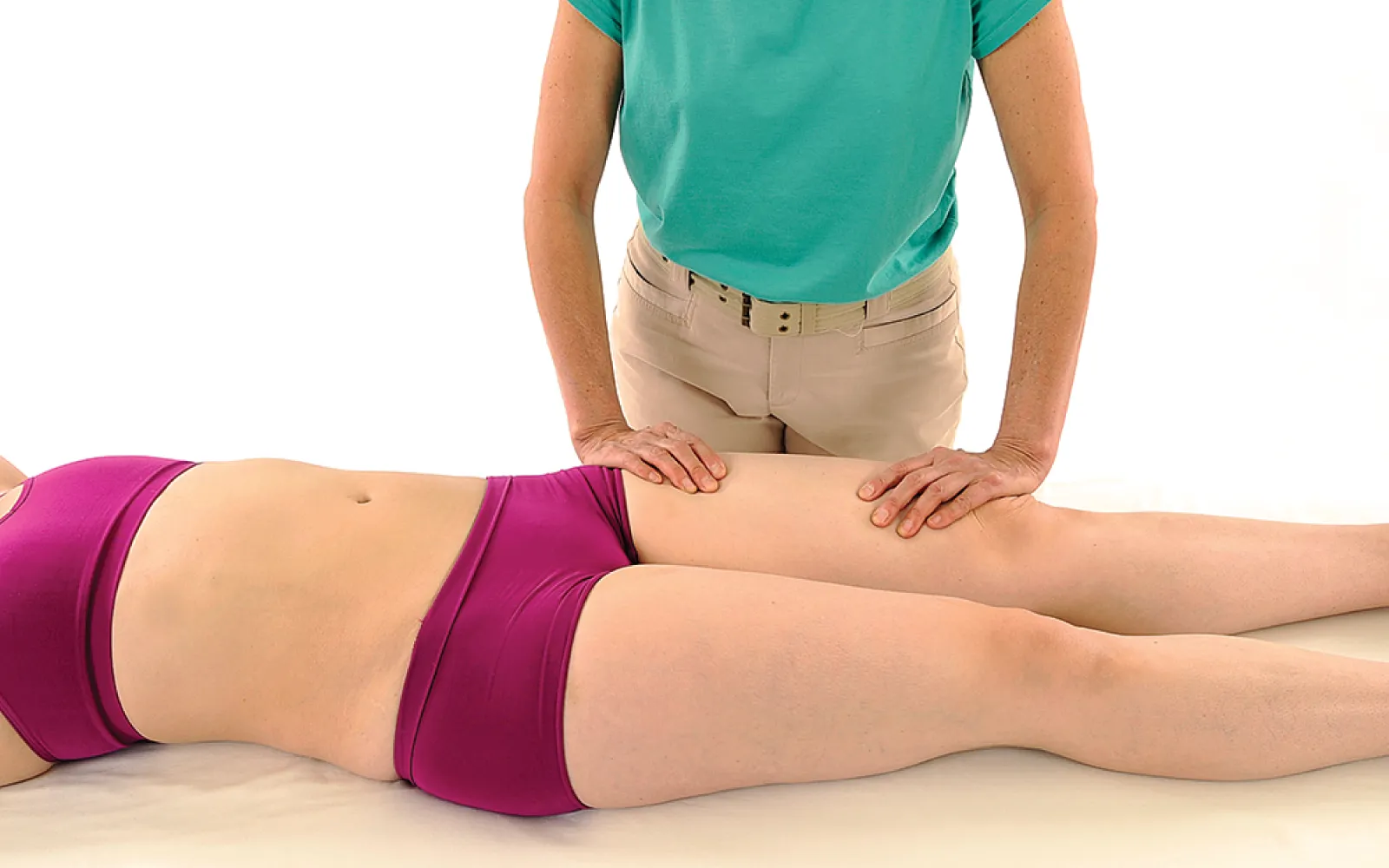
Use muscle approximation to improve muscle awareness and change the resting length of muscles.
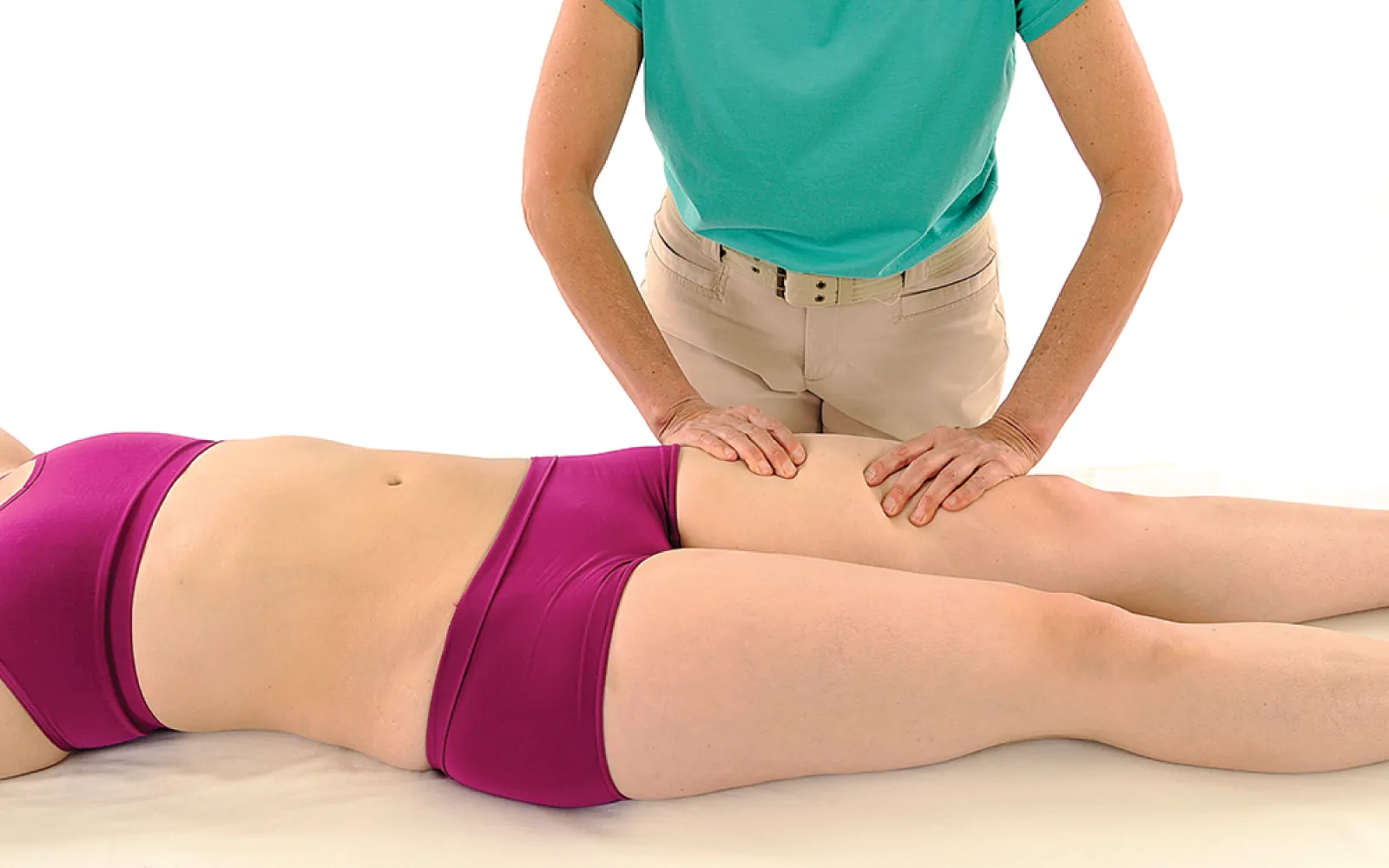
Image A.
Using both hands, hold the muscle near its origin and insertion, at the musculotendinous junctions. Adapt your hands to the shape and size of the target muscle. For flat muscles, use a broad touch; for large, tubular muscles, use a round, encompassing touch; for thin, spindle-shaped muscles, use a pincer touch.
Slowly push the ends of the muscle together to shorten it (Image A).
Hold the muscle in the shortened position until you feel a relaxation response. As the muscle relaxes, it will slowly spring out into your hands, which will take a few seconds.
For an adaptively shortened muscle, approximate and release. Slowly draw the origin and insertion apart, lengthening the muscle to its end range of extensibility (Image B).
For a stretch-weakened muscle, approximate and release. Do not elongate.
For an inhibited muscle, have your client isometrically contract it as you approximate it.
Image B.
Notes
1. P. Page, C. Frank, and R. Lardner, Assessment and Treatment of Muscle Imbalance: The Janda Approach (Champaign, Illinois: Human Kinetics, 2010).
2. J. Linn, “Core of the Matter: Core and Sleeve in the Rolfian Paradigm,” accessed June 2013, www.somatics.de/artikel/for-professionals/2-article/60-the-core-of-the-matter. Originally published in Structural Integration: The Journal of the Rolf Institute 30, no. 1 (Winter 2002): 16–9.
To understand tissue-tension barriers, MTs must be constantly present and mindful. Too light and we will not become efficient at creating the healing change that is needed.