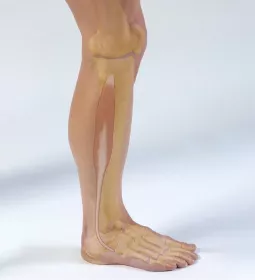
Weakness, poor mobility, or lack of control of the fibularis longus and other ankle muscles may contribute to injuries such as lateral ankle sprains or chronic conditions such as tendinitis, shin splints, or plantar fasciitis.
The estimated number of nerve endings in the body-wide fascial system is 250 million. Compared with the estimated 200 million nerve endings in the skin, this suggests the human fascial network constitutes, in fact, our richest sensory organ.
FR:EIA is changing how we look at fascia. Studying FR:EIA’s dynamic fascial system helps us better understand its organization, fluidity, and strength, and offers clinical insights into how we treat clients.
Lymph relies on muscular contractions to circulate throughout the body, leading one to hypothesize that chronic conditions leading to stiffness and less movement will thereby greatly slow down and inhibit the circulation of lymph in the body.
Individual muscles should be explored for what makes them distinct and extraordinary, in addition to their relationship to the kinematic function of the body.