
Three Lessons Learned from My First Clinical Trial
Three things Paige Mullins learned from developing the massage intervention for the Integrative Medicine for Pain in Patients with Advanced Cancer Trial.
Editor’s note: Research may be key to growing the public’s knowledge of the benefits of massage therapy. This is the inaugural article for a recurring column on massage therapy research and how MTs are interacting with that research. In this article, we follow a first-year practitioner—asked to be identified as “Emma” (she/they)—and how she grew to understand and welcome research. Emma helped in authoring this piece.
On Wednesdays, Emma reads research. It wasn’t always like that. She had to figure it out first.
Eight months out of massage school, it wasn’t long into working that Emma realized the job was very different from what they had been taught. Instead of a “mostly healthy” clientele, the people Emma saw at franchises and small businesses had what seemed like a million mental and physical health struggles. Emma now realized there hadn’t been enough focus on communication skills in their program, so discussing these struggles with clients was a challenge in itself.
Every time a health issue had been raised in their student clinic, the instruction had been to use “light Swedish,” but Emma was coming to realize that solution wasn’t meeting the needs of their clients and could even cause harm.
Emma had looked for continuing education (CE) to help, but the cost was too high compared to their income. When she did find something affordable, it was difficult to tell if the information was accurate or if the instructor was truly a subject matter expert. Often, the topics Emma was interested in, like cognitive and sensory disabilities, didn’t have much CE available.
Emma was a good student in high school and massage school. But now, when trying to read research papers, she often felt frustrated and confused. The papers were filled with words and terms Emma didn’t know; sometimes the papers had words and terms Emma did know, but they were used in ways that Emma had never read before.
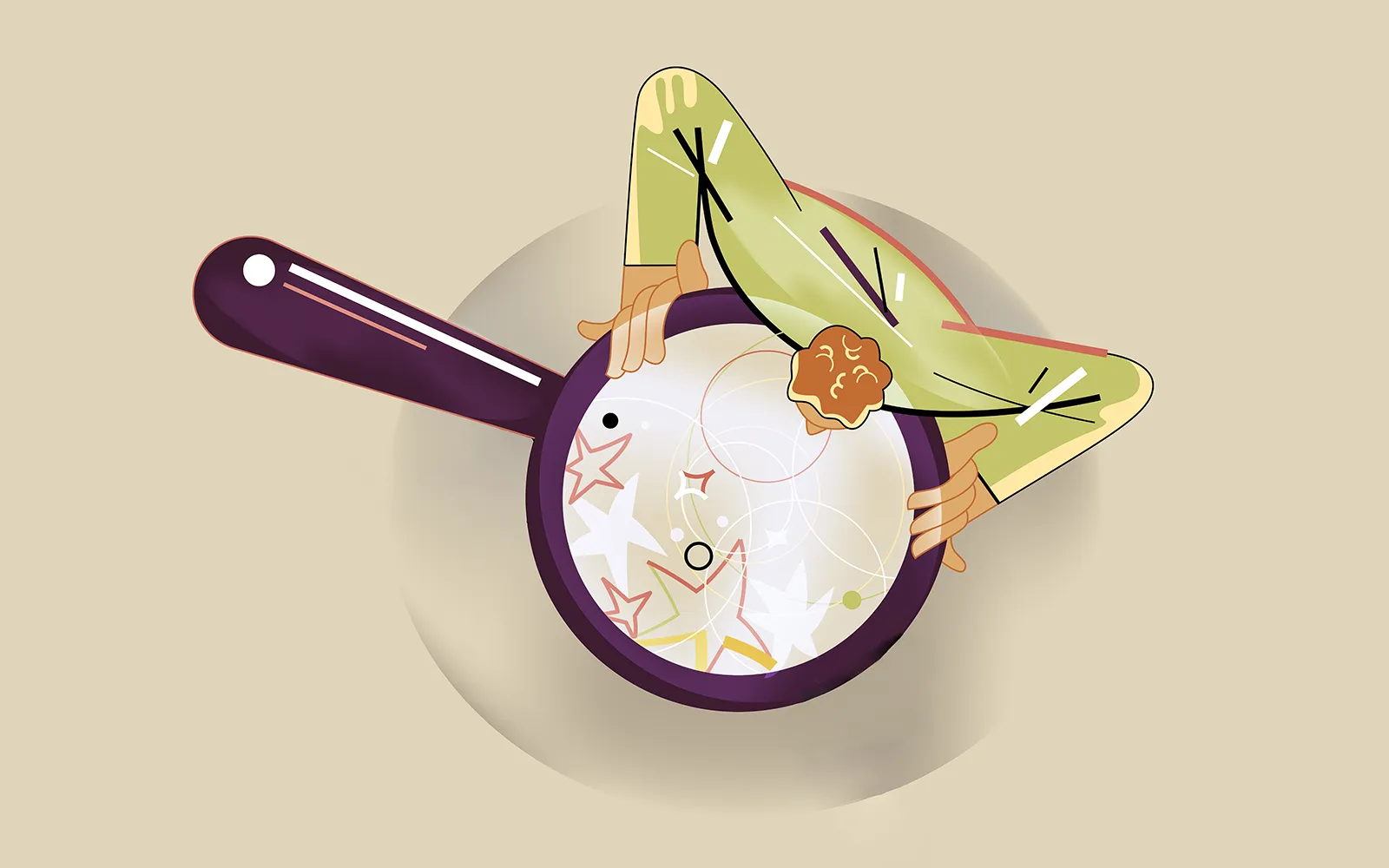
Reading research is like learning how to skateboard. It’s common to fall a lot until you find your balance. Instead of hitting the pavement, readers hit a mental wall.
It’s well documented that new words and difficult sentence structures can overload working memory. At this point, like with Emma, even familiar words become hard to understand and sentences stop making sense. Sometimes disciplines have taken familiar words and given them definitions specific to their topics, adding a layer of misdirection to the writing. With practice and time, you’ll find your balance the way skateboarders do, and then you’ll be doing mental kickflips.
Emma had a hard time focusing on topics they found boring. They weren’t interested in reading about randomized controlled trials with opioids, post-massage blood chemistry, or delayed onset muscle soreness. They were interested in people and their experiences, particularly people experiencing mental, cognitive, or sensory disabilities. Emma didn’t have enough information to address these people’s needs when they became clients, so Emma looked for research in these areas.
When Emma chose to read research, it was to better understand what their clients were dealing with and hopefully gain insights that could make the sessions more useful or comfortable. Emma didn’t focus too long on one topic; instead, they followed their interest wherever it led.
Research can be intimidating, but it’s possible to narrow the field quickly when you follow your curiosity. There is no rule that says you can only study research about massage therapy. If you have a question, it’s likely a university scholar or clinician has already thought deeply about it.
AI chatbots such as Perplexity can be useful for finding articles, but chatbots can misinterpret or heavily bias information if you ask them for a summary. Chatbots are especially good at looking across disciplines. If you give it a prompt like, “Can you recommend academic articles or clinical practices about bolstering people with health conditions?,” it could return articles from orthopedics, nursing, physical therapy, or occupational therapy.
It is possible some of those articles were made up (hallucinated) by the program, but you can quickly verify them by copying and pasting the titles into scholar.google.com. If a title doesn’t show up, you’ll know it was a figment of the chatbot’s imagination.
Sometimes Emma’s curiosity led them into a swamp. Some articles needed too much background knowledge to be understood, while others were written so densely that Emma found it impossible to pick them apart. In these cases, Emma learned to ask for help. They joined a research community where members had a variety of interests and just as much curiosity.
Trading massages with fellow MTs has to happen in person, but a research community can exist across thousands of miles and multiple time zones.
When they first became a member, Emma felt confident in their abilities. They had successfully navigated the expectations of high school and massage school—systems that traditionally placed emphasis only on the right answer. Emma found that this community felt humble and service-oriented. Community members cared about their systemically marginalized clients the way Emma did, and members took Emma’s questions seriously.
For Emma, asking for help was scary at first, but after a few months of receiving thoughtful answers, Emma felt more competent, and for her, feeling competent turned out better than feeling confident.
Research is more fun with friends, whether it’s reading, discussing, or designing it. Research is also a good way to find community within the massage therapy profession. Trading massages with fellow MTs has to happen in person, but a research community can exist across thousands of miles and multiple time zones. The most successful communities have a range of ages, experiences, and interests. They also foster a sense of psychological safety: Members may disagree without fear of being reprimanded, shamed, or belittled.
In these communities, new practitioners can ask for help unpacking the latest study or get clarity on a research topic. For Emma, having a resource like this was a safe place to ask her questions and feel supported.
It was Wednesday. Emma had learned they needed a schedule when it came to engaging with research and CE. After their work shifts, they were too tired to think straight, let alone read a complicated paper with confusing acronyms. Every time they tried to read after work, they quickly gave up and then felt guilty for not sticking with it. Because Emma didn’t see clients on Wednesday, they realized they had more brain space for the effort that reading research required.
Sometimes Emma attended live online events, even if they didn’t feel like they had anything to offer to the conversation. Listening to other members talk about manual lymphatic drainage with focus and passion was both educational and inspiring—and less tiring than pushing through a paper. These events often sparked Emma’s curiosity and renewed their interest and motivation to keep learning. “Being in a community has taught me so much already,” Emma says. “I can’t wait to learn more.”
Living alone on a desert island of frustration is an easy way to stop practicing your research skills. Be kind to yourself and know that not all times are the right time to tackle new information. Choose a time in your schedule when you haven’t already expended a lot of mental energy. The brain operates on glucose, and if you’ve already used up a lot of your energy, it’s going to be futile to try to concentrate on graphs, tables, and new concepts. Try to vary how you interact with research topics. Figure out what takes less energy and what takes more until you find your rhythm.
Emma tries to think of research as a journey rather than a race. She is building a growing competence that is changing how she shows up for clients.
Engaging with research is a habit you can gradually sculpt whenever makes sense for you—like Emma does on Wednesdays. The goal doesn’t have to be mastery; it can be anything you choose.
Right now, for Emma, it’s showing up, asking for help, and continuing to be curious. “I want other therapists to know, if they feel frustrated or inadequate, or find it as difficult as I do to engage with research, they are not alone,” Emma says. “Building a new skill is hard, and research is one heck of a skill.”
Three things Paige Mullins learned from developing the massage intervention for the Integrative Medicine for Pain in Patients with Advanced Cancer Trial.
The evolution of oncology massage started with patients, not researchers or practitioners.
Developing a massage protocol for the IMPACT study underscored that practitioners’ clinical reasoning and patient-centered understanding developed in clinical practice is critical to the research conversation.
Sometimes massage therapy research takes an unexpected turn. And that’s the reason to embrace it.