

Fascia: The Pericardium-Diaphragm Connection
Understanding how the pericardium relates to breathing can in turn help clients relax into their massage session.
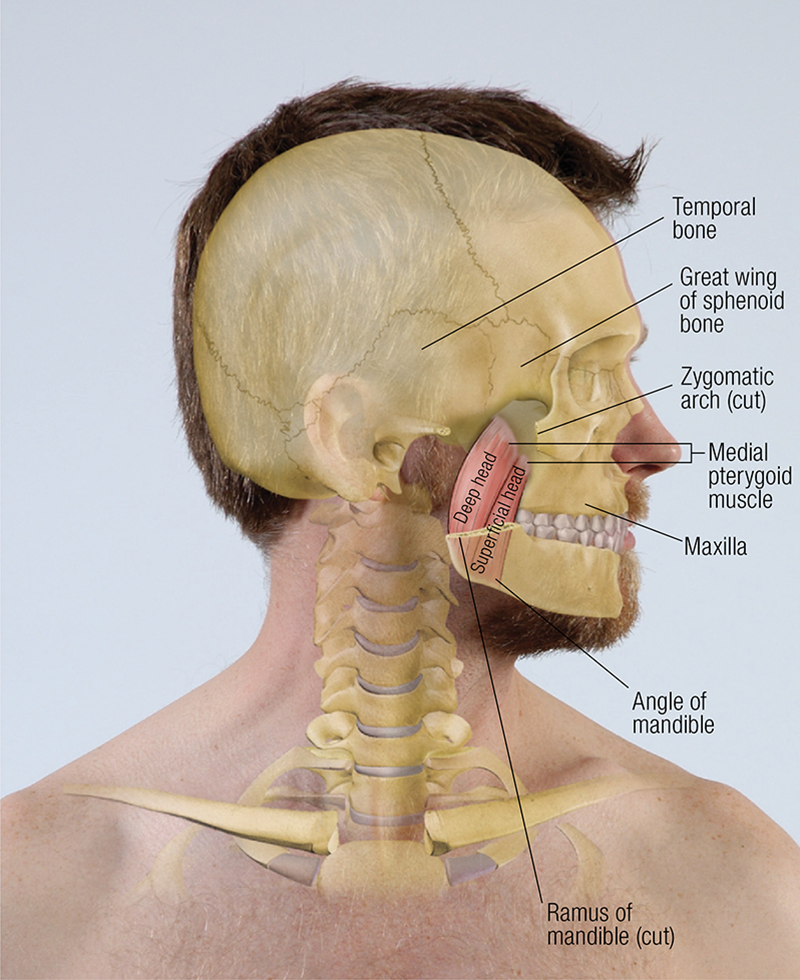
The medial pterygoid is a quadrilateral muscle located deep in the lateral jaw. The fibers of this muscle connect the sphenoid, maxilla, and palatine bones to the inner surface of the angle and ramus of the mandible.
It is located inferiorly to the temporalis muscle and zygomatic arch, and its fibers lie roughly parallel to the larger, more superficial masseter muscle. Together, the medial pterygoid and masseter form a tendinous sling around the angle of the mandible with the masseter located superficial to the ramus of the mandible and the medial pterygoid located deep. The medial pterygoid is found just medial to its counterpart, the lateral pterygoid muscle.
The lateral pterygoid, masseter, and temporalis muscles all work with the medial pterygoid during chewing or mastication. Together, they move the mandible up and down (elevation and depression), forward and back (protraction and retraction), and side to side (lateral deviation). These motions are necessary for grinding food between the teeth and moving it around the mouth. When contracted, the medial pterygoid assists the larger masseter and temporalis muscles in elevating the mandible. The medial and lateral pterygoid muscles work together to protract and laterally deviate the mandible to the same side.
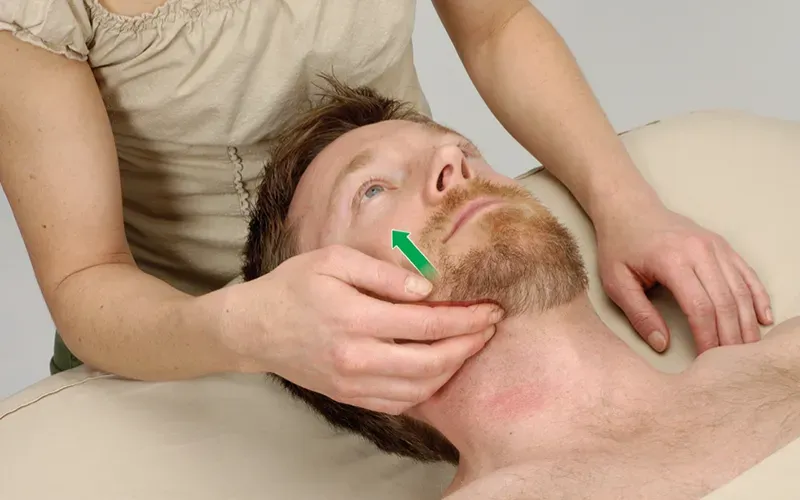
The medial pterygoid muscle is challenging to palpate, as it is located deep to the ramus of the mandible and must be accessed either from the inner surface of the mandible or intraorally. (Note: many jurisdictions have additional requirements or limit the practice of intraoral soft-tissue manipulation.) Hypertonicity or fascial restrictions in the medial pterygoids may result in temporomandibular joint dysfunction and pain, referred pain, and related dysfunction in the upper cervical spine.
Positioning: client supine.
 chin >
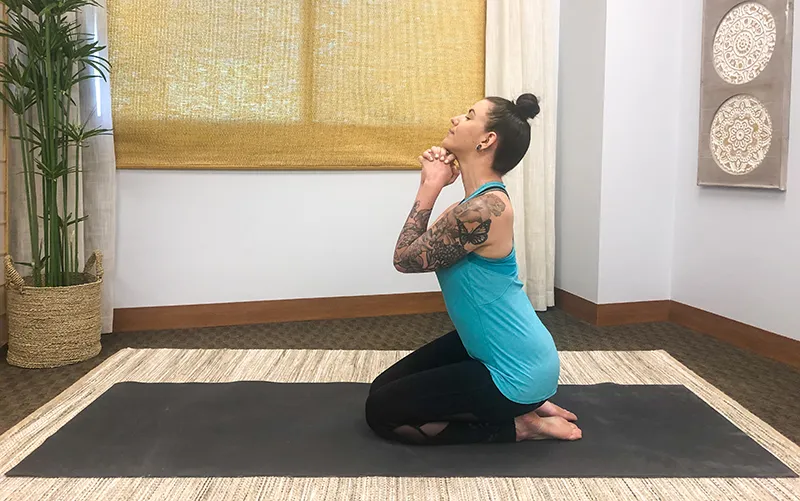
Editor's note: The Client Homework element in Functional Anatomy is intended as a take-home resource for clients experiencing issues with the profiled muscle. The stretches identified in Functional Anatomy should not be performed within massage sessions or progressed by massage therapists, in order to comply with state laws and maintain scope of practice.
Understanding how the pericardium relates to breathing can in turn help clients relax into their massage session.
Superficial fascia may not get the same attention as deep fascia, but it plays an extremely important role in the organization of tissues and the structure of the body.
Understanding tendons—their shapes, lengths, and organization—improves an MT’s touch vocabulary and facilitates a more skilled touch.
While the neck is a bridge, a pathway, the position of the neck and head can also indicate a multitude of other things happening beneath the surface.