

Spot Predatory Clients
Many massage therapists have stories of at least one client who crossed a line. Yet formal reporting in our profession remains rare.
Because of empathy, we can sense what's occurring within our client's body. Because of empathy, we know when our massage strokes are relieving pain. Because of empathy, we can drill into the emotional roots of a challenge. And because of empathy, we might (all too often) become overwhelmed by a client's feelings, physical aches, neediness, histories, and desires.
At baseline, empathy is the ability to understand and share another's reality. It is also the subject of one of my just-released books, Llewellyn's Little Book of Empathy,1 which constitutes the spine of this article. In client work, empathy is a necessity. Empathy enables you to relate to your client and lets them know you care, but it also comes with serious potential downsides for you as a massage therapist.
Because of the possible benefits and liabilities of empathy, I'm going to examine empathy from a unique point of view—through the lens of energy. Through this perspective, you can learn how to embrace the amazing upsides of using empathy on the job and decrease the possible negatives. I'll also outline the four major types of empathy and share specific ways to employ them during a session.
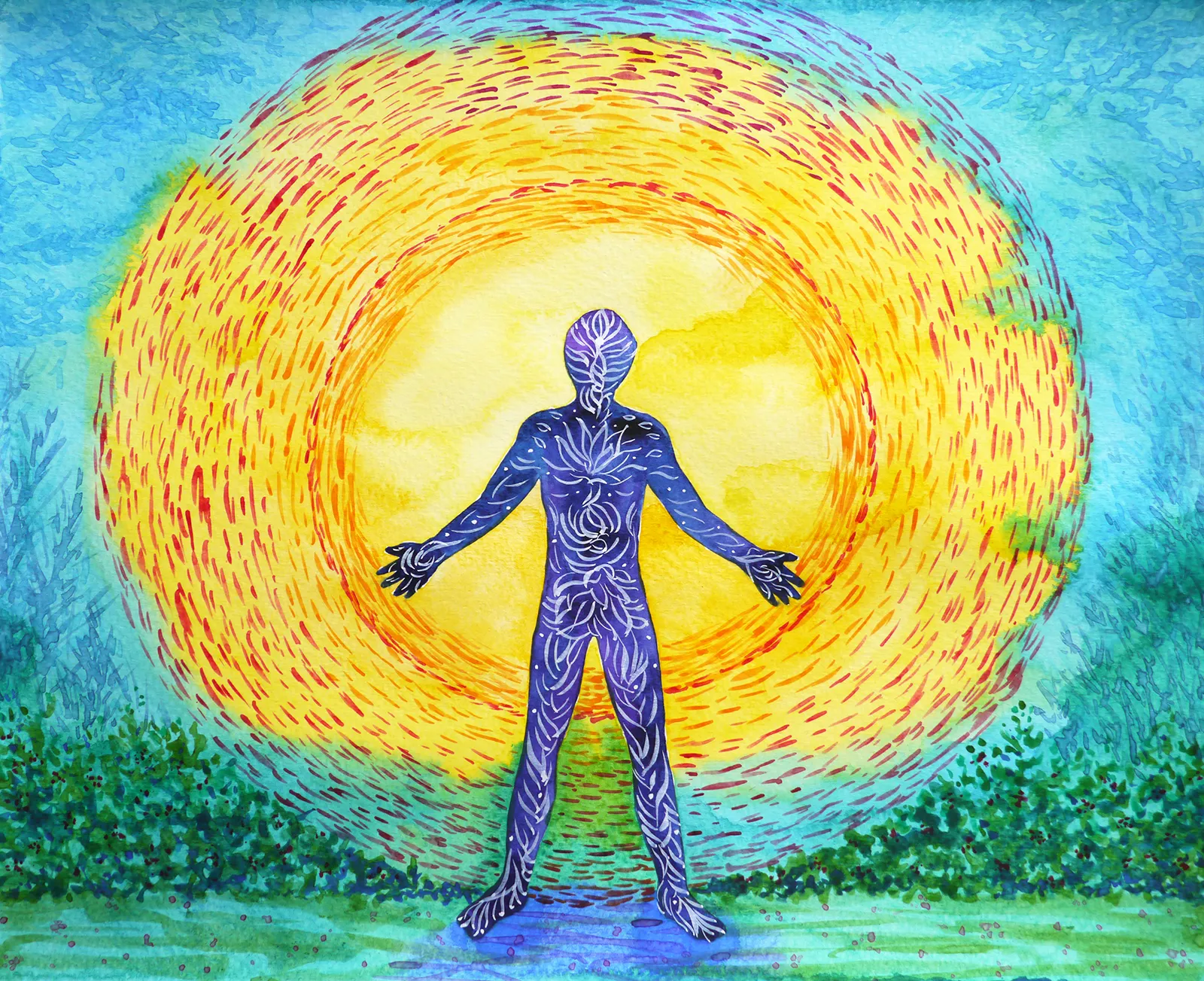
Energy is information that moves and absolutely everything is composed of it, including objects, bodies, thoughts, feelings, and spirits. There are two types of energy, however—physical and subtle. The distinction is crucial to comprehending empathy.
Physically, empathy is managed through hardwired neurons and a complex interaction of biochemicals. Our psychological profile, which is mainly body-based, enables us to send, receive, and interpret empathically delivered information. On the other hand, subtle information—also called psychic, spiritual, mystical, and intuitive data—comprises the bulk of the information we emanate and take in empathically. In other words, empathy produces concrete results but mainly occurs through the exchange of unseen information.
Accessing and interpreting empathically-based information can obviously be very useful. I already suggested a few gains in the first paragraph of this article. We can attune to another's physical conditions and maybe even the causes of their presenting symptoms; relate to repressed feelings and emotions; pick up on the beliefs creating problematic issues; and even attune to negative spiritual energies, which could create invisible influences. But there are three possible subtle energy problems that could also muddle the waters.
One empathic challenge is under-empathy. Some individuals aren't able to fully activate or employ their empathic circuitry. The "under-empathic" are often quietly and sadly left outside the circle of love. Others twist their empathic skills to get what they want from others. This is true of narcissists, sociopaths, and Machiavellian personalities. There are also those on the other side of the coin: the victims of deceit, the individuals whose empathic aptitudes can be manipulated. Too often, they end up indulging others' needs and ignoring their own.
The empathic drawback that healers are most vulnerable to is over-empathy. When I was a child, I was so completely attuned to others' physical conditions, emotional entanglements, and hidden beliefs, that I was a wreck. I couldn't tell whether I was catching the flu or over-identifying with an ill sister. I didn't know whether a bout of sadness reflected my personal feelings or belonged to my mother. I flayed around in confusion if I sensed that a teacher was lying or that a relative was prejudiced. Why did no one else seem to notice? And worse, I was afflicted with an even more unusual empathic conundrum. I was overly conscious of the unseen universe.
To me, shadowy entities, angels, and the deceased were as animate as the living. Sorting the supernatural from the natural was an exhausting process. Bottom line, it can be as harmful and isolating to be too "tuned in" as it is to be overly "tuned out."
Empathy enables you to relate to your client and lets them know you care, but it also comes with serious potential downsides for you as a massage therapist.
You too might be over-aware of what is occurring in a client. The key to being safe—without totally closing down the empathic gift—is twofold. It's vital to understand the four basic types of empathy and also learn how to establish empathic boundaries. After I outline this information, I'll give you tips for tapping into these four empathic styles during a session.
The ability to sense what is occurring in another's body, including relating to illnesses, aches and pains, and all other types of unpleasant and pleasant sensations, is physical empathy. This capability is what allows you to sense in your own body what is happening in your client's body.
The capacity to feel others' feelings as if they are our own is emotional empathy. During a session, we might be struck with any of the five feeling constellations, which are fear, sadness, disgust, happiness, or anger. During a bodywork session, these most frequently strike us when we are touching a client's bodily area of tension or pain. If we don't have a reason to feel that emotion, it is most likely our client's, and could be causal to the physical challenge.
An aptitude for cluing into another's thoughts and perceptions is mental empathy, as well as plugging into the "Universal Mind," a gigantic mesh of knowledge. For a client, you might unexpectedly become aware of their motive for an activity or a dysfunctional belief underlying their causal issue. Sometimes an actual thought will jump into our heads; other times, we get a "gut sense."
Spiritual empathy is the talent for relating to beings in the spiritual realms, including the deceased, entities, angels, and even a Higher Power by whatever name works for you—as well as the spiritual essence within all living beings.
As stated, when we go too far, we can easily become overwhelmed by others' physical, emotional, or mental realities, or by their awareness of the unseen world. We can become flooded by another's bodily concerns, illnesses, and desires; pleasant or unpleasant emotions; or perceptions, judgments, opinions, and knowledge. You can also be overtaken by the concerns, values, and consciousness of another's core self, as well as the invisible spirits involved in an empathic process.
Social scientists often apply the term contagion to describe the hyper-empathic condition in which one person's state of body, mind, or soul catches fire in another. Another term often used is empathic absorption, which happens when we soak up and hold onto so much of another's empathic data that we lose track of our own bodily needs, feelings, knowledge, or value system. Caregiver personalities are especially susceptible to this mistake, which can lead to caregiver burnout and its many afflictions, such as exhaustion, illness, depression, inflammation, and a lack of interest in life. Hence, the need for energetic boundaries. In relation to empathy, I call these "empathic boundaries."
If you let in too many empathic energies in any of the four empathy areas, then you need to alter the programs managing that ability. Then, and only then, can you trust the information you're getting.
Baseline empathic boundaries are the filters that decide what empathic information we will let in or disseminate. These sieves are composed of many types of fields that emanate from us, including our electromagnetic fields, which are biological and are generated from every one of our cells and organs, and our overall body. The other vital fields are the auric fields, which are extensions of our chakras, the subtle energy organs that manage all aspects of our being. These conjoint fields decide what empathic data to let in or keep out based on programs, which are ideas stored in our neurological system and our chakras.
The rest of this article is devoted to enabling you to alter any debilitating programs that might be impacting an empathic area, and providing you with tips for using data that is streaming in during a session.
As with all empathic input, you can always ask your inner self or a Higher Power to clear it from you if it becomes uncomfortable or unwieldy. The extra energy will be released in a good way to serve all concerned.
Remember the old Barry Manilow song? I'm dating myself, but it does go on about feelings . . . nothing more than feelings. How can you assure a safe assumption of another's feelings?
Receiving knowledge of a client's motivations or thoughts can assist you in figuring out what is occurring with them—as long as you aren't overwhelmed. These steps can help you:
Do the following to use your spiritual empathy during a session.
As mysterious as empathy is, it is an inborn ability to connect with another. Keep yourself safe while using it and it becomes a tool in your bodywork medicine kit.
1. Cyndi Dale, Llewellyn's Little Book of Empathy (2019).
Many massage therapists have stories of at least one client who crossed a line. Yet formal reporting in our profession remains rare.
Predatory sexual behavior by any potential or current clients is a serious issue. Let’s review ways in which therapists can advocate for their own safety and for safe working environments.
A new theoretical framework for massage considers how intention before, during, and after a session can profoundly impact the efficacy of your work.