

Fascia: The Pericardium-Diaphragm Connection
Understanding how the pericardium relates to breathing can in turn help clients relax into their massage session.
When something is described as sacred, it is held in high regard and offered inherent entitlement to respect and reverence. It inspires awe and curiosity for its power and significance. In some cases, its value is so great that without it, everything around it would be compromised.
The sacrum is one such sacred object. Better said, when properly stabilized, it is the keystone of a sacred region that has the power to support the rest of the body in health.
In the May/June 2020 issue of Massage & Bodywork ("The Sacred Sacrum, Part 1"), we presented an awareness of the energetic and structural significance of the sacral region and touched on the mental, emotional, physical, and spiritual aspects that may become compromised when delicate balance is off kilter.
In this article, we will cover subtle yet effective techniques to perform on clients and self-care exercises to assign between sessions to consciously support and encourage alignment. This requires a reminder of how to approach conversation and touch with your client when addressing this sacred region.
Because the sacrum is located in the vulnerable pelvic region and is connected to deeply rooted emotions and experiences, practitioners are wise to be mindful to clients' subtle cues of discomfort. Clients might feel awkward with hands-on work on or near their gluteals, abdomen, hips, and thighs.
You may notice the client tensing their muscles, breathing more rapidly, fidgeting, or talking about an unrelated topic to ease their discomfort. This is why it is important to clearly communicate what your intentions are, why this area is worthy of attention, and precisely how you will be draping and touching them before the work begins. Acquire their permission for anything you do.
New practitioners may struggle with confidence on communicating and touching these areas appropriately and, as a result, skip them entirely. Practitioners miss a valuable opportunity to facilitate healthful change for their clients when they avoid key areas out of fear. Working with a mentor and role-playing client communication are great ways to overcome insecurity and gain the necessary confidence to address vulnerable areas with ease and grace.
Showing your clients anatomical images can support this conversation. Many clients have no idea what their sacrum looks like, how it is connected to the spine and pelvis, how it is "glued" together by dense connective tissues, or why it can easily fall into misalignment. When you educate clients on these details, you offer deeper understanding, which fosters more comfort and safety.
If the client is open to energetic healing practices, provide some literature outlining the key aspects of the sacral and root chakras. Introducing clients to deeper subtleties can possibly illuminate connections to other mental and emotional experiences that are showing up in their lives.
The aim of these techniques and exercises is to free up excessive tension and stagnant energy so that the pelvis and sacrum can move, align, and adjust to external force more naturally and efficiently.
The aim of these techniques and exercises is to free up excessive tension and stagnant energy so that the pelvis and sacrum can move, align, and adjust to external force more naturally and efficiently. Please note there are a wide variety of deep-tissue techniques that can be applied to the lumbar, abdominal, gluteal, and thigh regions that affect the sacrum and surrounding articulations. This article focuses instead on subtle techniques that can be performed with or without deep-tissue massage.
This technique is performed at the beginning or end of the session while the client is fully clothed and in supine position.
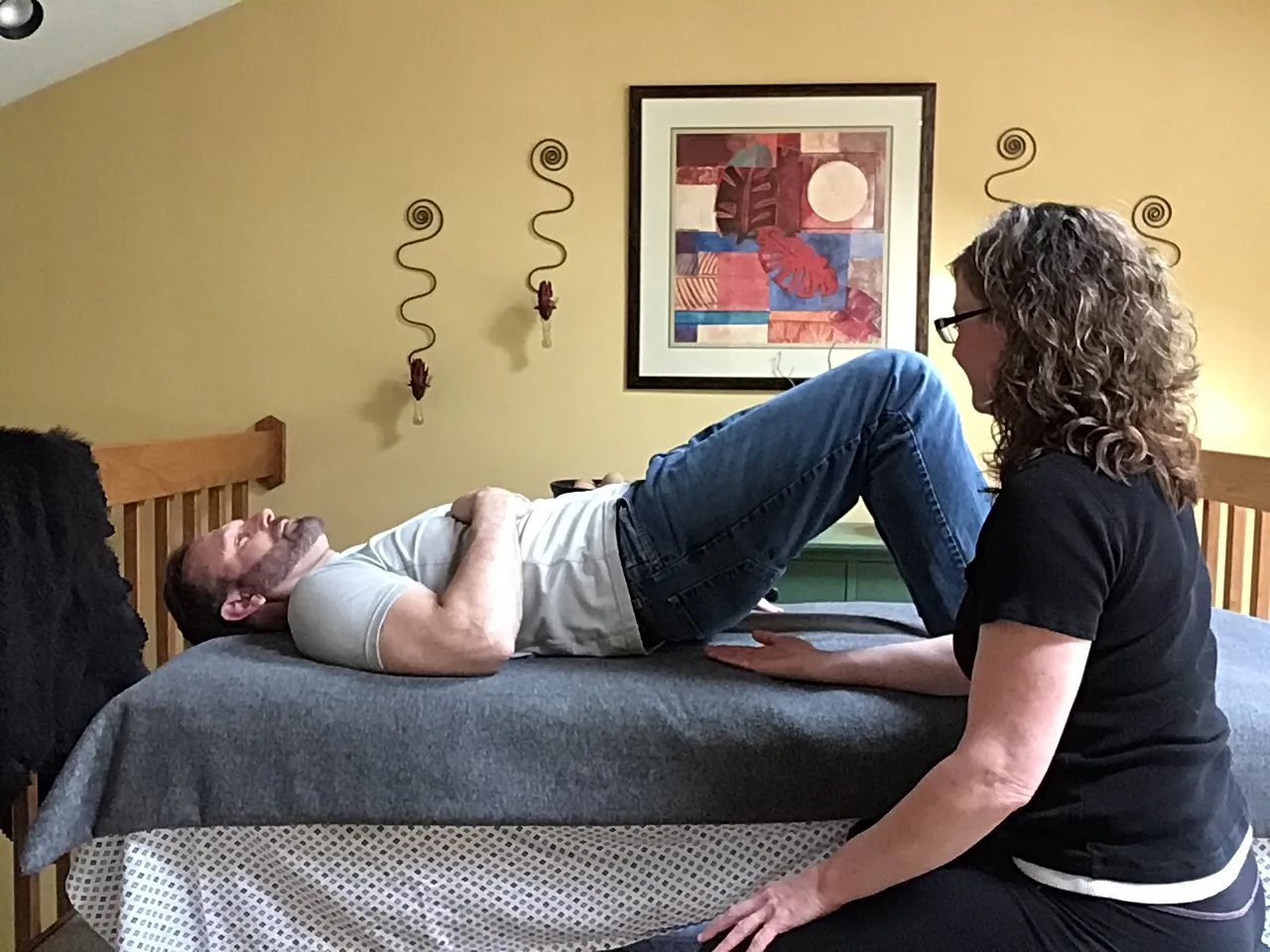
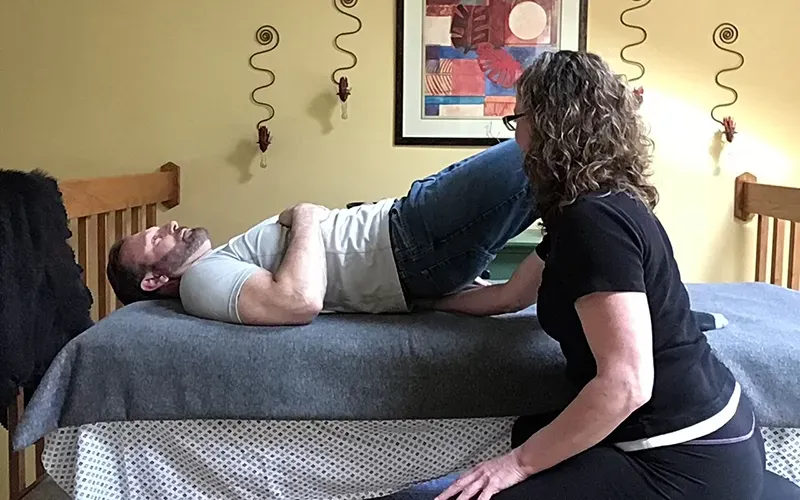
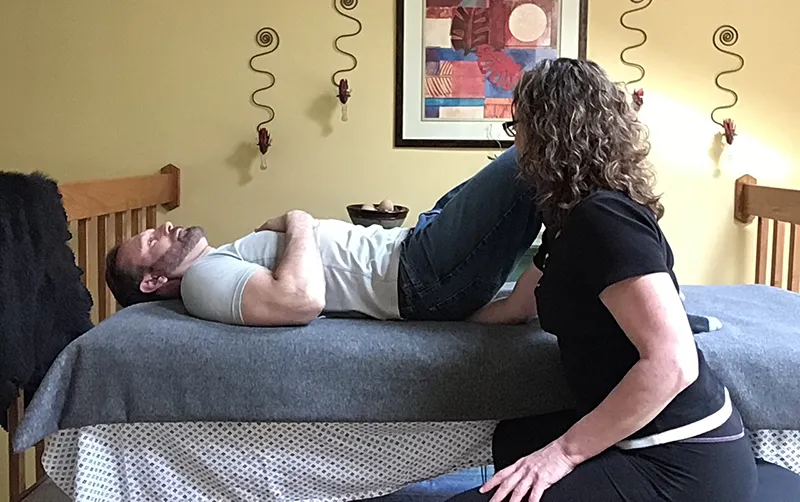
This technique can be performed at any time during the session while the client is in prone position. It is a great opening or closing to a back or posterior leg routine. For warmth, I typically apply sacral rocking with the client fully draped.
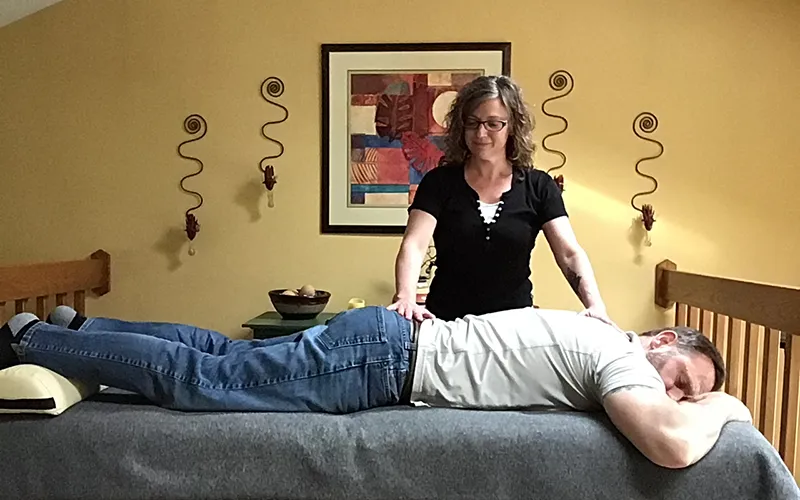
We can heal what we place our attention on. When our sacred center is acknowledged, held with full presence, and properly looked after, the rest of the body receives the positive ripple effect of freedom through stability.
This take-home exercise will assist clients with maintaining energetic movement at the base of the spine and released muscle tension around the sacroiliac and coxal joints. It also facilitates the movement of cerebrospinal fluid and can create release in the cranial region.
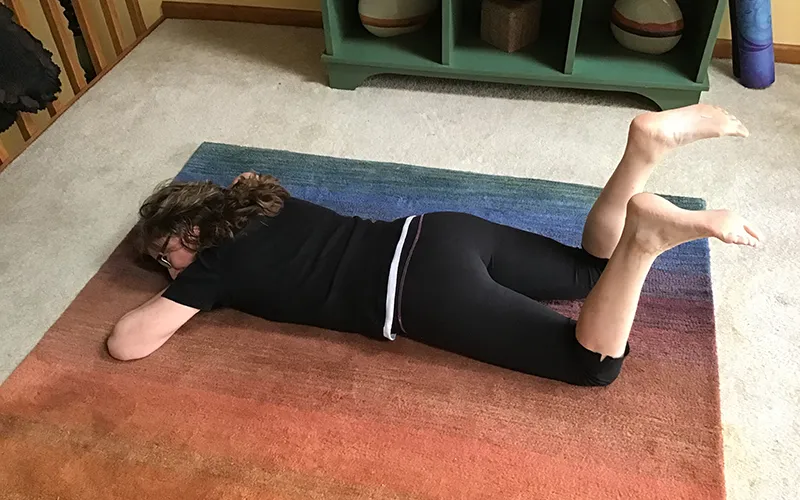
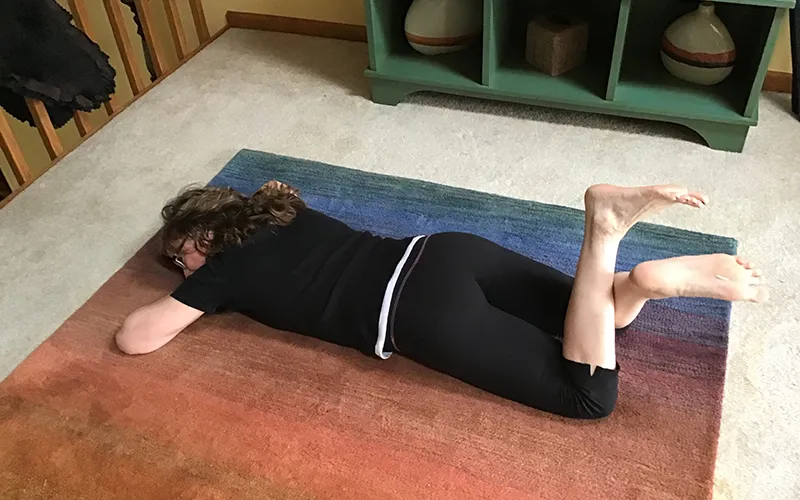
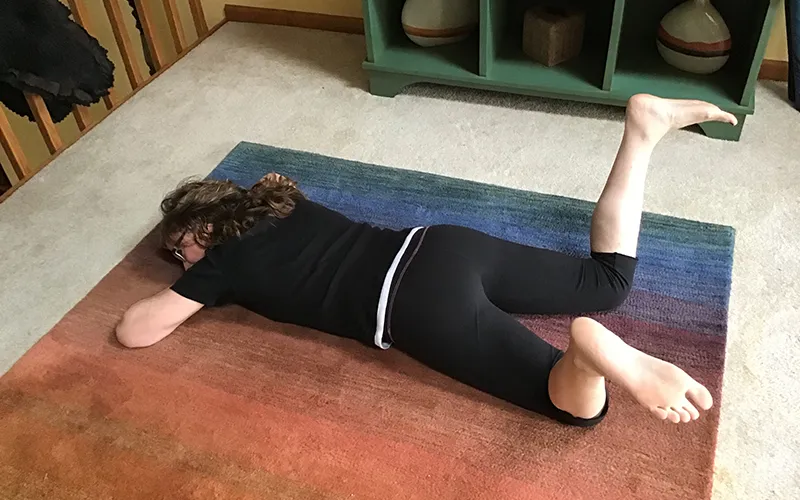
This take-home exercise is a powerful way clients can balance the musculature on both sides of the pelvis and thighs, which allows gravity to realign the pelvis and sacrum with little effort. Clients will need a fat pillow or yoga block and a yoga strap or belt for this exercise.
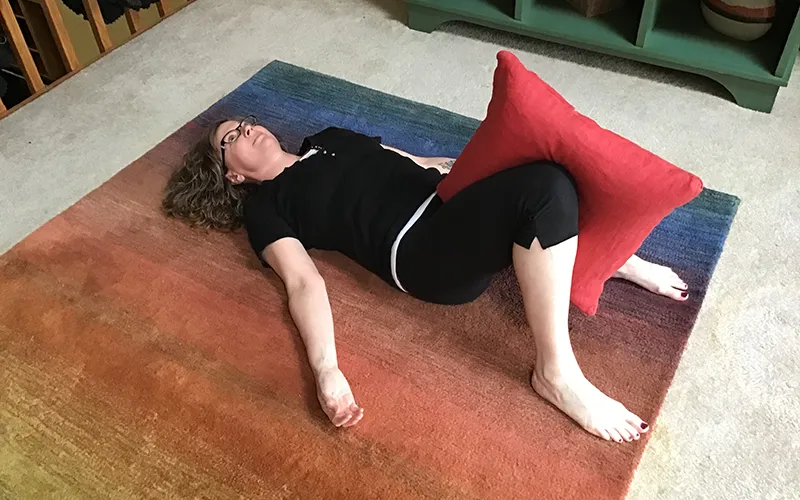
Phase 1
Phase 2
Phase 3
Editor's note: The Scissor Kick Exercise and Neutralizing Knee Squeeze Exercise are intended as resources for clients. The exercises should not be performed within massage sessions or progressed by massage therapists, in order to comply with state laws and maintain scope of practice.
Understanding how the pericardium relates to breathing can in turn help clients relax into their massage session.
Superficial fascia may not get the same attention as deep fascia, but it plays an extremely important role in the organization of tissues and the structure of the body.
Understanding tendons—their shapes, lengths, and organization—improves an MT’s touch vocabulary and facilitates a more skilled touch.
While the neck is a bridge, a pathway, the position of the neck and head can also indicate a multitude of other things happening beneath the surface.