Longtime massage educator Clint Chandler works the glutes both through a drape and with specific gluteal draping. He says you need both. “By leaving the area draped, I can use more aggressive approaches and I don’t have to worry about the placement and/or position of the drape. However, I also like to work directly on the tissue using a secure gluteal drape, and everyone knows you can't address the fascia unless you work directly on the body’s tissue. Deep, linear glide strokes combined with cross-fiber friction is often required on these strong and dense muscles.”
Here, we offer step-by-step instructions for proper gluteal draping techniques.
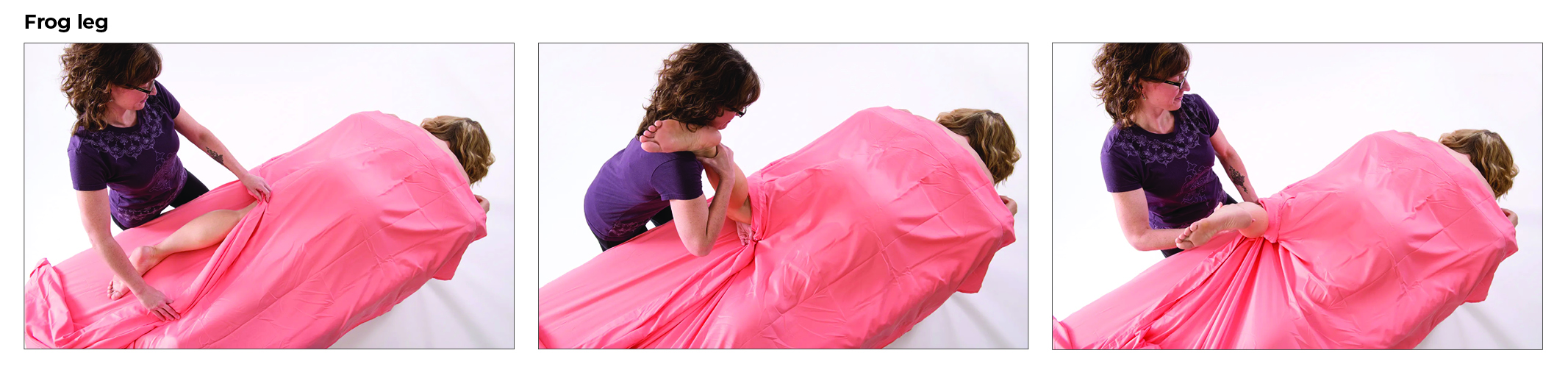
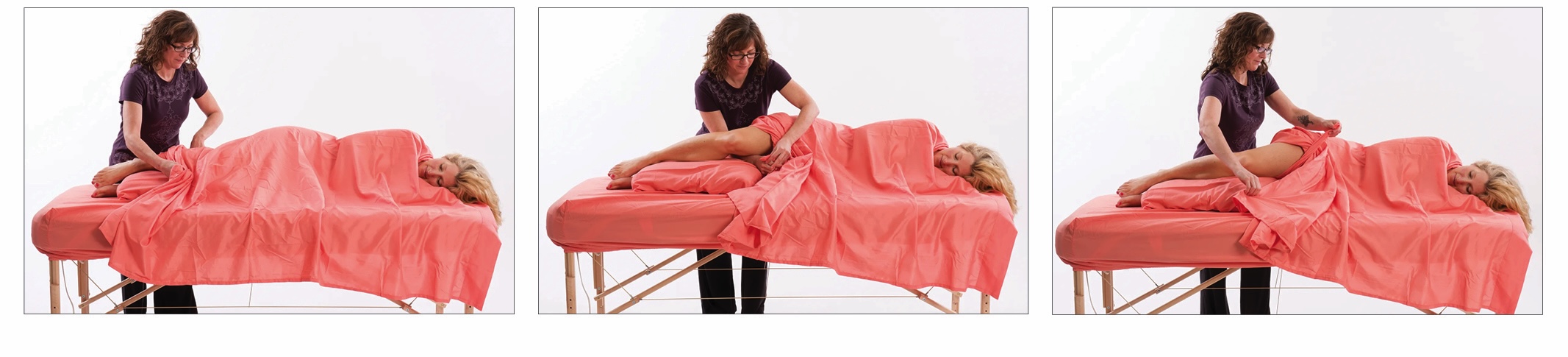
Frog Leg
1. Anchor the drape just superior to the knee while folding it back to expose the leg.
2. Rest the client’s ankle on your shoulder; slightly lift the thigh while reaching under and grabbing the drape.
3. Laterally rotate the hip while bringing the knee along with the drape to the side of the body.
4. With an anchor on the knee and drape, continue laterally rotating the hip to a resting position.
5. Easily access the hips, glutes, and lateral thigh through the drape.
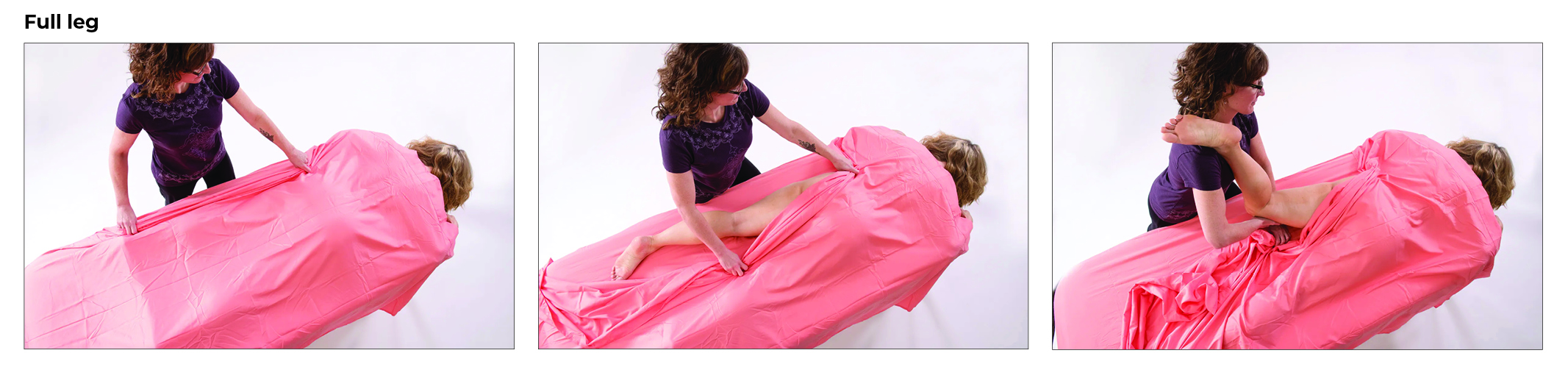
Full Leg
1. Gather the drape at the hip and the ankle.
2. Anchoring the drape at the upper glutes, undrape the entire leg.
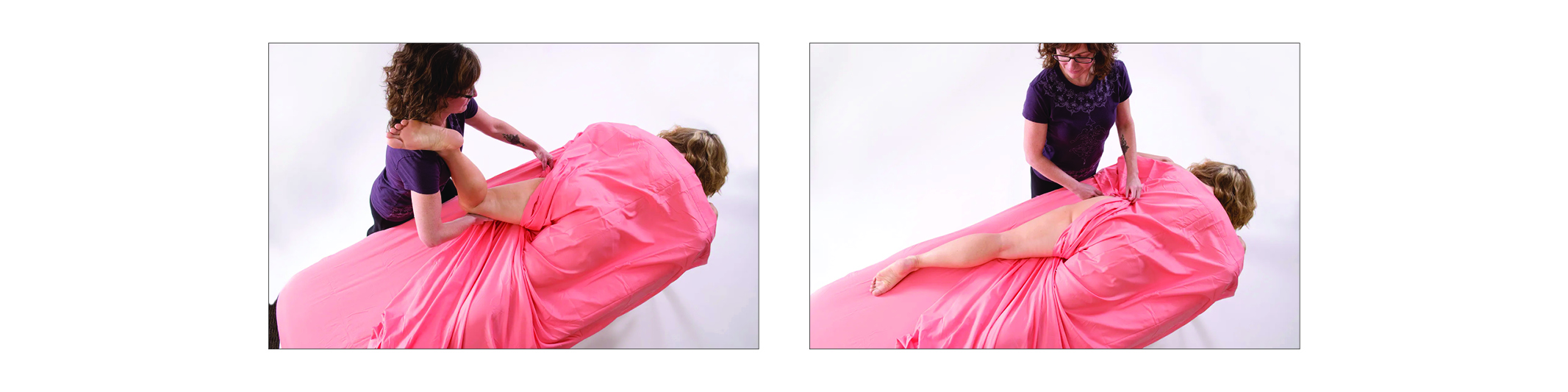
3. Rest the client's ankle on your shoulder; slightly lift the thigh while reaching under and grabbing the drape.
4. Pull the drape all the way up to meet the original anchor point at the upper glutes.
5. Gently release the leg; the entire hip, glutes, and leg will be ready for work.
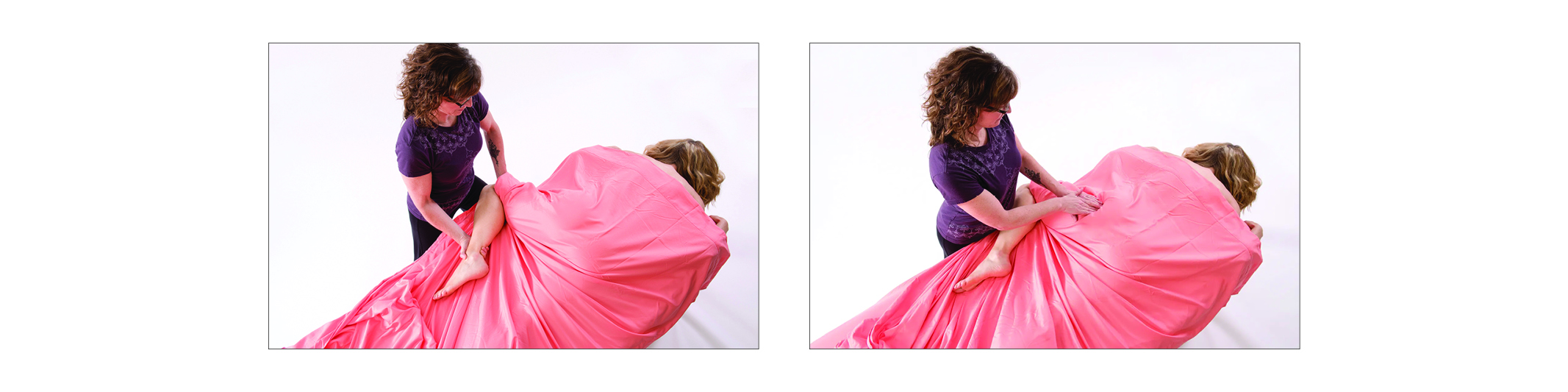
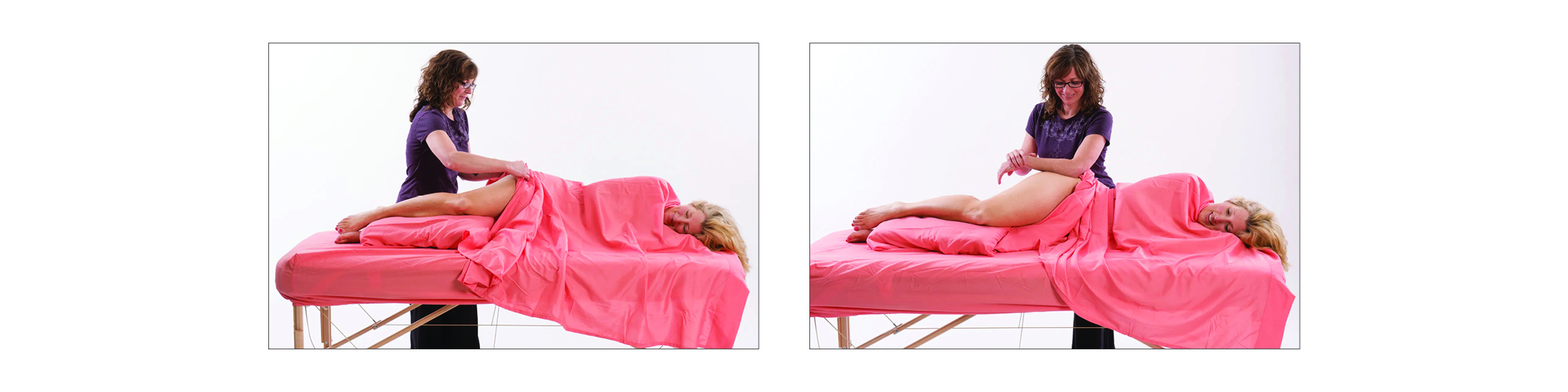
Sidelying
1. Gather the drape and slide it up just superior to the knee.
2. Slightly lift the knee and thigh to create space to pull the drape protectively between the thighs.
3. Continue to pull the drape up to the hip, being cautious it remains anchored to the body’s anterior side.
4. Noting client comfort, expose enough of the hip and glute to effectively treat the area.
5. Use of the forearm, soft fists, and digital pressure are all effective approaches.
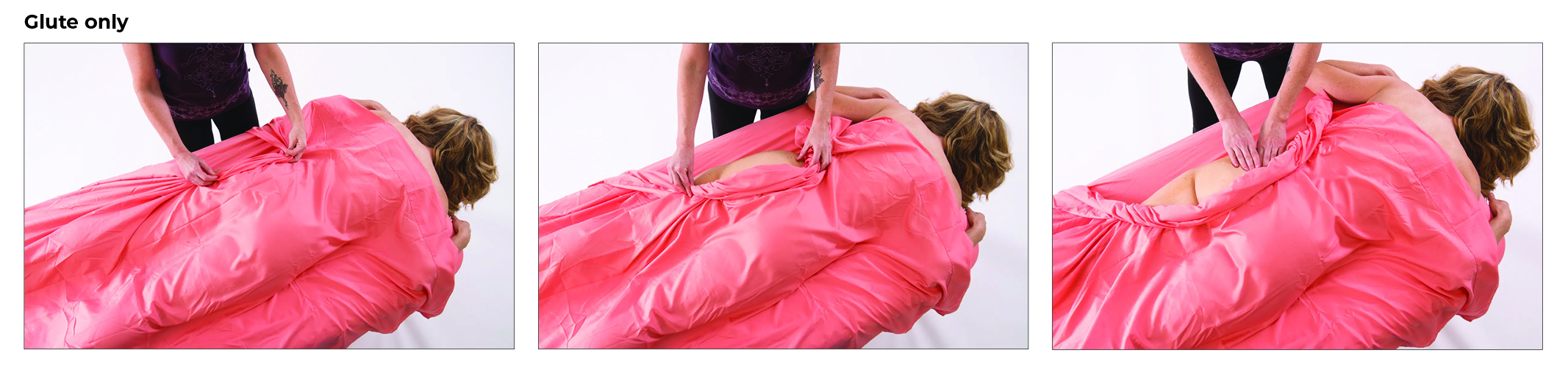
Glute Only
1. Gather the drape and anchor it at the hip and upper glute.
2. Continue to undrape just the hip and glute area.
3. Apply effective treatment while maintaining semi-privacy and warmth.
Draping Tip!
As you try out these techniques, remember to anchor the sheet with one hand by pressing down into the table, or lightly into the client’s tissue, while you fold back the drape with the other.
This pin-and-pivot-type move guarantees that the drape doesn’t accidentally start creeping off the client, while also ensuring that the client feels secure and protected as you move the drape. Also, make sure the drape doesn’t waft as it’s repositioned; it should slide just across the client’s skin to further ensure their sense of privacy.
To understand tissue-tension barriers, MTs must be constantly present and mindful. Too light and we will not become efficient at creating the healing change that is needed.