

Massage for Aging Clients
Caring for elderly clients requires the massage therapist to have a keen awareness, not only of the characteristics unique to the client but also of the various members of the client’s care team.
From conception to birth, the body undergoes a journey that can sometimes be filled with both physical and emotional strains and tensions. Craniosacral therapy is one tool that can make the journey easier.
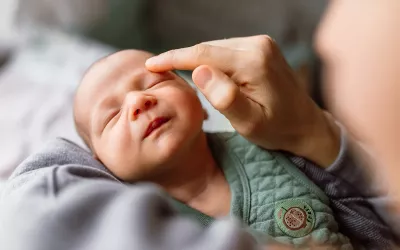
Craniosacral therapy is a gentle form of manual therapy that helps release restrictions that are interfering with the body's innate intelligent functioning. Rooted in traditional osteopathic techniques, craniosacral therapy was developed by Dr. John E. Upledger over the course of eight years of observing, treating, and conducting studies at Michigan State University in the late 1970s and early '80s. While originally developed as a unique way to treat the structures that comprise the craniosacral system (those that house and protect the brain and spinal cord), Dr. Upledger quickly realized that craniosacral therapy can be applied anywhere on the body to release restrictions in the fascia and other connective tissue, intracranial membranes, musculature, viscera, and more.
A craniosacral therapist's job is to tune into the body's cues. To perform craniosacral therapy, the practitioner places their hands on the client's body and gently "melds" with the tissues; that is, they conscientiously blur the line between where their hands end and the client's tissue begins. This enables practitioners to better feel what is happening within the client's body. They look for places where the normal physiological rhythms cannot be palpated, thus indicating restriction(s). The pressure is typically very light—as little as 5 grams or less.
During treatment, practitioners follow the tissue to its end range of motion in either its direction of ease or direction of barrier and then create a gentle barrier with their hands to prevent that tissue from sliding back to its original position. They then wait for signs of tissue release—heat, softening, a spontaneous deep breath from the client, or the tissue melting past its original end range. Practitioners also perform gentle decompression techniques to allow more space for vitality within the client's craniosacral system.
Pregnancy, birth, and the postpartum period are always powerful and emotional experiences (both positive and negative). Even when memories leave our conscious awareness, our bodies remember and carry our stories. When these memories arise from the tissue, along with their corresponding feelings, we can support our clients with a process called SomatoEmotional Release, which builds upon the principles of Dr. Upledger's craniosacral therapy to help clients release the effects of past traumas and injuries and move beyond the negative effects of their held past. Practitioners do this by holding a neutral, supportive, nonjudgmental space and asking open-ended, nondirective questions to facilitate the client's exploration of their own inner process while carefully monitoring their tissues for signs of physiological resonance. By supporting clients in this way, craniosacral therapists can help them not only physically but also emotionally and energetically.
Craniosacral therapy also works to help release restrictions in the pelvis, as well as address emotional, energetic, or other nonconscious factors, the results of which may contribute to improved fertility and more successful implantation. Anecdotally, practitioners report that many women have overcome fertility struggles and successfully conceived after receiving craniosacral therapy treatments. In a study of 10 infertile women who received up to six craniosacral therapy sessions, six of the 10 conceived and carried their babies to term.1
In my practice, I had a client who was unable to conceive since her miscarriage two years prior. When I released restrictions around her pelvic diaphragm and reproductive system, she processed deep grief from the loss of her first baby. After working through the grief, she arrived at a place of peace and self-assurance that she was ready to meet the next baby, whenever the time was right. She had a positive pregnancy test shortly after that and delivered a healthy baby girl nine months later.
During pregnancy, the body must continuously shift to accommodate the ever-expanding uterus. Craniosacral therapy can help the body better integrate these changes, the result of which can greatly improve comfort and set up the body for a smoother delivery.
I had a prenatal client experiencing severe pain in her right hip, 18 weeks into her third pregnancy. She had been largely debilitated by the same pain at the end of her previous pregnancy. With the pain presenting so much earlier this time, she was concerned about her ability to walk and care for her two toddlers in the coming months. I treated her pelvic fascial diaphragm and right sacroiliac joint. I also released restrictions around her lumbar vertebrae and uterus, as well as her upper respiratory diaphragm. She noticed significant relief almost immediately. After two more sessions, she was pain-free and maintained strong motility and functionality for the rest of her pregnancy.
Craniosacral therapy also can be offered during labor to facilitate ease of delivery. Gentle releases around the pelvic diaphragm, respiratory diaphragm, sacrum, coccyx, sacroiliac joints, and symphysis pubis can help a person's anatomy better accommodate a baby coming through the vaginal canal, and a specific technique called a still point can be used to help encourage a stalled labor to restart. It is helpful for a craniosacral therapist working in a delivery room to have some doula training or experience so they can be more familiar with the process of supporting the client in labor, but their role can be distinct from other types of birth support. In the delivery room, I treat in whatever position the client needs to be in for the birth and often treat in recurrent but short intervals. The goal is to facilitate the natural physiological process that is unfolding.
Due to its subtle and detailed nature, craniosacral therapy tends to help clients become more aware of, and in tune with, their bodies. When received during pregnancy, this benefit extends to helping clients become more bonded with their babies while the babies are still in utero. A stronger prenatal connection helps motivate and empower clients during birth and contributes to stronger bonding (and therefore more vital babies) after delivery.
It takes time for the body to recover and heal from birth, and poor breastfeeding posture can create additional challenges. Dr. Upledger found a correlation between idiopathic endogenous depression and restrictions in three critical junctures within the body: the L5-S1 articulation, the occipital-atlas junction, and the sphenobasilar junction. Treating these key areas can improve postpartum depression and associated poor bonding. After the birth of my second child, I suffered from frequent headaches; the back labor I experienced created restrictions in my pelvis that translated up through my spine and occiput and resulted in lesion patterns around my sphenoid. The craniosacral therapy I received addressed the lesion patterns in both my cranium and pelvis, effectively ending my headaches.
Craniosacral therapy can also be a benefit to babies who have incurred physical restrictions and maladies due to poor prenatal positioning, challenging or invasive deliveries, or excessive time in a single body position during infancy. It can also help with other issues including:
Whether it's the stress that can accompany trying to conceive, the physical stressors the body goes through during pregnancy, or the emotional and physical challenges for both the parent and child during birth, there is a place for craniosacral therapy during this journey and beyond.
1. Mary Ellen Kramp, "Combined Manual Therapy Techniques for the Treatment of Women with Infertility: A Case Series," Journal of the American Osteopathic Association 112, no. 10 (October 2012): 680-4, https://pubmed.ncbi.nlm.nih.gov/23055467.
Caring for elderly clients requires the massage therapist to have a keen awareness, not only of the characteristics unique to the client but also of the various members of the client’s care team.
This variation of your massage stance can reduce discomfort, help conserve strength, and use your movement and body weight most efficiently during a session.
When focusing on stretching a target muscle, sometimes other muscles in the group need to be considered for the session to be effective.
Balance challenges vary in form and cause. We can support clients’ sense of stability with the “settle, adapt, refine” model by addressing key regions of the body.