By Mary Murphy
Editor's note: Cecilia Bagwell was one of the winners of ABMP’s Massage Is for EveryBody 2025 contest. We wanted to share more of Cecilia’s story, which exemplifies the inclusive values of this campaign. Please join us in celebrating Cecilia!
A little over a year ago, Cecilia Bagwell was mourning the loss of the love of her life after he battled a three-year journey with cancer. “While he was in hospice, I spent about two hours giving him massage while he was actively dying,” Bagwell shares. “He could not speak or open his eyes, but he kept holding my arm. At the time, I did not fully understand the depth of what palliative massage really meant.” Bagwell’s loved one passed away within three hours of that session. “That experience showed me just how powerful simple human touch can be at the end of life,” she says.
A month later, Bagwell’s mother passed away unexpectedly in her sleep. Her mother was a huge part of Bagwell’s journey as a massage therapist. “My mom lived her entire life in chronic pain. She had juvenile rheumatoid arthritis and a spinal fusion at the age of seven, [so] pain was simply part of her daily life for as long as I can remember,” Bagwell says. “When I became a massage therapist, she quickly became my best guinea pig.”
These experiences with pain and loss were pivotal for Bagwell. They taught her the power of human touch and inspired her to focus on providing massage to populations who may not have access to it. Fast-forward a year, and Bagwell has built Thrive Geriatric Massage, focusing on giving dignity, therapeutic care, and support to seniors (read more about it in her winning Massage Is for EveryBody essay). She’s now expanded to launch a nonprofit too, The Touch Institute—which focuses on research, education, and access—to support the greater mission to bring care to those who need it.
“That experience [with loss] deepened my passion for this work and reinforced my belief that massage has a much larger role to play in helping people manage chronic pain and improve their quality of life,” Bagwell says. Through her practice, she works with seniors and those with chronic pain, complex medical conditions, dementia, and more. She’s also in the process of building a framework to reach even more populations who don’t have access to massage.
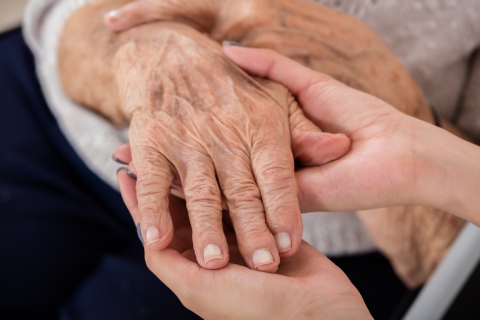
“The deeper gift is helping families understand that they are allowed to touch their loved ones,” Bagwell says. “I want families to know that holding someone’s hand, gently touching them, or simply being physically present is one of the most meaningful ways to honor that relationship.”
Why 2026 Is “Foundational” for This Work
Right now, Bagwell and The Touch Institute are laying the groundwork for what they hope will become “long-term infrastructure” for medical massage.
“We are developing educational programming, practitioner roundtables, and clinical frameworks that help therapists think more like health-care partners,” Bagwell says. “A lot of massage education focuses on technique, but when you work with medically complex populations you also need a strong understanding of physiology, medications, chronic disease, aging, and nervous system regulation.” And by “we,” Bagwell mostly means herself, for now. She’s a one-woman operation running her massage practice as well as building The Touch Institute from the ground up. Next steps include establishing a board, group of advisors, and hopefully a volunteer therapist database.
Beyond the care and support they already provide seniors through therapeutic touch and massage, The Touch Institute is looking after the whole system of massage therapists and involved practitioners.
What’s Next for The Touch Institute?
One of the newer educational programs Bagwell is excited about focuses on working with memory care populations (those with Alzheimer’s, dementia, or other cognitive decline). The baby boomer generation is aging rapidly, so there’s an enormous need, Bagwell says. Memory care communities are overflowing; caregivers and providers are overwhelmed. Much of this population lives with chronic pain, mobility challenges, and isolation, and memory care residents can live in a constant state of fight or flight. Helping seniors in this population feel safe when receiving care can be “incredibly meaningful.” But where to start?
Bagwell says her advice for working with these populations is simple. First, take the time to learn beyond technique. “Understanding physiology, medications, chronic conditions, and the aging process will make you a much better practitioner,” she says. Second, remember that the work is about more than muscles. “Sometimes the greatest thing you can offer someone is compassionate touch,” says Bagwell. With skilled touch and the right approach, MTs can not only help create moments of comfort for these individuals but also for their families and caregivers.
How Practitioners Can Be Part of the Vision
One of the most important things The Touch Institute wants to accomplish this year is to give fellow therapists a voice. “The long-term goal is to create a community of therapists who are committed to deeper clinical understanding and who want to work collaboratively with other health-care providers,” Bagwell says. And the more practitioners who have a seat at the table, the better.
“We are also beginning practitioner roundtables so therapists can help shape these standards together,” says Bagwell, adding that the entire profession should be involved.
Combining compassionate touch and medical massage with better education, more research, thorough clinical standards, and an interconnected network of dedicated practitioners to best support these populations is no small task. Together, The Touch Institute’s three pillars will hopefully help move the work forward by building framework, credibility, awareness, and, of course, providing access for the people who need care.
Because at the heart of everything, the institute has one belief: touch is one of the most powerful forms of care. Or, as Bagwell puts it, “Touch is one of the most human things we have.”
Get Involved
- Upcoming: The Touch Institute invites MTs interested in medical-informed massage and their Touch Is Medicine initiative to join a discussion on Zoom on March 30, 11 a.m. ET. Local MTs as well as practitioners outside the Atlanta area are welcome to participate.
- Interested in being part of the conversation, contributing to research, or volunteering? Reach out to The Touch Institute directly at cecilia@thetouchinstitute.org.
Related Content
- “Touch For Clients with Alzheimer’s or Dementia”
- “Create a Pre-Massage Checklist for Sessions with Elderly and Compromised Clients”
Share Your Story
What started as a massage and bodywork awareness week more than 30 years ago, Massage Is for EveryBody has grown into a yearlong mission of advocacy, awareness, and inclusion. Don't forget, the Massage Is for EveryBody essay contest is coming up! Share your story with us by June 1, 2026! Learn more at abmp.com/massage-week-intro.
author bio
Mary Murphy is an associate editor with abmp.com. She began her editorial career as a reporter for The Gazette in Colorado Springs, Colorado, before moving to Denver, where she worked stints at various print and digital magazines. Mary has a bachelor's degree in English, Creative Writing, and Journalism from Colorado College. An avid outdoorsperson, Mary enjoys climbing, hiking, backpacking, running, skiing, paddleboarding, and traveling.